of graduate employers say relevant experience is essential to getting a job with them

MENTAL HEALTH NURSING
BSc (Hons)
Accredited by the Nursing and Midwifery Council (NMC)
Accredited by University College Birmingham
- University
- Undergraduate
- Courses
- Mental Health Nursing BSc (Hons)
Award
BSc (Hons)
Duration
3 years full-time
UCAS Code
B760
Placement
Multiple placements
Entry
September
Fees
View fees

Winner of Education Provider of the Year at the Student Nursing Times Awards 2025
As of September 2025, there are approximately 105,100 Mental Health Nurses on the NMC register in the UK
Our Mental Health Nursing BSc (Hons) degree is approved by the Nursing and Midwifery Council (NMC) and is designed to prepare compassionate, knowledgeable and highly-skilled nurses to meet the complex health needs of mental health service users across a wide range of care settings. The programme integrates academic study with extensive practice-based learning, enabling students to develop the competence, confidence and professional values required for contemporary nursing practice.
This course is aimed at individuals who are motivated to pursue a rewarding career in mental health nursing and who are committed to delivering safe, person-centred and evidence-based care. It is suitable for school leavers, mature students and those with relevant healthcare experience who wish to qualify as a Registered Mental Health Nurse.
The primary goal of the course is to prepare students to meet the professional standards required for registration with the Nursing and Midwifery Council (NMC). It uses a blend of innovative teaching methods, including lectures, seminars, simulation-based learning, digital learning platforms and practice placements.
Students benefit from a strong support network, including personal tutors, practice assessors, supervisors and academic assessors, clinical skills support, wellbeing services and access to extensive learning resources. Additional support is available for academic skills, digital literacy and personal development. Successful completion of the degree enables graduates to apply for registration with the NMC as a Mental Health Nurse and pursue careers across a wide range of healthcare settings.
The degree is also a foundation for further study and career development, including specialist practice, leadership and management roles, education, research or postgraduate study at master’s or doctoral level.

Financial help to study mental health nursing
- £6,000 free Cost of Living Allowance on us: for all full-time UK undergraduate students starting in September 2026
- An extra £5,000 a year from the UK government to support nursing recruitment
- Another £1,000 a year from the government - specifically for mental health nursing students
This adds up to a potential £24,000 for free to support you in gaining your mental health nursing degree, helping to remove financial barriers to study.
Find out moreWhy should I choose to study Mental Health Nursing BSc (Hons)?

- EDUCATION PROVIDER OF THE YEAR – The university was named Nurse Education Provider of the Year 2025 (pre-registration) at the Student Nursing Times Awards in recognition of outstanding commitment to nurturing student development and preparing future nurses to deliver compassionate, person-centred and holistic care.
- AWARD WINNING PLACEMENTS – The university received the Student Placement of the Year: Hospital 2022 award at the Nursing Times Awards and was shortlisted for Best Student Experience and Nurse Education Provider of the Year in 2023.
- STATE-OF-THE-ART FACILITIES – The University’s £44 million investment in the Moss House campus offers nursing students exceptional facilities, including a simulation ward and immersive VR technology, providing some of the best nursing training in the UK.
- PERSONALISED APPROACH – Our team of experienced lecturers promote a focused and supportive learning environment, ensuring students benefit from a personalised teaching experience to support them throughout their nursing degree.
- STRONG EMPLOYMENT PROSPECTS – Graduates can expect high employability rates, thanks to strong links with local NHS trusts and healthcare providers, offering numerous job opportunities.
- INDUSTRY-APPROVED TRAINING – Train to today’s gold standard in line with the NMC’s ‘Future Nurse: Standards of proficiency for registered nurses,’ and apply for Registered Nurse status upon graduation.

Pay early and save up to £4,500
International students applying for our BA/BSc undergraduate degrees, who meet all our deposit deadlines, can qualify for Early Action Scholarships of £4,500 or £3,500, depending on your course. Simply meet the payment deadlines and we'll do the rest - no application needed. International students can also apply for merit scholarships, worth up to the full amount of the tuition fee.

Our facilities
As a student on our mental health nursing degree at University College Birmingham, you will have access to our Health Skills and Simulation Suite, featuring a purpose-built simulated clinical environment to help you practise your physical health skills and enhance your practical training. Our 360° immersive video room provides access to 200 interactive health and social care backgrounds, while we also have virtual reality software and a range of mental health-focused online case studies and scenarios, helping you grow in confidence in your mental health nursing practice during your nurse degree.
Course breakdown
- Year 1
- Year 2
- Year 3
Core Modules
Anatomy and Physiology Across the Lifespan
This module aims to develop your underlying knowledge of anatomy and physiology and lifespan development, in the context of and application to nursing. This will include an introduction of basic pathophysiology and pharmacology of common health conditions and the indicators of health and ill health, including sociology, psychology, genetics and genomics.You will be introduced to physical, social, and psychological care considerations across the lifespan.
Fundamentals of Nursing Practice
This module will prepare you for your placements (14 weeks) and provides skills practice and simulated practice learning (200 hours) that runs across part 1 of the programme. This module aims to develop your knowledge, experience and skills required for the delivery of person centred nursing care. The module's focus is on the development of practical skills, medicines management, fundamentals of nursing practice, for example: professional behaviour, teamworking skills, communication skills and reflective practice. You will undertake study that will underpin your knowledge of the evidence -base required to deliver essential practical skills related to nursing care. You will be provided time to develop your practical skills by undertaking simulated- based learning activities within the university's health skills and simulation suites. This year long module runs alongside all Year 1 theory modules, which will help you integrate your knowledge and understanding into your practice.
Principles of Nursing
This module introduces you to the role of the nurse and the context of nursing practice, across the four fields of nursing practice. The background of nursing is explored so you can appreciate the complexities of modern nursing and the interprofessional agenda across a range of nursing environments. You will gain knowledge and understanding of safe, effective and compassionate person-centred care. To gain an understanding of the person and the lived experience of their condition, you will study patient case studies, which will introduce you to a range of common acute and long-term conditions to be explored in the context of different care settings and across the lifespan. This knowledge will be built on further at Level 5 with separate modules on nursing across acute environments and health and wellbeing across lifespan.
Technology Enhanced Nursing
This module provides the essential foundations you need to thrive as a learner and as a future nurse. You will develop key academic and literacy skills—such as academic writing, reflective practice, critical reading, and effective study organisation—to help you succeed throughout your degree and into professional practice. Alongside this, the module introduces you to the digital world of contemporary healthcare. You will explore how technology enhances safe, efficient and person‑centred nursing practice, and gain hands‑on experience with the digital platforms you will use throughout your studies and clinical placements. These include virtual learning environments, e‑portfolio systems, electronic patient records, and digital simulation tools. You will also examine real examples of the technologies shaping modern healthcare, from electronic prescribing and telehealth consultations to wearable monitoring devices, smart clinical equipment, and emerging innovations such as AI‑supported diagnostics. Teaching is delivered by academic staff, digital health specialists and practising clinicians, giving you an authentic insight into how technology strengthens communication, teamwork and patient outcomes. By the end of the module, you will be equipped with strong academic skills, digital confidence, and a clear understanding of your professional responsibilities when working with technology—preparing you for successful learning and safe, effective nursing practice.
Core Modules
Crisis Care Management
This module will enable you to build on previous knowledge of physiology, pathophysiology, psychophysiology, mental state presentations, anatomy, and pharmacology knowledge acquired in Part 1, with a practical application to delivering care to patients in crisis. You will be taught to recognise the care requirements and the nursing interventions for patients who are in crisis through simulated practice, with an exploration and evaluation of a range of assessment methods and tools as well as supporting physical health. The module aims to define 'crisis care' delivered within a range of settings so you understand the complexities of prioritising and providing acute care to patients who are experiencing crisis. Reference will be made throughout the module to the legal-ethical framework, policies and the evidence-base that underpins safe practice delivery by nurses and the inter-professional team within a range of environments, including inpatient settings and community so that you can apply knowledge and skills into your practice. Legislative processes including the Mental Health Act (1983, updated 2025) and its application to practice will be taught.
Enhancing Nursing Practice (Registered Nursing Associates)
This module will be delivered in the 2nd half of part 2 of the BSc (Hons) nursing programme and is bespoke to Registered Nursing Associates entering the degree programme with 50% recognition of prior learning (RPL). The module will prepare you for your practice placements and practice based learning opportunities that run across part 2 of the programme and provides skills support to the theory units delivered in parallel. The module's focus is the development of professional values and the delivery of safe, holistic compassionate care. This module defines the skills and proficiencies student nurses require by the end of Part 2 as outlined in the Practice Assessment Document (PAD Part 2), prior to moving onto Part 3.
Enhancing Nursing Practice
This module will prepare you for your placements (18 weeks) with skills sessions and simulated practice learning (200 hours) that runs across part 2 of the programme. The module provides skills support to the theory units delivered in parallel. You will be provided time to enhance your practical skills by undertaking simulated- based learning activities within the university's health skills and simulation suites. The module's focus is the development of professional values and the delivery of safe, holistic compassionate care. This module defines the skills and proficiencies student nurses require by the end of Part 2 as outlined in the Practice Assessment Document (PAD Part 2), prior to moving onto Part 3. These skills and proficiencies include more critical and acute care skills for nursing acutely ill patients / service users in crisis, individuals with more complex care needs and individuals at the end of their lives.
Evidence Based Practice for Nursing
There is a significant emphasis on evidence-based practice in health and social care and, as a healthcare practitioner, you will need to be able to justify the care that you choose to provide. This Level 5 module is designed to support you in building an understanding of the fundamentals of research and how research is embedded into healthcare practice This module will give you the skills to find research papers relating to a particular aspect of practice and how to use research methodology to understand, analyse and critique research papers, write a literature review and develop an action plan. You will build on your knowledge of the research process and research methodology gained from this module when studying the Evidence Based Service Improvement Project module at Level 6.
Promoting Mental Health and Well-Being across the Lifespan
This module will consider the biological, psychological, and social impact of long-term Mental Health conditions on an individual, using sources of information from clinical experts, service-users, the evidence-base and reflecting on clinical practice experiences. Students will be supported to develop skills and critical knowledge to enable them to apply it to safe care delivery, for individuals diagnosed with chronic long-term mental health conditions. The concept of shared decision making, and the role of multi-professional care will be explored. The module promotes critical thinking through the application of evidence-based practice. The aim of the module is to enable students to identify, discuss and analyse the impact of long-term mental health conditions on the service-user, their family and/or support network. To enable students to critically discuss the shared decision-making process in the nursing care of people with long-term mental health conditions and co morbidities, using a multi-professional approach to care.
Core Modules
Managing Complexities in Integrative Nursing Practice
This module will prepare you for your placements (20 weeks) through skills practice and simulated practice learning (200 hours) that runs across part 3 of the programme. The module provides skills support to the theory units delivered in parallel. You will be provided time to enhance your practical skills by undertaking simulated- based learning activities within the university's health skills and simulation suites. The module's focus is the development of professional values and the delivery of safe, holistic compassionate care. This module defines the skills and proficiencies student nurses require by the end of Part 3 as outlined in the Practice Assessment Document (PAD Part 3), prior to registering as a Registered Nurse (Adult or Mental Health) on the Nursing and Midwifery Council Professional Register. These skills and proficiencies include leadership and management skills for nursing individuals with complex care needs across diverse care environments, as well as skills required to supervise and teach others.
Progression to Registered Nurse
The Progression to Registered Nurse module prepares final‑year Adult and Mental Health nursing students for autonomous practice as Registered Nurses. The module consolidates clinical, professional, and leadership skills, supporting you as you transition from being a supervised student nurse to be an accountable practitioner. You will engage in advanced clinical reasoning, reflective practice, leadership development, and evidence‑based decision‑making that aligns with the Nursing and Midwifery Council (NMC) Standards of Proficiency for Registered Nurses (2018) and the expectations of practice settings. This module is aligned to a 14 week leadership and management placement where you will assessed on your professional practice, leadership, management, teamworking, teaching and supervision standards of proficiency.
Service Improvement Project
Service improvement is at the heart of how we ensure and improve the quality of the service-user experience across health and social care environments. This module will provide you with the knowledge and skills to enable you to write a Service Improvement Project (dissertation) based on an evaluation of a student-selected aspect of a service in practice. Your project may relate to any aspect of a service which could be improved, with an aim of enhancing the service-user experience. This might relate to care in a clinical or community setting or may be concerned with processes and resources. The project needs to identify how the quality of care may be enhanced and good practice disseminated. In undertaking this module, you will receive practical advice, extend your academic knowledge, and have the support of a group of peers engaged in their own service improvement challenges. The six-week service improvement placement you attend within the module, will expose you to contemporary quality of care initiatives, audits, research projects, service improvements that are occurring within the organisation you are allocated to. Whilst working with your Practice Assessor/Practice Supervisors and the patient/client group, you will be able to explore your topic. During your placement, you will return to university on a set day each week for dissertation tutorial meetings with your project supervisor. Following the placement, you will use secondary evidence from a review of literature to appraise, evaluate and apply it to the service improvement issue. Within your summative report, you will be required to make analytical and objective judgements on the evidence and the potential impact on the quality and standards of care, safe working practices, risks, and service-user outcomes. You will also include realistic recommendations for achieving this in an action plan for practice, and deliver a poster presentation that provides an overview of your project and appraises the role of the nurse in service and quality improvement.
The modules listed above for this course are regularly reviewed to ensure they are up to date and informed by industry as well as the latest teaching methods. On occasion, we may need to make unexpected changes to modules – if this occurs, we will contact all offer holders as soon as possible.
Entry requirements
Entry requirements
Either:
- Access to Higher Education Diploma: 112 UCAS Tariff points including a minimum of 15 Level 3 credits at Distinction
- A-levels: Grade profile of BBC
- T-levels: A T-level with an overall Merit grade
- BTEC: Grade profile of DMM. This can be achieved from either an Extended Diploma or a combination of smaller BTEC qualifications
- Irish Leaving Certificate: Grade profile of two subjects at H2 and three subjects at H3. The remaining tariff points can be made up of Higher or Ordinary subject grades
- Tariff: Other Level 3 qualifications are accepted at University College Birmingham for entry. A minimum of 112 UCAS Tariff points will be required.
- Graduate Entry: A 2:2 or above will also be considered.
Plus:
- GCSE/IGCSE English language or literature and maths grades 9-4/A*-C or equivalent
- GCSE/IGCSE biology or human biology grade 9-4/A*-C or equivalent*
- Irish Leaving Certificate grades of the following will be accepted as GCSE equivalencies in the subjects above:
- O1-O4 or A1-C3 (Ordinary Level)
- H1-H7 or A1-D3 (Higher Level)
*Pass in a biology-focused module, e.g. anatomy and physiology, human biology, as part of a relevant Level 3 qualification is regarded as an equivalent for entrance.
We would expect all GCSE qualifications to have been achieved prior to applying for this course. However, we will consider applications from students with one GCSE qualification pending.
If you have any questions about applying to University College Birmingham for this course, please complete our enquiry form here.
Not yet ready to apply for the Mental Health Nursing degree course?
If you don't currently meet the Level 3 qualification requirements above, our Nursing Associate foundation degree (FdSc) provides an opportunity to study the foundation degree for two years and enter the Mental Health Nursing degree at the 50% stage (i.e. Halfway through the second year of the programme). Alternatively, you may want to consider our Access to Higher Education Diploma (Health Professions) course.
Disclosure and Barring Service (DBS)
Students must also complete an Enhanced Disclosure and Barring Service (DBS) check. The University will coordinate and fund the completion of the DBS check. Further information is available regarding the DBS check – the requirements prior to entry onto the course can be found here and a summary of the documents required for the application process can be found here.
Pre-course health and immunisation requirements
Students must complete a Pre-course Health Questionnaire and meet the Immunisation Requirements.
In addition to the above, we would also strongly recommend that applicants receive the latest vaccinations against Covid-19 and influenza, though this is not compulsory for entry.
Interview
The Admissions team will use the entrance criteria, as well as your personal statement, reference and work experience information, to shortlist candidates for interview. Successful applicants will be invited to an interview which will comprise multiple mini interviews (MMIs) – you will be assessed on your motivation and understanding of the role of a nurse and your familiarity with NHS Constitution and Values.
Information regarding the stages of the initial assessment for Literacy, Numeracy and Digital Skills can be found here.
Recognition of Prior Learning (RPL)
RPL can be awarded for full years of study, where there is clear mapping of learning outcomes/modules from other institutions, for advanced entry into year 2 or year 3.There also needs to be evidence of practice-based learning hours attended and achievement of NMC Standards of Proficiency, that align to the UCB programme expectations at the point of transfer.
Maximum 50% RPL credits permitted from L4 and L5 study (NMC standard). For example, Registered Associates can be awarded 180 credits for RPL from their FdSc and enter the nursing degree in Year 2 Semester 2.
From the NMC Standards for Pre-Registration Nursing Programmes (2018, updated 2023): https://www.nmc.org.uk/...ion-nursing-programmes/
Standards
1.5 permit recognition of prior learning that is capable of being mapped to the Standards of proficiency for registered nurses and programme outcomes, up to a maximum of 50 percent of the programme
1.6 for NMC Registered Nurses permit recognition of prior learning that is capable of being mapped to the Standards of proficiency for registered nurses and programme outcomes that may be more than 50 percent of the programme,
(an example for 1.6 is a Registered Nurse who is on the NMC register for one field of practice, who wants to Register in a second field of practice).
Top up from Registered Nursing Associate to Registered Nurse
You can apply to ‘top up’ by gaining a place on the nursing degree programme using your foundation degree plus English and Maths Level 2 qualifications to meet the entry criteria.
On your UCAS application, you must clearly state in your personal statement that you wish to top up to the degree and that you are a Registered Nursing Associate, providing your NMC PIN in your personal statement.
Once your qualifications have been confirmed, if successfully shortlisted, you will be invited to interview.
If successful at interview, you will enter the degree programme at the 50% stage (i.e. halfway through the second year of the programme). You will complete 18 months of the degree programme, with placements, before you can register as a Registered Nurse and achieve your full degree.
You can ‘top up’ as an apprentice if your current Nursing Associate employer can support your application. Alternatively, you can self-fund and complete the 18-month top-up course full-time.
International students
Academic entry requirements: Please visit our Country Specific Information page.
English Requirements:
We will accept the following English grades at the point of application. However, students must achieve the required NMC IELTS and OET English requirements on completion of year two of their studies. See the heading NMC Requirements below.
The University will provide additional English classes to support students in achieving the following NMC requirements. No additional fees will be charged, but students must commit to attending a minimum of 3-4 hours of English Language support.
The University will meet the cost of exam fees for the first attempt; however, subsequent attempts must be paid by the student.
English Requirements accepted at the application stage:
IELTS -overall score of 6.5 in reading, listening and speaking and a minimum of 6.0 in writing
Occupational English Test (OET): with a minimum of grade C+ (330-340) in listening, reading and speaking and a C in the writing section (this must be between 250-290)
NMC English Requirements on completion of year two:
To achieve NMC approval and successfully graduate, students must achieve the following.
IELTS score of 7.0 – a minimum of 7.0 in reading, listening and speaking, and a minimum of 6.5 in writing.
Occupational English Test (OET): an OET examination certificate – a minimum of grade C+ in the writing section and grade B in the reading, listening and speaking sections.
The Nursing and Midwifery Council updated this requirement in January 2020.
Combining OET test scores – you can achieve the required mark across two test sittings if:
- You sit the tests within six months of each other
- You are tested in all four sections at the same time
- All grades in both sittings are above grade C+, and you achieve at least a grade C+ in the writing section and at least a grade B in the reading, listening and speaking sections in either of the two test sittings
Further information regarding accepted English language tests can be found here.
Alternatively, if you do not have IELTS, you can take University College Birmingham's Online Proficiency Test – An overall score of C1 – a minimum of C1 in reading, listening and speaking, and a minimum of B2+ in writing.
Key information
Teaching and assessment
Note: Indicative information only – actual timetables and assessment regimes will be issued at your induction.
Teaching
A typical teaching week is 3 x 8 hour study days which will include academic module delivery, directed e-learning activities, skills sessions and simulation-based learning.
The other two days (2 x 8 hours) will be required for completing formative and summative assessment work/ revision.
Teaching methods across the programme are varied and include:
- large group teaching
- small group tutorials
- online teaching sessions
- small group skills and simulation-based learning
- interprofessional sessions with other healthcare students delivered by a range of professionals from practice
- e-portfolio work / online workbooks
Assessment
Assessment methods across the programme are also varied and include:
- exams
- written assignments and case studies
- literature review
- service improvement project
- professional discussions and vivas
- practical workbooks and ePAD (to assess practice-based learning)
- professional development plans
- reflections on practice learning
- placement assessments
Estimated breakdown of assessments for this degree are:
Coursework 50%
Exams 25%
Practical exams 25%
Plus 6 compulsory placements across the programme.
Our teaching and assessment is underpinned by our Learning and Teaching Strategy 2025-2030.
Timetable
Whilst your lessons will be timetabled into 3 days a week, it is worth noting that your course includes regular placements in addition to these hours.
Tuition fees for home students
If you are a home student enrolling on a bachelor's or foundation degree course at University College Birmingham, the 2026/2027 academic year tuition fee for full-time study is £9,790. For part-time study, the fee is £4,895.
The same fee applies to those enrolling on an HNC (Higher National Certificate) or an HND (Higher National Diploma) programme.
Funding for nursing degrees
On top of £6,000 free Cost of Living Allowance you get from us, additional support from the UK government is available to nursing students, which includes a non-repayable payment of £5,000 to eligible students each academic year, and additional payments worth up to a total of £3,000 to help students cover childcare costs. As a mental health nursing student, you could also be eligible for an extra £1,000 from the government. Find out more.
Students who already have a degree, but undertake our BSc (Hons) in mental health nursing as an additional degree, are able to apply to access a student tuition fee and maintenance loan through Student Finance England.
Tuition fees for international students
If you are an international student (or have been fee assessed as an international fee payer) and are enrolling on a full-time [Band 1] bachelor's degree course in 2026/2027, the fee for the academic year will be £16,500. If you complete a placement year, there will be an administration fee of £500 for a full year or £250 for a half-year placement.
Uniform and kit costs
This course requires a uniform and a tablet. This will be redeemed from The Kick-Start scheme fund, paid to each student at the start of each academic year. Exact costs and information on how to order required items will be provided to you prior to enrolment.
Kick-Start Scheme
As a new student studying this course full-time, you will receive £300 per year through our Kick-Start Scheme (UK students only, eligibility criteria applies). This scheme will support your studies and future career by contributing to course-related materials, uniform or selected items on campus. You may also qualify for an additional £500 per year.
Find out more about the Kick-Start Scheme here.
Still interested in starting this September?
You may still be able to apply for this course before 30 June. After this date, applications usually go through Clearing.
Work placements
Practice placements are vital for gaining real-life experience and for building your confidence and skills before you finish your course and they may even lead to a job when you graduate.
Our BSc (Hons) Mental Health Nursing course features multiple placements in different environments throughout your studies.
You will attend:
- 14 weeks of placement in year 1
- 18 weeks of placement in year 2
- 20 weeks of placement in year 3
Placement blocks are between 6 - 14 weeks in length and are full time (40 hours per week) at set times in the programme. You will receive a programme planner at the start of the course so you know when these placements are allocated to you.
Placements are arranged by the Health Placement Team, in partnership with our placement providers across Birmingham and Solihull areas. You are not required to find your own placements.
There are some placements available across the wider West Midlands, for example, Dudley, Walsall and Wolverhampton, and also across private, independent and voluntary settings, such as nursing homes, community, GP practices and hospices.
Placements are mapped for you to ensure you receive opportunities to meet all practice learning outcomes required for the programme.
Work alongside experts in your sector
We work with:
- Birmingham and Solihull Mental Health Trust

"From ensuring the most accurate diagnoses to the ongoing education of the public about critical health issues, nurses are indispensable and the glue that holds a patient’s healthcare journey together. Our nursing degrees have been developed with practice learning partners, service users and carers to reflect the requirements and complexities of modern healthcare."
Professor Kathryn Riley Director of Nurse Education
Career opportunities
Mental Health Nurses can work in a wide range of inpatient and community settings, including acute wards, CAMHS, forensic services and crisis teams. Early roles include Band 5 Staff Nurse and supported preceptorship or rotational posts. With experience, RMNs can progress into specialist and advanced practice roles, as well as leadership, education, research and independent or third‑sector careers, offering long‑term and flexible career development.
Note: Some roles below may require further study/training. The roles and salaries below are intended as a guide only.
Band 5 (registered mental health nurse)
£31,049–£37,796
Want to take your studies to the next level? Completing the BSc (Hons) degree will enable you to move on to MSc Nursing pathways or advanced clinical practice qualifications.

Helen's Story
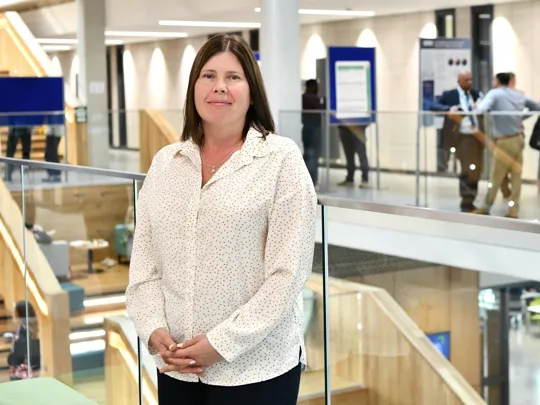
As a mental health nurse with more than 20 years of experience, programme lead Helen is eager to share her wealth of knowledge for working in this field.
Course statistics
BSc (Hons)
Meet your lecturers


What’s happening

Best education provider of the year at Student Nursing Times Awards
The award recognises our dedication to supporting students' personal growth and their ability to deliver person-centred, h…
Read more
Healthcare heroes: first nursing and physiotherapy graduates celebrate
The first cohorts from University College Birmingham's Nursing (Adult) BSc (Hons) and Physiotherapy BSc (Hons) programme…
Read more
Emotional celebration for first nursing cohort who started at height of pandemic
There were emotional moments a-plenty for both students and teaching staff at a special celebration for Univer…
Read more
Shortlisted for best student experience in national nursing awards
University College Birmingham has been shortlisted for Best Student Experience in the national Student Nursing Times Awards…
Read more
Mental health nursing degree launched to meet shortage of frontline workers
University College Birmingham has invested in a raft of cutting-edge technology to support students on its new ment…
Read more
Nursing graduate who found his calling during degree wins student of year
A recently-qualified student who was part of the very first cohort of the University’s adult nursing degree at the he…
Read more
"Authentic" hospital placement wins at Student Nursing Times Awards
An "authentic" hospital placement opportunity available to University College Birmingham nursing and physiotherapy students…
Read more
Accelerated apprenticeship to turn nursing associates into full practitioners
A brand new accelerated degree apprenticeship to train nursing associates working everywhere from emergency wards…
Read more
Nursing associate apprenticeship offers specialist skills boost for health sector
A new apprenticeship programme at University College Birmingham is set to provide a boost for the health sect…
Read moreOther courses you may like
Adult Nursing BSc (Hons)
Dream of becoming a nurse? Featuring multiple placements and supported by our outstanding facilities, this award-winning course will prepare you for a rewarding career working in adult nursing, enabling you to become a Registered Nurse with the NMC upon graduation.
Physiotherapy BSc (Hons)
Kick-start a career as a physiotherapist by studying our Physiotherapy degree. This course will give you advanced training to diagnose and rehabilitate across a range of conditions, aiding recovery from surgery, accidents, strokes or sports injuries and supporting people with disabilities.
Health and Social Care BSc (Hons)
Discover how you can make a difference to the lives of many different people in their time of greatest need. This course will prepare you for working in the dynamic health and social care sector, with weekly placement experience and additional qualifications available.