of graduate employers say relevant experience is essential to getting a job with them
- University
- Undergraduate
- Courses
- Sport and Exercise Science BSc with Foundation Year (Hons)
Award
BSc (Hons)
Duration
4 years full-time
Placement
Opportunities available
Entry
September 2026
Fees
View fees
The UK health and fitness market generated £5.7 billion in revenue in 2024, up 8.8% from 2023
The sport and physical activity sector employs a large share of the UK workforce - around 878,000 jobs, which is about 3.5% of all UK employment
Our Sport and Exercise Science BSc with Foundation Year (Hons) is designed for individuals who are interested in sport, human performance, physical activity, and wellbeing. It is ideal for students who want to understand how the body responds to exercise, how to optimise performance, and how movement, health, and behaviour interact. Whether you aspire to work with athletes, support community health, or explore the science behind physical activity, this course offers a strong and versatile foundation.
It is suited to those who enjoy science-based learning, problem-solving, practical application, and working with people in performance, health, or rehabilitation contexts.
Sports and exercise science is a dynamic, rapidly evolving field with an increasing demand for skilled practitioners across health, performance, and wellbeing sectors. On this programme, you will:
- Build a solid grounding in anatomy, physiology, biomechanics, psychology, nutrition, and research methods
- Learn through hands-on experience in our excellent sports facilities
- Develop the practical skills, scientific understanding, and professional values required by employers in both sport and health settings
- Benefit from evidence-based teaching delivered by enthusiastic academic and visiting experts
This degree is designed to give you both breadth and depth, enabling you to apply sport and exercise science to improve performance, prevent injury, promote wellbeing, and support healthy communities.
Graduates can pursue careers across sport performance, health and fitness, rehabilitation and coaching, including roles in strength and conditioning, sport science support and health promotion.
Financial support
We offer a range of financial suport for home and international students, to help you invest in your future. Explore all of our scholarships and fee waivers.

£6,000 Cost of Living Allowance
Home students
We provide all UK full-time undergraduate students with £6,000 each to support expenses like food, bills, and transport - completely free, with no need to pay it back.
Find out more
Early Action Scholarships
International students
International students applying for our BA/BSc undergraduate degrees, who meet all our deposit deadlines, can qualify for Early Action Scholarships of £4,500 or £3,500, depending on your course. More scholarships are also available.
Find out more
Kick-Start Scheme
Home students
All full-time UK students starting an undergraduate course may be eligible to receive financial support worth up to £800 in each year of study. Funds are provided as a credit which can be spent on the UCB Aspire website to buy course-related materials and products to support your studies.
Find out moreWhy should I choose this course?
- SPECIALISE YOUR STUDIES - encompasses physiology, biomechanics, motor control, psychology, nutrition, public health and more - meaning the skills you build are applicable to many sectors beyond just sport
- PRACTICAL APPLICATION - Develop the practical skills, scientific understanding and professional values required by employers
- MAKE A DIFFERENCE - Sport and exercise science is ultimately about helping people perform better, feel better, and live healthier lives. You’ll join a programme rooted in those values, preparing you to make a meaningful difference in the world
- EXPERT TUITION - Our highly-experienced academics continue to work within the sports and exercise arena and remain at the forefront of sector needs
- TOP FOR STUDENT SATISFACTION - We came third in the UK for overall student satisfaction among universities in the National Student Survey 2026 (when taking the average score for student satisfaction for each of the 26 questions in the NSS)
Our facilities
As a student on the BSc (Hons) Sports and Exercise Science degree, you will apply theoretical knowledge in our purpose-built human performance laboratory, equipped to replicate industry-standard environments. You will engage in sports clinics, rehabilitation sessions and nutrition-based sports kitchens, with access to our Human Performance Centre, featuring a 35-metre sprint track, six Olympic lifting platforms, integrated force plates, a range of conditioning equipment and an AlterG anti-gravity treadmill used to support athlete rehabilitation.
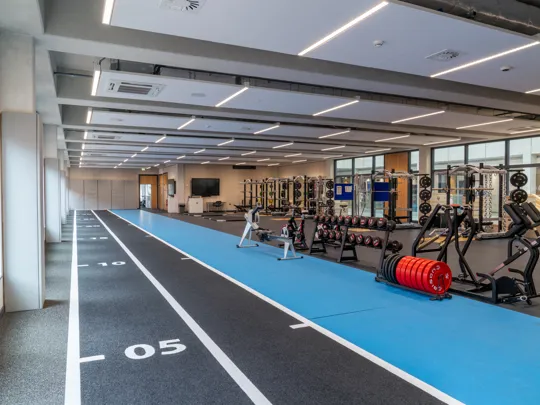
Our purpose-built Human Performance Laboratory features the latest equipment including an anti-gravity treadmill, isokinetic dynamometer, Monark LC7 cycle ergometer and SECA body composition analyser
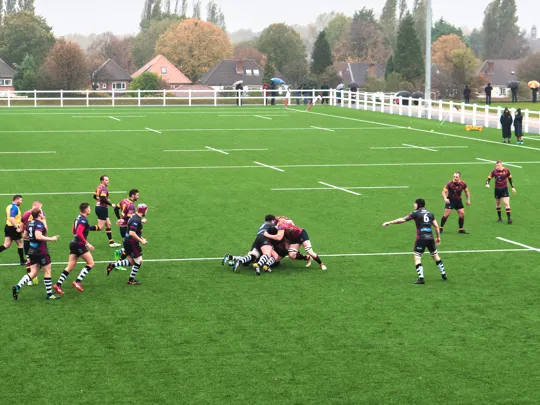
The impressive £3m Avery Fields complex – which we share with Bournville RFC – boasts an all-weather pitch, two grass pitches and a clubhouse with function room and modern changing facilities
Course Breakdown
- Foundation year
- Year 1
- Year 2
- Year 3
Core modules
Academic and Study Skills For Professional Practice
This module is designed to support students in developing the academic and study skills necessary for success in professional practice-related degrees. Focusing on bridging the gap between foundational knowledge and degree-level study, it provides comprehensive support in key areas such as academic English, scientific writing, numeracy, and critical thinking. Students will build confidence in public speaking and self-advocacy while developing essential strategies to overcome systemic barriers in education. This module emphasizes the importance of academic integrity and equips students with the skills to effectively engage with professional data, research, and real-world problem-solving. Building resilience and the ability to reflect on challenges is a key component of this module, enabling students to navigate setbacks and continue to grow throughout their academic journey.
Applied Science and Human Biology
This module introduces you to the essential scientific principles underpinning human health, wellbeing and professional practice. Through an inclusive and applied approach, learners will explore the structure and function of the human body, common disease / illness processes, and the scientific foundations relevant to health and wellbeing. You’ll gain a practical understanding of anatomy and physiology, pathology, and the basic sciences that influence health and wellbeing. The module also highlights conditions that disproportionately affect certain cultural groups—supporting your awareness of population health and culturally responsive care. Whether you’re new to science or returning to study, this module is designed to build your confidence, scientific literacy, and readiness for degree-level health and wellbeing and professional education.
Contemporary Professional Practice
This module introduces students to the diverse and dynamic world professional practice, with a strong focus on inclusivity, equity, and effective communication. This module will give you the knowledge, confidence, and practical tools to succeed in a professional context and environments. You’ll explore what it means to be a professional—learning about key roles and responsibilities, ethical and legal frameworks, and the importance of working independently and within multi-professional teams. Throughout the module, we’ll shine a spotlight on diverse role models and underrepresented voices in areas of professional practice, helping you see where you fit and how you can make an impact.
Sport in action: Bodies, Lifestyle and Participation
Sport in Action: Bodies, Lifestyles and Participation is your starting point for understanding what sport and exercise really means in the real world. You’ll explore how the body moves, why people take part in physical activity, and how everyday life shapes health and wellbeing. Through practical sessions and real-life scenarios, you’ll discover how sport is experienced differently by different people—and how professionals support participation at all levels. This module is designed to build your confidence, develop your understanding, and help you find your place within sport, whether your interests lie in science, therapy, strength and conditioning, or health and wellbeing.
Core modules
Core Concepts in Sport and Exercise Psychology
This module introduces you to key psychological theories that underpin sport performance, exercise behaviour, and overall wellbeing, while developing your understanding of how psychological factors influence participation, adherence, and performance. It provides opportunities for you to apply theoretical knowledge to real world sport and exercise contexts and supports the development of effective communication skills through the analysis and presentation of applied case studies.
Functional Anatomy and Movement Analysis
Human movement is fundamental to performance, wellbeing and lifelong participation in sport. Gaining a clear understanding of how the body moves and the factors that influence that movement forms a crucial foundation for further study. This module introduces the essential concepts of anatomy, biomechanics and neuromuscular control, helping you build a strong scientific basis for analysing human movement. You will explore how movement is created, coordinated and adapted in a variety of everyday and sporting situations. You will develop early practical confidence by learning how to observe movement patterns, recognise movement variability, and identify key factors that contribute to efficient or inefficient motion.
Integrative Physiology, Exercise & Nutrition
In this module, you will explore how your body systems work together during exercise and how nutrition influences these responses. You will learn the structure and function of key physiological systems and how they maintain homeostasis at rest and during physical activity. Through practical sessions, you will develop skills in physiological testing and data interpretation. You will apply your knowledge to understand how exercise and nutrition interact to affect health and performance, building a strong foundation for further study in sport and exercise science.
Physical Activity, Health and Society
In this module, you will explore how physical activity influences health within society. You will examine the social and cultural factors that affect participation in sport and exercise, alongside key public health guidelines. You will also develop an understanding of inequalities, barriers, and facilitators to physical activity. By applying your knowledge to real world scenarios, you will gain insight into how to promote healthier, more active communities.
Principles of Training for Health and Performance
In this module you will be introduced to the key principles that underpin effective training programme design for both health and athletic performance. Drawing upon anatomical and physiological knowledge developed in other modules of study, you will explore different training methods that are used to target different components of fitness, whilst developing the practical skills needed to coach exercises safely and design and monitor appropriate training programmes for a range of populations.
Core modules
Applied Coaching Science
In this module, you will develop the skills needed to design, deliver, and evaluate effective coaching sessions in sport and exercise settings. You’ll explore how coaching styles, communication, feedback, and cueing influence how people learn and develop skills. You will also learn how to plan structured and safe sessions for individuals and groups, drawing on principles from skill acquisition and motor learning. Through practical coaching experience and reflection, you will build confidence in your delivery, improve your decision making, and develop your own coaching style. This module prepares you for real world coaching roles where effective practice and reflection are essential.
Digital Data Skills and AI in Sport and Health
With the use of data in sport and exercise science roles becoming increasingly common, in this module, you will learn how to work with real sport and health data and turn it into clear, useful insights. You will develop the skills to clean, manage, analyse, and visualise large datasets using different data analysis tools. You will also explore how data is used in real world sport, exercise, and health settings to support decision making by coaches, practitioners, and managers. You will also be introduced to artificial intelligence and how it can support data analysis and communication. This module will develop your confidence in translating complex data into meaningful, actionable information.
Evidence Based Practice in Sport and Exercise Science
This module introduces you to the research methods used in sport and exercise science. You will learn how to design, conduct, and evaluate both quantitative and qualitative research, preparing you to undertake a successful independent project in your final year.
Performance and Biomechanical Analysis in Sport and Exercise
In this module you will examine the practical application of biomechanical theory to sport and exercise performance. You will explore how forces and motion interact to influence movement technique and efficiency and learn how to analyse and interpret biomechanical data using technology. Learning will take place through a balance of theoretical lectures and applied laboratory work, culminating in a professional style presentation of biomechanical analysis findings.
The Interdisciplinary Practitioner
In this module, you will explore how sport and exercise science disciplines work together in real world practice. You will learn how to assess and profile clients using sports therapy, psychological, nutritional, and strength and conditioning approaches, then bring these perspectives together to make informed decisions. You will also develop your understanding of how to work as an independent practitioner, including how to design and pitch your own sport and exercise science business. Through practical workshops, case studies, and interdisciplinary discussions, you will build the skills needed to work confidently and professionally after graduation.
Core modules
Becoming a Sport and Exercise Science Professional
This module prepares you for a career in sport and exercise science by developing key professional skills including communication, employability, and reflective practice. You will explore industry expectations, build your professional profile, and learn how to effectively present your skills to employers. The module also introduces you to continuing professional development (CPD), encouraging you to take a proactive approach to lifelong learning and adapt to the evolving demands of the sport and exercise science industry through ongoing professional development and self directed learning.
Exercise Prescription for Clinical and Special Populations
This module provides you with the advanced knowledge and practical skills required to design and deliver inclusive, evidence based exercise programmes across a range of populations. You will develop the ability to critically evaluate exercise prescription strategies and adapt them to meet the diverse needs of individuals, including those with varying health conditions, abilities, and backgrounds. There is a strong focus on inclusivity, ensuring you can confidently modify and tailor interventions to promote participation, safety, and positive health outcomes for all individuals. Through a combination of theoretical learning and practical application, you will explore key principles of exercise prescription, behaviour change, and client centred practice.
Independent Sport and Exercise Science Project
This Sport and Exercise Science project module provides you with an opportunity to undertake an independent investigation in sport and exercise science. You can choose from a range of project types, including empirical research, service improvement, placement based initiatives, audits, or secondary reviews. Supported by expert supervision, you will develop skills in project planning and management, ethical practice, data analysis, and professional communication. The module culminates in a written report and viva, enabling you to showcase your expertise and enhance employability or readiness for postgraduate study.
Nutrition for Exercise and Performance in Practice
This module explores how nutrition influences exercise performance, recovery and training adaptations. You will examine how the body uses nutrients during exercise and how nutrition strategies can support different types of training and competition. The module will develop your ability to analyse dietary intake and apply sport and exercise nutrition principles to real world athlete scenarios. By the end of the module you will be able to critically evaluate sport and exercise nutrition research and develop evidence based nutrition strategies to support athlete health and performance.
Training, Injury Prevention and Rehabilitation
In this module, you will explore how injuries occur in sport and how to prevent and rehabilitate them effectively. You will learn to design safe and effective training programmes that reduce injury risk while enhancing athletic performance, implement screening and monitoring strategies, and support individuals through evidence based rehabilitation pathways. Through applied practice you will develop the skills to implement and justify evidence based prevention and rehabilitation strategies.
Entry requirements
Sport and Exercise Science with Foundation Year BSc (Hons)
A-levels: Grade profile of DD in any subject combination.
T-levels: T-level graded pass with a core component profile less than C.
BTEC: Grade profile of PPP from any subject. This can be achieved from either an Extended Diploma or a combination of smaller BTEC qualifications.
Tariff: Other Level 3 qualifications are accepted for entry to University College Birmingham. A minimum of 48 UCAS Tariff points will be required.
Access to Higher Education Diploma: 48 UCAS Tariff points.
Non-tariff: Non-UCAS Tariff-based Level 3 qualifications are also considered for entry.

Sport and Exercise Science BSc with Foundation Year (Hons) is open for Clearing 2026
Still exploring your university options? Whether you are applying now, changing your plans or looking for a different course, you can apply to UCB through Clearing.
Key information
Teaching and assessment
Our teaching and assessment is underpinned by our Teaching, Learning and Assessment Strategy 2021-2024.
Tuition fees for home students
If you are a home student enrolling on a bachelor's or foundation degree course at University College Birmingham, the 2026/2027 academic year tuition fee for full-time study is £9,790. For part-time study, the fee is £4,895.
For 2027/2028 academic year tuition fee for full-time study is £10,050. For part-time study, the fee is £5,025.
The same fee applies to those enrolling on an HNC (Higher National Certificate) or an HND (Higher National Diploma) programme.
View tuition fees for home students
Please note: the fees stated are subject to parliamentary procedure. Tuition fees are expected to increase each academic year in line with the maximum permitted value set by the Government for that academic year. The expected rise for Home undergraduate students (including those on a foundation year course), may impact both new and continuing students.
Financial support for home students
£6,000 Cost of Living Allowance
If you are a full-time undergraduate student with home fee status and plan to pay your fees using a student loan, you’ll be eligible for a £6,000* Cost of Living Allowance.
Further information and terms and conditions can be found here: £6,000 Cost of Living Allowance.
*If you are studying a two-year accelerated degree or foundation degree, you will receive £5,000 over the duration of your course. If you decide you'd like to top up to a full BA or BSc (Hons) at the end of your foundation degree, you will also be entitled to the £1,000 in the third year.
Kick-Start Scheme funds (worth up to £800 per year)
As a new student studying this course full-time, you will receive £300 per year through our Kick-Start Scheme (UK students only, eligibility criteria applies). This scheme will support your studies and future career by contributing to course-related materials, uniform or selected items on campus. You may also qualify for an additional £500 per year. Find out more about the Kick-Start Scheme.
Scholarships
Available to eligible Home and EU students, our scholarships are designed to support students who demonstrate excellence in academic and sporting achievements, as well as to help students from economic and social hardship.
Financial support for international students
Scholarships
We offer a range of scholarships and fee waivers for international students. Students must have overseas international status and have received an offer to study on a full-time course at University College Birmingham in the current/upcoming academic year.
- Early Payment Discount
- Early Action Scholarship
- Sporting Excellence Scholarship
- Vice Chancellor’s Award
- Dean’s Award
- Sustainable Development Scholarship
- Women in Leadership Scholarship
- GREAT Scholarship
- Alumni Scholarship
- Continuation Scholarship
- Short Course Alumni Scholarship
70%
Work placements
Work placements are vital for gaining real-life experience and for building your confidence and skills before you finish your course - and they may even lead to a job when you graduate. Our HIRED team can help find the ideal placement for you.
Work placements are integrated into some of the modules that you will study on our Sport and Exercise Science BSc (Hons) course, allowing you to put theory into practice and enhance your future employability.
Work alongside experts in your sector
A snapshot of some of the employers we have worked with:
- Warwickshire County Cricket Club
- Wasps Rugby Academy
- Scotland Rugby team
- Aston Villa FC
- Leicester Tigers RFC
- West Bromwich Albion Ladies FC
Career opportunities
Note: Some roles below may require further study/training. The roles and salaries below are intended as a guide only.
Sport and exercise scientist
£25,000 - £40,000
Physical activity specialist
£26,862
Sports development officer
Average Salary: £30,000
Health and wellbeing/sports development officer
Average Salary: £30,000
Community sports coach
Average Salary: £24,000
Personal trainer
Average salary: £27,000 - £37,000
Want to take your studies to the next level? Completing the BSc (Hons) degree will enable you to move onto our postgraduate courses such as Strength, Conditioning and Performance MSc.

Other courses you may like
Strength, Conditioning and Sports Nutrition BSc (Hons)
Do you aspire to become a strength and conditioning coach? Accredited by the NSCA, this course combines theory and practical work in strength and conditioning with the study of sports nutrition to mould you into an expert industry practitioner.
Sports Therapy BSc (Hons)
Want to work with professional athletes or treat patients in a sports injury clinic? This specialist course will arm you with advanced practical sports therapy skills and scientific knowledge, with excellent placement opportunities to test your training in the real world.
Strength, Conditioning and Performance MSc
Aligned with the NSCA and standards developed by CIMSPA, our Strength, Conditioning and Performance postgraduate course will help mould you into an expert strength and conditioning specialist able to work with athletes, teams, governing bodies and other organisations.