Recent searches
You do not have any recent searches.
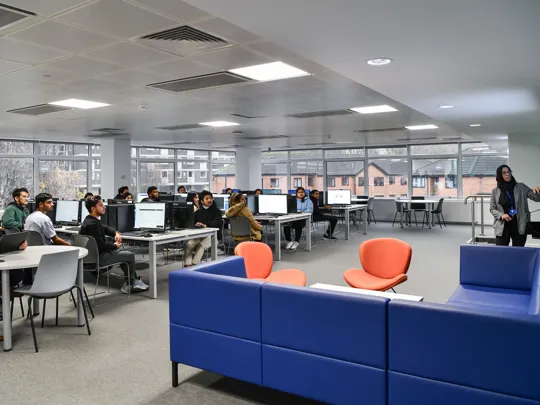
Group of young people problem solving software at a computer.

Software Engineering

BEng (Hons) / FdEng

Accredited by University College Birmingham

This course is subject to validation and approval
Choose Award
Duration

4 years with placement

Placement

48 weeks (optional)

Entry

February 2027, September 2027

Fees

View fees

Department of Computing
Choose Award
Duration

2 years FT

Entry

February 2027, September 2027

Fees

View fees

Department of Computing
Discover more at our next open day

Saturday 15 August 2026

Join our Clearing open day

Approximately 1.7 million people were employed in the UK digital sector in 2020, with 144,000 of those roles located in the West Midlands across 2,400 businesses

By 2027, it is projected that 55.2% of all jobs will require higher-level qualifications at Level 4 and above

The UK's regional technology sector is worth £15.3bn and continues to create demand for highly-skilled software professionals. Our Software Engineering BEng (Hons) degree is designed to prepare you for a career in this fast-growing industry by building your expertise across the full software development lifecycle (SDLC), from requirements gathering and system design to software development, testing, deployment, and ongoing support. You will gain practical knowledge of software development, object-orientated programming, artificial intelligence (AI), cyber security, cloud computing and DevOps.

Through team projects, industry-focused activities and a substantial final-year project, you will apply your technical knowledge to real-world challenges, while developing the problem-solving, communication, teamwork and professional skills valued by employers. This approach ensures you can confidently design, develop and deliver complex software solutions in a professional environment.

Aligned with British Computer Society (BCS) standards, the degree supports your progression towards professional recognition, while developing the ethical awareness and technical competence required in sectors where software quality, security and reliability are critical, including aerospace, healthcare, manufacturing, energy and digital technologies.

Why should I choose this software engineering degree?

  • INDUSTRY-FOCUSED LEARNING – Gain real-world experience through industry projects, guest speakers and the opportunity to undertake a 48-week placement year after Level 5
  • EMERGING TECHNOLOGY SKILLS – Develop expertise in high-demand areas including Artificial Intelligence (AI), Cloud computing, DevOps, cyber security and mobile app development
  • LEARN FROM THE EXPERTS -  Be taught by experienced academics and industry professionals, including PhD-qualified staff and members of the British Computer Society (BCS)
  • STUDY IN A THRIVING TECH CITY – Being located in Birmingham, the UK’s second-largest tech hub, students are at the heart of a digital economy worth £15.3 billion, offering unparalleled local employment and networking opportunities
  • MAJOR FINAL YEAR PROJECT – Complete a substantial final-year project that allows you to apply your knowledge to a complex real-world challenge and showcase your skills to future employers
  • TOP FOR STUDENT SATISFACTION - We came third in the UK for overall student satisfaction among universities in the National Student Survey 2026 (when taking the average score for student satisfaction for each of the 26 questions in the NSS)

Our facilities

As a student on an undergraduate computing course, you will have access to cutting-edge IT facilities on campus.

Course breakdown


  • Year 1
  • Year 2
  • Year 2/3
  • Year 3/4

Core Modules

Computer Science Fundamentals

This module provides an introduction to the foundational concepts of computer science, including the evolution of computing, core hardware components and operating systems. Students will explore binary data representation, algorithms and basic logic circuits. The module also covers essential networking concepts and principles of data storage and security. Emphasis is placed on developing a broad understanding of the key elements underpinning modern computing systems.

Fundamentals of Cyber Security

This module introduces the fundamental principles of cyber security, focusing on confidentiality, integrity and availability. Students will examine common cyber threats, cryptographic methods and authentication mechanisms. The curriculum addresses network defense, malware and organisational security policies. Legal, ethical and risk management considerations are integrated throughout the module.

Introduction to Networks

This module provides an overview of computer networking concepts, including network topologies, protocols and addressing schemes. Students will study the OSI and TCP/IP models, subnetting and key network devices. The module covers both wired and wireless transmission media, as well as core application protocols. Students develop practical skills in network troubleshooting and security through applied activities.

Introduction to Programming

This module introduces students to the fundamental principles of programming using contemporary languages and tools. Key topics include variables, control structures, functions and object-oriented concepts. Students will develop skills in problem-solving, debugging and code documentation through practical exercises. The module aims to establish a solid foundation for further study in software development and computational thinking.

Maths for Computing

This module covers essential mathematical concepts required for computing, including set theory, logic,and matrix operations. Students will engage with probability, statistics and graph theory as they relate to computational problems. The module provides a foundation in number theory and Boolean algebra for application in computer science. Emphasis is placed on developing analytical skills for problem solving in technical contexts.

Principles of Artificial Intelligence

This module examines the core principles and historical development of artificial intelligence. Students will study problem-solving paradigms, search strategies, and knowledge representation techniques. The curriculum includes an introduction to machine learning, neural networks and natural language understanding. Ethical considerations and the societal impact of AI are also explored in depth.

Core Modules

Advanced Programming

Students will gain experience with GUI development, automated testing and version control systems. The module aims to enhance problem solving abilities and code quality in software development.

Computer Science Research Methods

This module develops students' understanding of research methodologies relevant to computer science. Topics include literature review, data collection, and ethical considerations in research. Students will learn to design experiments, analyse quantitative and qualitative data, and present findings using appropriate academic conventions. The module prepares students for independent research and project work in later stages of the programme.

Database Systems

This module provides a comprehensive overview of database systems, including relational and NoSQL models. Students will learn about schema design, advanced SQL querying and transaction management. The curriculum addresses database security, optimisation and data integrity constraints. Practical skills in database development and administration are developed through applied exercises.

Industry Project

The Industry Project module provides students with an opportunity to design and develop a complete software system in response to an authentic industry-focused brief. Students will work either individually or as part of a small project team, reflecting professional software development practice and real-world working environments. The module is centred on the full development lifecycle, from understanding client needs and defining requirements through to system design, implementation, testing and final evaluation. Assessed outputs include a working software product, supporting technical documentation and a critical reflection on development decisions and team practice.

Software Architecture and Design Patterns

This module introduces students to the principles and practices that underpin the design of large-scale, professional software systems. Students will explore a range of established architectural styles — including layered, microservices, event-driven and service-oriented architectures — and develop the skills to select and apply the appropriate style for a given engineering context. The module provides a thorough grounding in the 'Gang of Four' design patterns across creational, structural and behavioural categories, enabling students to write software that is modular, reusable and maintainable. Through a combination of theoretical analysis, architectural modelling and practical implementation, students will graduate with the design thinking and technical vocabulary expected of a professional software engineer.

Software Engineering Principle

This module introduces you to the core principles that underpin professional software engineering practice. You will learn how to move from requirements to robust system designs using industry-recognised process models, agile methods and structured engineering workflows. Through practical case-based activities, you will develop skills in requirements engineering, UML modelling, quality assurance and risk-aware project planning. By the end of the module, you will be able to justify technical decisions, apply ethical and professional standards and design software solutions that are maintainable, scalable and fit for real-world deployment.

Work Placement (optional - for BEng (Hons) students only)

Work Placement

You will gain valuable work experience on a 48-week work placement. This is an exciting opportunity to put what you have learned into practice, broaden your experience and demonstrate your abilities to potential employers.

Core Modules

Advanced Software Testing

This module develops students' ability to design and implement comprehensive test automation strategies for complex, enterprise-scale software systems. Students will learn to integrate automated quality gates into CI/CD pipelines and apply advanced testing approaches including performance modelling, fault-injection testing, and security-focused test design. The curriculum addresses the cost-benefit analysis of quality investment and technical debt management. Students will develop the practical and strategic skills to plan, execute, and evaluate testing programmes appropriate to real-world engineering environments.

Cloud Computing and DevOps

Explore the cutting-edge world of Cloud Computing and DevOps in this cyber security-focused module. Learn to deploy, automate, and secure cloud applications while understanding cloud architectures and Infrastructure as Code. Gain hands-on experience integrating security into DevOps workflows through CI/CD pipelines and DevSecOps practices. Build the skills to design resilient, secure cloud environments and prepare for careers such as Cloud Security Engineer, DevSecOps Analyst, Cloud Architect, Security Consultant, Systems Engineer, or Site Reliability Engineer.

Final Year Project

This module enables students to undertake an independent project addressing a substantive problem in computer science or artificial intelligence. Students will define project objectives, conduct a literature review, and develop a technical solution using appropriate methodologies. The module includes project management, implementation, and evaluation components. Emphasis is placed on critical analysis, reflective practice, and effective communication of results.

Mobile App Development

This module equips students with practical skills to design and develop modern cross-platform mobile applications using industry-relevant technologies. Students will create user-centred mobile interfaces, implement data handling, and integrate device functionalities. The module focuses on real-world development practices including testing, debugging, and software quality assurance.

Secure Software Systems

This module provides a comprehensive exploration of secure software development, equipping students with the essential knowledge and practical skills to build robust and resilient applications. Students will delve into the principles of secure design, learn to identify and mitigate common vulnerabilities, and master secure coding practices across the entire software development lifecycle.

The modules listed above for this course are regularly reviewed to ensure they are up to date and informed by industry as well as the latest teaching methods. On occasion, we may need to make unexpected changes to modules – if this occurs, we will contact all offer holders as soon as possible.

Entry requirements 

Software Engineering BEng (Hons)

A-levels: An A-level grade profile of CCC.

T-levels: A T-level graded Pass with a core component of grade C.

BTEC: A BTEC grade profile of MMM. This can be achieved from either an Extended Diploma or a combination of smaller BTEC qualifications.

Tariff: Other Level 3 qualifications are accepted for entry. A minimum of 96 UCAS Tariff points will be required.

Access to Higher Education Diploma: 96 UCAS Tariff points including a minimum of 15 Level 3 credits at Distinction.

GCSEs: You should also have a minimum grade 4 in GCSE Mathematics, or Functional Skills Level 2. 

Software Engineering FdEng

A-levels: An A-level grade profile of CD.

T-levels: A T-level graded Pass with a core component profile less than C.

BTEC: A BTEC grade profile of PP. This can be achieved from either an Extended Diploma or a combination of smaller BTEC qualifications.

Apprenticeship: Achieve an advanced apprenticeship (Level 3).

Tariff: Other Level 3 qualifications are accepted for entry. A minimum of 48 UCAS Tariff points will be required.

Access to Higher Education Diploma: 48 UCAS Tariff points.

Non-tariff: Non-UCAS Tariff-based Level 3 qualifications are also considered for entry. Please complete our enquiry form here to check your eligibility.

GCSEs: You should also have a minimum grade 4 in GCSE Mathematics, or Functional Skills Level 2.

Work-based: We also give equal consideration to applicants who are currently in work and wish to apply to University College Birmingham. To apply, you must have a minimum of 3 years’ relevant work experience, demonstrating management or supervisory duties. Your application must also include a reference from your line manager supporting your entry to higher education. For further details, please contact Admissions.

International students

For academic and English entry requirements for EU and international students, please visit the Country Specific Information page.

Please note: As an International Student, when choosing optional placement, a visa extension may be required.

Key information

Teaching and assessment

Note: Indicative information only – actual timetables and assessment regimes will be issued at your induction. 

Teaching 

Example of a typical teaching week (up to 12 contact hours):

  • Large group teaching (lectures and seminars) - 4 hours
  • Subject-related workshops and lab sessions - 6 hours
  • Tutorials, project supervision, and academic support - 2 hours

You will also need to commit around 20 hours per week for individual study time. 

Assessment

Estimated breakdown of assessment for this degree course:

  • Coursework - 50%
  • Practical assessment - 50%

Our teaching and assessment is underpinned by our Learning and Teaching Strategy 2025-2030.

Timetable

The timetable for this course runs on just two days per week on campus, meaning you can fit your studies around your life. This won't change for the duration of the course.

Home fee-paying students: your two days are confirmed as Mondays and Tuesdays each week (with a Thursday online tutorial). 

International students: your two-day timetable will be confirmed at enrolment.

Tuition fees for home students

If you are a home student enrolling on a bachelor's or foundation degree course at University College Birmingham, the 2026/2027 academic year tuition fee for full-time study is £9,790. For part-time study, the fee is £4,895.

The same fee applies to those enrolling on an HNC (Higher National Certificate) or an HND (Higher National Diploma) programme. 

View tuition fees for home students

Tuition fees for international students

If you are an international student (or have been fee assessed as an international fee payer) and are enrolling on a full-time [Band 1] bachelor's degree course in 2026/2027, the fee for the academic year will be £16,500. If you complete a placement year, there will be an administration fee of £500 for a full year or £250 for a half-year placement.

View fees for international students

£6,000 Cost of Living Allowance

We are committed to supporting students who may be facing financial challenges due to the rise of living costs. If you are a full-time undergraduate student starting your course in September 2026, with home fee status and plan to pay your fees using a student loan, you’ll be eligible for a £6,000* Cost of Living Allowance.

Further information and terms and conditions can be found here: £6,000 Cost of Living Allowance.

*If you are studying a two-year accelerated degree or foundation degree, you will receive £5,000 over the duration of your course. If you decide you'd like to top up to a full BA or BSc (Hons) at the end of your foundation degree, you will also be entitled to the £1,000 in the third year.

Kick-Start Scheme

As a new student studying this course full-time, you will receive £300 per year through our Kick-Start Scheme (UK students only, eligibility criteria applies). This scheme will support your studies and future career by contributing to course-related materials, uniform or selected items on campus. You may also qualify for an additional £500 per year.

Find out more about the Kick-Start Scheme here.

Financial support for international students

Scholarships

We offer a range of scholarships and fee waivers for international students. Students must have overseas international status and have received an offer to study on a full-time course at University College Birmingham in the current/upcoming academic year. 


Percentage
70%

of graduate employers say relevant experience is essential to getting a job with them

Work placements

Our BEng (Hons) Software Engineering course features the option of a paid 48-week work placement, during which you will not incur any tuition fees. Work placements are essential for gaining practical experience and developing your confidence and skills before completing your course and they could even lead to a job after graduation.

Our HIRED team is here to support you throughout the placement process. You will have the opportunity to complete a paid work placement, allowing you to put theory into practice and gain valuable real-world experience.

"This course gives you more than coding ability. It builds the confidence to design, test, secure and deliver software in real industry contexts. Through projects, teamwork and modern tools, you graduate with practical experience, professional habits and the adaptability employers value in a fast-moving digital sector."

Edward Bird Deputy Dean

Career opportunities

The example roles and salaries below are intended as a guide only.

Software engineer

Average Salary: £52,000

Cyber security analyst

Average Salary: £35,000

DevOps engineer

Average salary: £55,000

Cloud engineer

Average salary: £58,000

Mobile application developer

Average salary: £47,000

Software test engineer (QA/automation)

Average salary: £43,000

Want to take your studies to the next level? Completing the BSc (Hons) degree will enable you to move onto our postgraduate courses such as Computer Science MSc/PGDip or Data Analytics MSc.

HIRED

We are here to support your career goals every step of the way. 

Find out more

Shania’s Story

Shania was seriously contemplating studying maths at degree level when she was introduced to coding and instantly “clicked” with computer science at University College Birmingham.

Read story

Take the next step...


Back to top