
Recent searches
You do not have any recent searches.
Two-Day Degree

ELECTROMECHANICAL ENGINEERING

BEng (Hons)

Accredited by University College Birmingham

Award

BEng

Course Level

Undergraduate

Duration

3 years FT, 4.5 years PT

UCAS Code

HH36

Placement

48-week optional placement

Entry

September, February

Fees

View fees

Department of Engineering and Built Environment
Discover more at our next open day

Saturday 27 June 2026

Join an open day

The best of both worlds - one degree, two disciplines

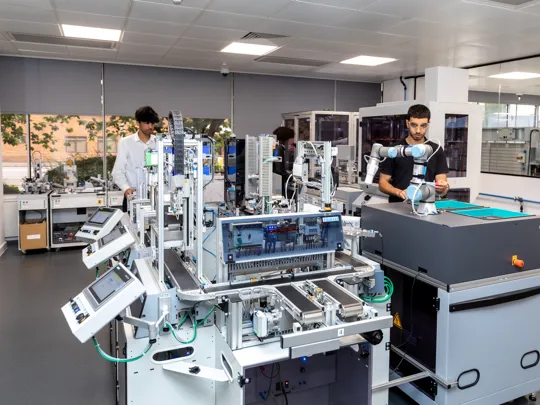
Our Electromechanical Engineering BEng (Hons) degree develops the practical skills and technical knowledge needed for modern engineering careers. You’ll study in Industry 4.0 facilities, using industry-standard software and hardware to design and maintain electromechanical systems for sectors such as automation, robotics and renewable energy.

Built around practical learning: 100% labs and seminars, no lecture theatres. 

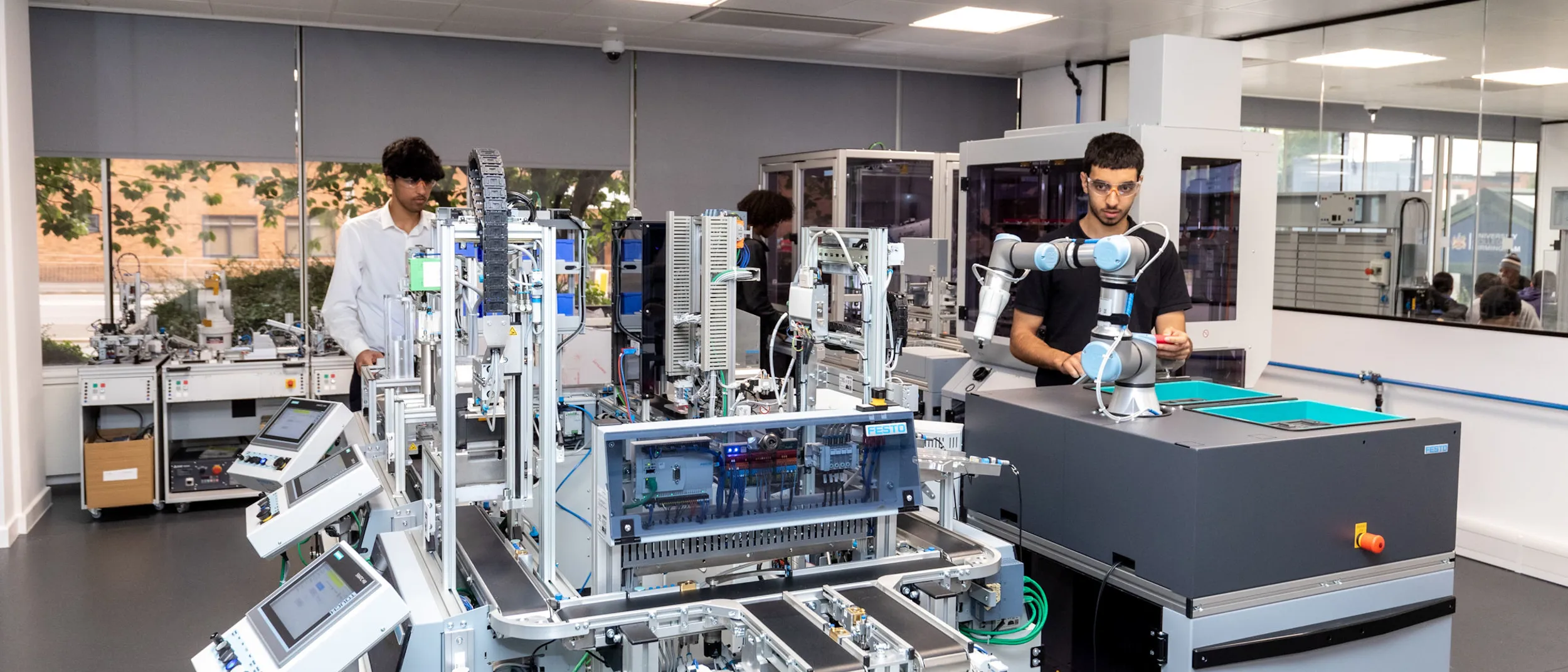
  • Hands-on Industry 4.0 experience where you work with real industrial equipment, programming robots, controllers, PLCs and advanced manufacturing rigs in our engineering facilities. 
  • Apply simulation software and practical design tools used in professional engineering to build expertise across electrical, mechanical and automation systems.

Study in Birmingham - the city of a thousand trades - with industry all around you.

  • Study at the heart of UK industry - Birmingham’s rich manufacturing heritage, once known as the “City of a Thousand Trades” for its diverse industrial output, means you will be surrounded by engineering, advanced manufacturing and innovation hubs. 
  • As Britain’s Second City, with a strong commercial and industrial economy, Birmingham offers engineering students connections to businesses, start-ups and professional networks throughout the region.

Learn using practical facilities

Industry-led teaching

UK’s second-largest city, industry-connected

Excellent engineering career opportunities

Financial support

We offer a range of financial suport for home and international students, to help you invest in your future. Explore all of our scholarships and fee waivers.

£6,000 Cost of Living Allowance

Home students

We provide all UK full-time undergraduate students starting in September 2026 with £6,000 each to support expenses like food, bills, and transport - completely free, with no need to pay it back.

Find out more

Early Action Scholarships

International students

International students applying for our BA/BSc undergraduate degrees, who meet all our deposit deadlines, can qualify for Early Action Scholarships of £4,500 or £3,500, depending on your course. More scholarships are also available.

Find out more

Kick-Start Scheme

Home students

All full-time UK students starting an undergraduate course may be eligible to receive financial support worth up to £800 in each year of study. Funds are provided as a credit which can be spent on the Kick-Start website to buy course-related materials and products to support your studies. 

Find out more
Why should I choose to study Electromechanical Engineering BEng?

  • TWO-DAY DEGREE - The timetable for this course is already confirmed as just Monday and Tuesday on campus each week in your first year, meaning you can fit your studies around your life. You can also apply for a one-night-a-week accommodation package. Find out more.
  • SHARED FIRST YEAR FOR ULTIMATE FLEXIBILITY – Explore your options before you commit. All our undergraduate engineering courses share a foundational first year. As your technical interests develop, you can seamlessly choose to specialise in the Automated Manufacturing, Electromechanical, or Mechanical pathway starting in Year 2.
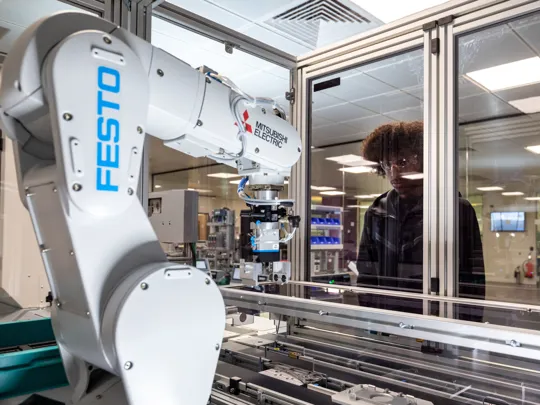
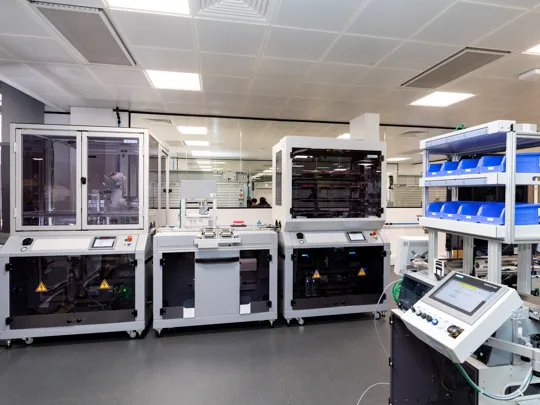
  • SMART MANUFACTURING & FESTO FACILITIES – Train for the future of Industry 4.0. You will gain hands-on experience in our cutting-edge Camden House labs, featuring a state-of-the-art Advanced Manufacturing Festo facility, alongside dedicated labs for Mechatronics, Robotics, Fluid Mechanics, and Automation.
  • THE TOOLS OF THE MODERN ENGINEER – Master the exact software and hardware driving modern smart factories, including SolidWorks, AutoCAD, ANSYS, MATLAB, Python, and industrial automated control systems.
  • CLOSE THE REGIONAL SKILLS GAP – This degree is purpose-built to tackle the critical shortage of high-level automation experts in the West Midlands. You will graduate primed for high-value, highly paid careers as an Automation Engineer, Robotics Specialist, or Process Engineer.
  • PROFESSIONAL RECOGNITION – Our curriculum is built to align with the Engineering Council’s academic requirements for Incorporated Engineer (IEng) status and partial Chartered Engineer (CEng) status, with formal accreditation being sought from the IET and IMechE.
  • OPTIONAL PAID PLACEMENT YEAR – Boost your graduate employability by taking a 48-week industrial placement year between Years 2 and 3, working on-site or in a design office.

Our facilities

Engineering students gain hands-on experience of programming robots and controllers in our state-of-the-art industrial manufacturing cell facility, plus you will use all our modern laboratories for practical work in electrical power, electronics and control, fluid mechanics, mechanical principles and materials testing. 

  • Training rigs
  • Production line technology
  • Industry 4.0 rigs
  • Process manufacturing training equipment
  • Hydraulics
  • Pneumatics
  • Renewable energy simulators
  • Control engineering rigs
  • Cyber-physical system
  • Mechatronics automation
  • PLCs
  • Fluid dynamics software
  • MATLAB design software
  • Enhanced IT facilities

GBSIoT facilities

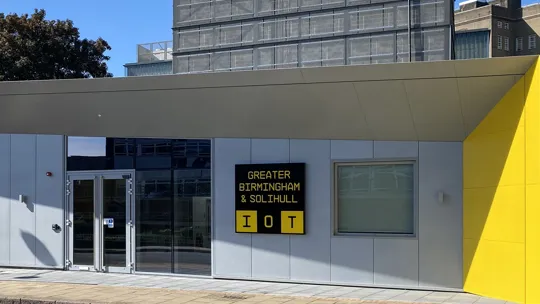
Our students gain access to the GBSIoT Hub — a state-of-the-art facility in central Birmingham, including Europe’s largest Cyber Physical Manufacturing Rig, hybrid classrooms and hot-desk spaces.

Find out more

"As technology evolves, the boundaries between the different engineering disciplines are merging. As a result, a curriculum which bridges this divide gives engineers a broad technical toolset from which to address the industrial and engineering challenges of the future.

"At a time where technology is evolving more rapidly than ever before, dual-skilled engineers are well-positioned to maximise their potential and maximise these opportunities."

Steve Jones Siemens - Connected Curriculum Lead

Course breakdown

  • Year 1
  • Year 2
  • Year 3

Core modules

Applied Engineering Mathematics

This module equips students with the core mathematical tools required across engineering practice. Through practical, engineering-focused examples, students will develop confidence in using calculus, differential equations, transforms, and statistical methods to analyse systems and interpret data encountered in modern engineering practice.

Digital Design and CAD for Engineering

This module introduces students to 3D CAD modelling, computer-aided manufacture, and engineering computation. Students will develop practical skills in creating parametric models, generating manufacturing documentation, and using software tools to support and improve design quality. The module also highlights how mechanical designs interface with electrical and control systems in real engineering environments.

Electrical and Electronics Principles

This module provides a practical introduction to circuit analysis, electronic components, digital logic, and programmable control. Through hands-on laboratory work, students will develop confidence in building and testing circuits safely while gaining essential knowledge of PLCs and control systems used widely in industry.

Engineering Science and Principles

This module provides a foundation in engineering science, covering forces and motion, energy and heat transfer, fluid behaviour, and vibration. Students will gain the knowledge needed to understand how real engineering systems behave, forming a strong base for advanced modules.

Fundamentals of Engineering Practice

In this module, students will apply engineering design methods to a practical build project while developing an understanding of health and safety, ethics, inclusivity, and sustainability. Through teamwork and reflection, students will begin to build the professional skills and behaviours expected of modern engineers.

Material and Manufacture

This module introduces students to the key engineering materials used in industry and the processes used to shape and manufacture them. Students will explore how material properties influence performance and cost, gain hands-on experience through laboratory testing, and learn how to make informed, sustainable material choices for real engineering applications.

Core modules

Control Systems Engineering

This module equips students with the knowledge and skills to model, analyse, and design control systems, including PID controllers, and to evaluate performance using simulation tools. Students will gain hands-on experience in understanding system behaviour, stability, and response characteristics, preparing them for advanced engineering applications.

Digital Manufacturing and Smart Factory Systems

This module introduces students to smart factory concepts, cyber-physical systems, and data-driven manufacturing. Students will explore how digital tools such as simulation and digital twins can be used to analyse and optimise manufacturing processes, developing practical skills aligned with Industry 4.0 and modern electromechanical engineering practice.

Engineering Management

This module equips students with the tools and techniques to plan, monitor, and control engineering projects. Students will also explore ethical, environmental, and legal responsibilities, as well as quality and operations management principles. The module provides practical insights into managing change within engineering assets and operational contexts.

Mechatronic System Design

In this module, students will design and build a working mechatronic system, integrating sensors, actuators, and controllers. Through simulation, laboratory testing, and prototyping, students will evaluate system performance and reliability while developing the practical and communication skills needed for modern electromechanical engineering roles.

Sustainable Engineering and Renewable Energy

This module introduces students to renewable energy technologies, sustainability principles, and the environmental and societal impacts of engineering solutions. Students will learn to assess system efficiencies, compare renewable integration strategies, and make informed, sustainable decisions in the design of engineering systems.

Thermo-Fluids and Energy Systems

This module introduces students to thermodynamic cycles, heat transfer, and fluid flow in engineering applications. Students will explore fluid machine design and turbomachinery, apply analytical methods to real systems, and develop practical skills through experimental work, interpreting results with attention to accuracy and uncertainty.

Optional work placement

Work Placement

You will gain valuable work experience on a 48-week work placement. This is an exciting opportunity to put what you have learned into practice, broaden your experience and demonstrate your abilities to potential employers.

Core modules

Advanced Engineering Simulation

This module equips students with the knowledge and skills to apply FEA and CFD techniques to real-world engineering problems. Students will develop confidence in building, validating, and interpreting complex simulation models, while critically assessing their accuracy, limitations, and role in professional engineering practice.

Advanced Smart Manufacturing and Industry 4.0

This module equips students with the skills required to engineer the next generation of intelligent manufacturing systems. Students explore Industry 4.0 concepts including cyber-physical systems, Industrial Internet of Things (IIoT), digital manufacturing, and data analytics. Through applied design and analysis, learners will integrate automation, connectivity, and manufacturing data to enhance productivity, reliability, and sustainability while addressing cybersecurity and scalability challenges in modern industrial environments.

Embedded and Intelligent Systems

This module explores the technologies that underpin modern intelligent products and automated systems. Students will design and implement embedded systems that integrate sensors, actuators, communication interfaces, and control algorithms. Emphasis is placed on real-time performance, industrial reliability, cybersecurity considerations, and validation through rigorous testing. The module prepares graduates for careers in embedded software, industrial automation, robotics, and smart systems engineering.

Independent Major Project

The Independent Major Project is the culmination of the degree programme and provides students with the opportunity to investigate and solve a significant engineering problem of their choosing. Working independently with academic supervision, students will plan and deliver a major project, applying advanced technical skills while considering ethical, sustainability, and professional requirements. The project develops the autonomy, critical thinking, and communication skills expected of graduate engineers.

Industrial Robotic Systems

This module enables students to design, implement, and optimise industrial robotic systems using industry-relevant tools and standards. Students will work with digital twins, safety frameworks, and performance metrics to evaluate and improve robotic workcells, preparing them for professional roles in robotics and automation engineering.

The modules listed above for this course are regularly reviewed to ensure they are up to date and informed by industry as well as the latest teaching methods. On occasion, we may need to make unexpected changes to modules – if this occurs, we will contact all offer holders as soon as possible.

Entry requirements 

Entry requirements

88 UCAS points – 

A-levels: CCD (Engineering, Physics, Maths ideally, but not mandatory),

BTEC: MMM (Including Further Maths unit),

T-level: Pass (core component grade C).

GCSE/IGCSE: Maths (9–4/A*–C) or Functional Skills Level 2.

Other Level 3 qualifications are also welcome.

EU/International Students

For entry requirements for EU and international students, please visit the Country Specific Information page.

Still interested in starting this September?

You may still be able to apply for this course before 30 June. After this date, applications usually go through Clearing.

Check how to apply

Key information

Teaching and assessment

Teaching

A wide variety of teaching methods will be used to ensure you gain the appropriate skills and knowledge, including lectures, practical sessions, workshops, tutorials and group study sessions. Face-to-face classes will be combined with practical research activities in our state-of-the-art engineering facilities, while you will also conduct independent and online learning.

Assessment

Assessment occurs through a combination of assignments, projects and tests/exams, with a focus on the holistic development of practical, interpersonal and higher-level skills. Many modules will require a practical demonstration of skills, while others will require you to carry out your own research and analysis, working independently or as part of a team. Our assessments will focus on developing the skills required by a professional engineer – designing and demonstrating a product, delivering presentations and technical report-writing, aimed at technical and non-technical audiences to broaden your range of skills.

You will also need to commit around 20 hours per week for individual study time.

Estimated breakdown of assessment for this course:

  • Coursework - 40%
  • Practical assessment - 35%
  • Written examination - 25%

Our teaching and assessment is underpinned by our Learning and Teaching Strategy 2025-2030.

Additional qualifications and training

It is recommended that students on this course join the Institute of Engineering and Technology (IET) as student members, offering benefits including workshops, short courses and webinars as well as alignment with professional expectations. The IET Birmingham base is also located just a short walk from our campus buildings.

Student membership of the IET costs approximately £20 per year – for more details, visit the IET website.

Timetable

This course is two, consecutive days on campus each week, meaning you can fit your studies in around your life. For September 2026 starters, your on-campus days in your first year will be Monday and Tuesday. There will be a minimum 20 hours of independent study around this each week. Find out more

Uniform and kit costs

This course requires equipment (e.g. safety boots, overalls) costing approximately £50, depending on the items you purchase. (Prices are subject to change each year – you will not require any specialist equipment at the start of the course and exact costs and information on how to order required items will be provided to you after enrolment.)

Tuition fees for home students

If you are a home student enrolling on an Electromechanical Engineering BEng course at University College Birmingham, the 2024/2025 academic year tuition fee for full-time study is £9,250. In 2025/2026, the full-time fee will be £9,535 per year.

Electromechanical Engineering BEng is a 4.5-year programme when studied part-time. The tuition fee for a full year of part-time study (years 1-4) is £6,165, and for half a year (year 5), the fee is £3,090.

Part-time study tuition fees over 4.5 years:

Year 1: £6,165
Year 2: £6,165
Year 3: £6,165
Year 4: £6,165
Year 5 (half year): £3,090

View tuition fees for home students

Tuition fees for international students

If you are an international student (or have been fee assessed as an international fee payer) and are enrolling on a full-time [Band 3] bachelor's degree course in 2026/2027, the fee for the academic year will be £19,750. If you complete a placement year, there will be an administration fee of £500 for a full year or £250 for a half-year placement.

View fees for international students

Financial support for home students

£6,000 Cost of Living Allowance

If you are a full-time undergraduate student starting your course in September 2026, with home fee status and plan to pay your fees using a student loan, you’ll be eligible for a £6,000* Cost of Living Allowance.

Further information and terms and conditions can be found here: £6,000 Cost of Living Allowance.

*If you are studying a two-year accelerated degree or foundation degree, you will receive £5,000 over the duration of your course. If you decide you'd like to top up to a full BA or BSc (Hons) at the end of your foundation degree, you will also be entitled to the £1,000 in the third year.

Kick-Start Scheme funds (worth up to £800 per year)

As a new student studying this course full-time, you will receive £300 per year through our Kick-Start Scheme (UK students only, eligibility criteria applies). This scheme will support your studies and future career by contributing to course-related materials, uniform or selected items on campus. You may also qualify for an additional £500 per year. Find out more about the Kick-Start Scheme.

Scholarships

Available to eligible Home and EU students, our scholarships are designed to support students who demonstrate excellence in academic and sporting achievements, as well as to help students from economic and social hardship.

Financial support for international students

Scholarships

We offer a range of scholarships and fee waivers for international students. Students must have overseas international status and have received an offer to study on a full-time course at University College Birmingham in the current/upcoming academic year. 


Career opportunities

The example roles and salaries below are intended as a guide only.

Mechanical engineer

Average Salary: £32,000

Project engineer

Average salary: £38,000 - £45,000

Process design engineer

Average Salary: £43,000

Process manufacturing engineer

Average Salary: £35,000

Electrical/electronics engineer

Average Salary: £32,000

Product designer

Average Salary: £45,000

Want to take your studies to the next level? Completing the BEng (Hons) degree will enable you to move onto our postgraduate courses such as our Engineering Management MSc/PGDip

HIRED

We are here to support your career goals every step of the way. 


Find out more

An engineering male student stood in front of a British Airways plane

Easmay's Story

Electromechanical Engineering at University College Birmingham gave Easmay the chance to turn passion into practical experience. From learning in specialist facilities that reflect real industry to receiving support from approachable lecturers, he is building his skills and confidence. Memorable experiences included a visit to British Airways for Engineering Day, where classroom theory came to life in an aviation setting, and a trip to the GBSIoT, offering access to cutting-edge equipment and expert insight. These opportunities, alongside friendships and academic support, helped shape his ambition and prepare Easmay for a future career in engineering.

Read Story

Course statistics

BEng (Hons)

Take the next step...


Back to top