
MASTER OF BUSINESS ADMINISTRATION (MBA)
MBA / PGDip / PGCert
Accredited by University College Birmingham
- University
- Postgraduate
- Courses
- Master of Business Administration (MBA)
Over 1 in 3 MBA graduates move into consulting or finance roles, making them the two most popular and reliable post‑MBA career routes at top business schools
Nearly 1 in 5 MBA graduates now work in technology, with global employers such as Amazon and Microsoft actively recruiting MBA talent for digital, data and leadership roles.
This MBA is designed for graduates who want to build the confidence, skills and strategic thinking needed to progress more quickly into business and management roles - whether you are stepping up from a traditional academic degree or returning to study to strengthen your professional capability.
What makes this MBA stand out is that you will also gain an accreditation with the Institute of Sustainability and Environmental Professionals (ISEP). No other MBA in the UK currently has a dual accreditation in sustainability. You will also gain a Level 7 Diploma in Strategic Leadership Practices with the Chartered Management Institute (CMI).
At its core, this course focuses on strategic development, engaging students in the exploration of contemporary business theory and practice across UK and international contexts. While academically rigorous, the MBA is strongly applied, helping you to translate theoretical understanding into practical decision‑making, leadership and problem‑solving skills valued by employers.
UK employers consistently report shortages in management, leadership, digital and strategic skills, with over 120,000 additional managers needed by 2030 and widespread skills gaps holding back organisational growth.
Throughout the programme, you will develop high‑level graduate attributes linked to business leadership, management and strategic change, enabling you to tackle complex organisational challenges with confidence. The MBA is particularly well suited to those who want to move into business or management roles but may not yet feel 'career‑ready' as the programme provides structured support to build both competence and confidence.
Why should I choose a Masters of Business Administration (MBA)?
- TWO-DAY DEGREE - The timetable for this course is already confirmed as just Tuesday and Wednesday (10am-3.30pm) on campus each week, meaning you can fit your studies around your life. You can also apply for a one-night-a-week accommodation package.
- SUSTAINABILITY‑FOCUSED LEARNING – One of the first MBA programmes in the UK to offer ISEP (Institute of Sustainability and Environmental Professionals) dual accreditation, giving graduates enhanced international recognition and credibility.
- GUEST SPEAKER INSIGHT - Guest speaker sessions are planned as part of the programme, offering students exposure to current industry thinking and practical perspectives, with details to be confirmed.
- RESIDENTIAL LEARNING EXPERIENCE - A UK‑based residential trip is included within the MBA, designed to support collaborative learning, strategic discussion and professional networking.
- CAREER PROGRESSION - This MBA supports graduates who want to move into business or management by developing practical skills that enable faster progression and long‑term career growth.
- PROFESSIONAL RECOGNITION - Through the MBA, students can apply for Foundation Chartered Manager (CMI) status, supporting early career development and signalling management readiness and commitment to professional standards.
Business School
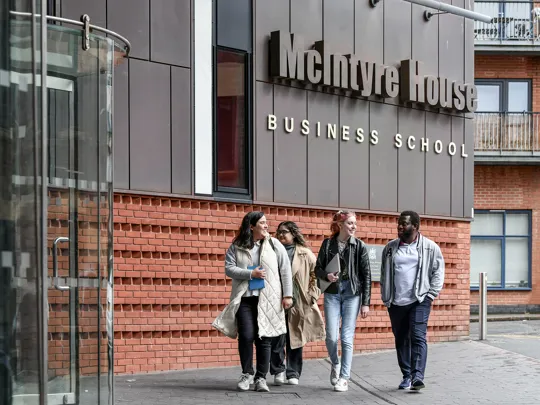
The Business School at University College Birmingham offers a whole suite of undergraduate and postgraduate degrees, all taught in our award-winning facilities. Our lecturers come from industry themselves, and because of our smaller size, we are able to give you a more personalised experience, complete with graduate advantage, employability and enrichment sessions throughout the curriculum.
With plenty of placement and networking opportunities, our Business School courses are accredited by leading industry associations including the Chartered Management Institute (CMI), Business Graduates Association and the Digital Marketing Institute, and sit within our Department of Business and Enterprise, Department of Hospitality and Tourism and Department of Creative Industries.
Course breakdown
- Year 1
Core Modules
Global Business Dynamics
Global Business Dynamics gives you a broad understanding of contemporary issues in Business at the company, regional, national and international levels. You will learn about the global business environment and the theories and practices that help us manage in a volatile, uncertain, complex and ambiguous, ever-changing world. Working in mutually supportive learning teams, you will tackle realistic case studies that give you new perspectives on business change. Guest speakers will provide their own insights into both leadership challenges and personal development. During an international trip, you will experience firsthand a dynamic economy to help you analyse global challenges and opportunities that they face.
Strategic Market Creation and Innovation
Marketing is a fast-paced and constantly changing industry requiring flexible, agile practitioners to respond quickly and decisively to changing consumer behaviours, market trends and global shocks. The module aims to provide you with the practical skillset and specialist knowledge to accelerate your development in becoming a future leader who can innovate and implement strategic marketing plans to achieve sustainable growth.
Cultivating Leadership Excellence
Effective strategic leadership is a catalyst for organisational high performance and success. The survival and growth of small, medium and large organisations is highly dependent on effective strategic leadership; and leaders need to be knowledgeable, creative, agile and resilient to respond to a wide range of challenges. The aim of this module is to enhance knowledge and understanding of leading forto high performance across organisational contexts and cultures. Leaders will explore the complexities of the role and the theoretical perspectives, approaches, behaviours and skills which can enhance their professional practice to achieve sustainable strategic goals.
Financial Decision-Making for Managers
Effective leaders need solid financial skills to make big decisions effectively. Finance plays a huge role in how well organisations perform, and with technology evolving fast, it's even more important for leaders to manage finances wisely. This module works with individuals to enhance skills in finance, accounting, and technology, helping them understand how to manage a company's financial performance. By blending these skills, leaders can steer their organisations to success, surpassing goals with confidence. This module supports effective leaders in understanding the main finance functions and practices of managing financial performance of contemporary organisations. There are three essential elements embedded including finance, accounting, and technology. The implementation of technology, either for organisational or finance specific use, allows leaders to explore project accounting, governance, ethics and emerging technological factors, for organisational success.
Sustainable Operations and Responsible Enterprise
This module seeks to explore the issues which effect the ethically responsible, economic, and sustainable operations management, in a global business environment. The module will expose you to the global challenges which drive change, with an emphasis of equipping students with essential research informed strategic decision-making skills, which is underpinned by evaluation of how operations management affect the economy, society, and the environment.
Digital Transformation and Business Innovation
Every aspect of modern life encounters technological innovation, and over time business and industry has experienced revolutions because of technological advancement. You will gain knowledge of the latest transformative technology applications such as AI, VR, Gamification and Big Data used across B2C and B2B distribution channels. Through application of technology roadmaps, you will develop skills in planning operational and strategic transformation through technology, as well as knowledge of the risks and challenges.
Consultancy Project GMBA
The MBA Consultancy project is the culmination of your learning throughout the MBA programme. Working within either an organisation provided by the university or another of your choice, but supported by the university, you will conduct research on an issue, or opportunity, of strategic importance. While academic research rigour will be critical, even more important will be your ability to combine intensive research with creative insights and your own business acumen to propose actionable recommendations for change. You will have both an academic supervisor and a mentor from the client organisation who will each provide guidance and support. But the emphasis is on you taking individual responsibility for persuading your client of the way to deliver strategic change to their organisation – using your proven ability as a business professional to make a real difference to your client.
The modules listed above for this course are regularly reviewed to ensure they are up to date and informed by industry as well as the latest teaching methods. On occasion, we may need to make unexpected changes to modules – if this occurs, we will contact all offer holders as soon as possible.
Entry requirements
Academic
Students will need to demonstrate the ability to meet the requirements of postgraduate study, either through previous undergraduate achievement (achieving a minimum 2:2) and/or professional qualifications or substantial management experience.
Interview – all applicants are required to attend an interview (either online or in-person on campus) prior to any offer. This process is to ensure we can fully support your study needs, to ensure you are comfortable with the requirements of a MBA and to discuss next steps (as appropriate).
International students
For academic and English entry requirements for EU and international students, please visit the Country Specific Information page.
English language entry requirement 6.5 with nothing below 6.0 and 6.5 in speaking, due to participation activities and level of communication with industry professionals.
Interview – all applicants are required to attend an interview (either online or in-person on campus) prior to any offer. This process is to ensure we can fully support your study needs, to ensure you are comfortable with the requirements of a MBA and to discuss next steps (as appropriate).
Key information
Teaching and assessment
Teaching on the MBA is a combination of face-to-face sessions (2 consecutive days per week) at our city centre campus and independent work.
Module delivery will centre on a case-based approach, where you will be able to explore demanding and challenging cases within the classroom with colleagues from a range of backgrounds and experiences.
The in-person campus sessions will maximise the time you have to hone your skills, learn from others and make critical connections between taught theory and industry practice.
Lecturers will take your existing knowledge, support you to enhance this, maximising your understanding and drive you forward in your career. Additionally, you will hear from a wide range of guest speakers who are specialists in their field, with opportunities to network with both them and your peers to benefit your own professional network.
Online/independent sessions will include recorded lectures, discussion boards, video, wider reading, etc. all of which can fit around your own commitments, but still allow you to come to the campus session prepared to apply new skills and knowledge.
Assessments vary, but all are designed to be relevant to you and your future working environment, enhancing the work you may already do and harnessing existing experience through master's level study.
This may include presentations, business simulations, applied research with an international organisation and a final consultancy project to address the change/challenge of a real-life organisation.
Our teaching and assessment is underpinned by our Learning and Teaching Strategy 2025-2030.
Timetable
This course is two, consecutive days on campus each week, meaning you can fit your studies in around your life. For September 2026 starters, your on-campus days will be Tuesday and Wednesday (10am-3.30pm). Find out more
Tuition fees for UK and international students
UK students
Tuition fees are £11,000 for home (UK) students.
International students
Tuition fees are £17,000 for international students.
For courses starting in 2026/27, University College Birmingham students who have achieved a first class Honours undergraduate degree with us will receive a 25% discount on their postgraduate fees. All other progressing students will receive a 20% discount.
This applies to all University College Birmingham alumni. No application is necessary. We will apply the discount at enrolment.

An MBA offers higher income potential, advanced business knowledge, and strong networking opportunities with professionals. It enhances communication, leadership, current trends, and sustainability skills while boosting confidence. Graduates gain entrepreneurial insights, career flexibility, and recognition, increasing job prospects and long-term career growth in leadership roles.
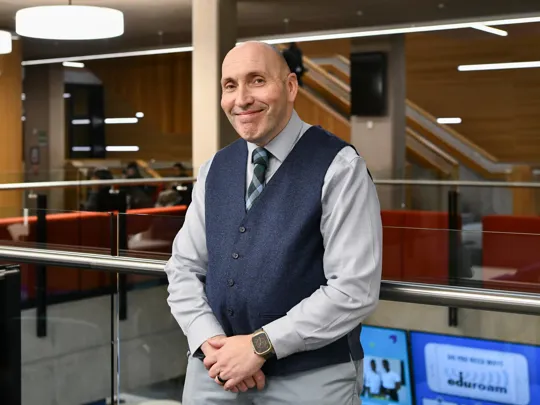
Bruce Morrison MBA Director
Career opportunities
This MBA is designed for people at any stage of their career, including those with no prior business background or those looking to change direction. It opens up opportunities to progress into more senior roles across a wide range of sectors.Some examples of these are below.
Financial analyst
Average Salary: £47,000
Project manager
Average salary: £45,000 to £65,000+
Business systems analyst
Average Salary: £48,000
Management consultant
Average Salary: £50,000
Operations management/supply chain manager
Average Salary: £45,000
Digital product manager/business development
Average Salary: £46,000
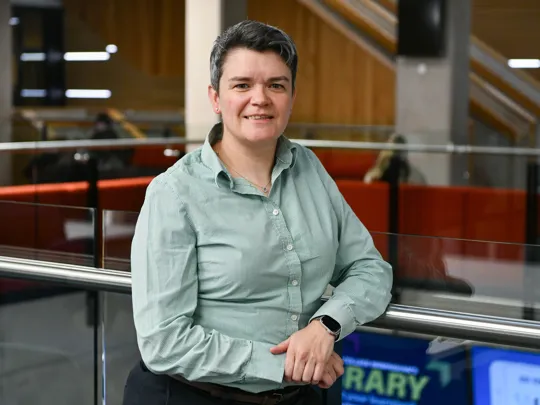
Professor Elaine Limond's story
Completing my own MBA was pivotal in my development as a senior leader, building my strategic leadership credentials and deepening my understanding across a wide range of corporate fields. I would not have had the same career opportunities without having the knowledge and skills gained by studying an MBA.

Meet your lecturers
Other courses you may like
Enterprise Management MSc / PGDip
Our Enterprise Management postgraduate course will equip you with the business knowledge and experience to advance in management positions within the enterprise service sector, with opportunities to engage with entrepreneurs.
Marketing Management for Events, Hospitality and Tourism MA / PGDip
This postgraduate course enables you to develop the specialist skills and knowledge to start a marketing career within the events, hospitality and tourism sectors. You will work alongside entrepreneurs on live projects.