May 2026
New criminology courses prepare students for a changing justice landscape

By Claire Huggins
Share post:Read time: approx 5 mins

Scott Banks
With over a decade of experience in the police service, Scott has an intrinsic understanding of the ethical, practical and analytical skills demanded by employers; all four courses have victim-focused perspectives, real-life scenarios and professional skills embedded in every module.
“The reality is that the landscape and the nature of the justice system in this country are changing rapidly,” explains Scott.
“The courses we offer address these changes by equipping students with the skills they need, for example, critical thinking, problem solving, communication and leadership. All highly transferable and desirable skills developed against a backdrop of real-world scenarios.”
In a deliberate move away from the traditional academic course structure, Scott has drawn on his experience of the system and the people within it to create an integrative curriculum, that aims to meet the expectations and needs of a wide range of criminal justice services and stakeholders.
Check out our latest news stories

University College Birmingham renews £6,000 Cost of Living Allowance for 2027
The University renews its committment to student support.
Read more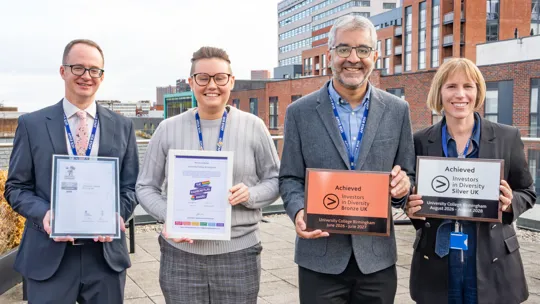
University College Birmingham strengthens its commitment to inclusion
National equality, diversity and inclusion accolades reflect our ongoing work to embed inclusion into university life.
Read more
University expands hospitality training with Beyond and Brocks
Investment programme set to transform the student experience and strengthen Birmingham's hospitality sector.
Read more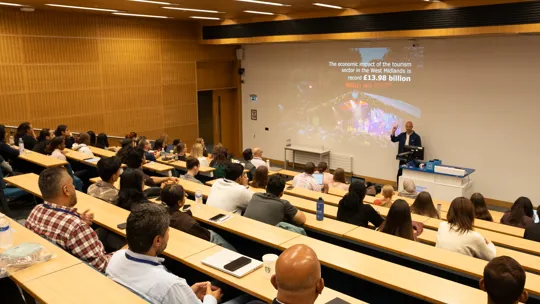
Hospitality and tourism conference inspires students to step up to Invictus Games
University College Birmingham students got a glimpse of how they could be part of one of the world's most ins…
Read more
University's first social work apprentices begin their studies
Developing the next generation of social workers and creating a learning community where apprentices feel that they belong.
Read more
University College Birmingham earns Armed Forces Covenant Silver Award
The University continues to strengthen its engagement with the Armed Forces sector.
Read more