April 2026
Blog | A psychology department with a difference
By Helen McEwan
Share post:Read time: approx 6 mins
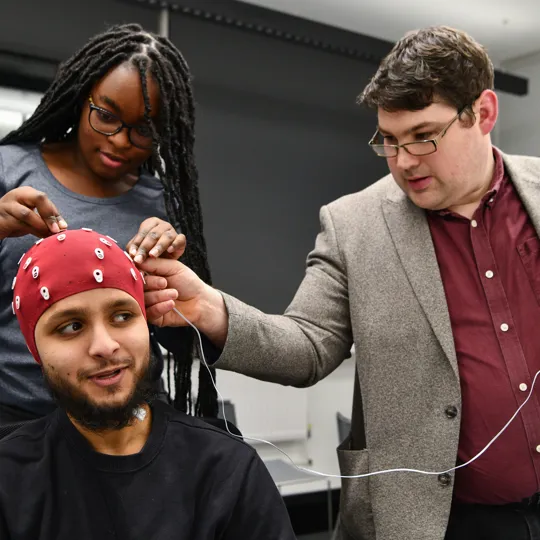
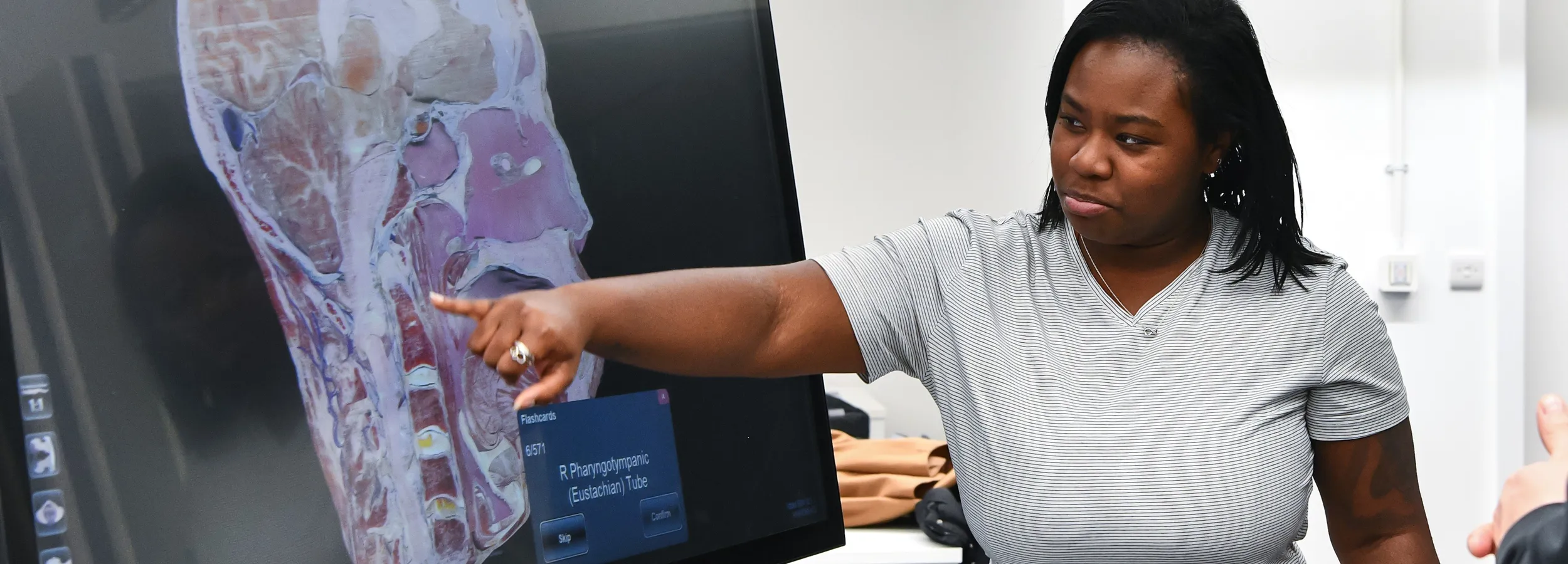
The diversity of our research interests is reflected in the range of degrees offered across the department. In addition to Psychology BSc (Hons), students can choose to study Psychology with Sport and Exercise BSc (Hons), Psychology with Education BSc (Hons), or Psychology with Health BSc (Hons).
We also offer these programmes as 4-year degrees with a Foundation Year, helping to widen participation and access to a broader range of students, alongside a Psychology (Conversion) MSc, for those who have already completed a degree in a different subject but are interested in switching to further study and careers in Psychology.
Our Psychology BSc and Psychology MSc (Conversion) degrees are fully accredited by the British Psychological Society (BPS), a mark of quality and recognition that is essential for those considering a professional career in psychology. This accreditation provides students with the Graduate Basis for Chartered Membership (GBC) with the BPS, opening doors to further study and professional pathways, including becoming a Chartered Psychologist.

"The benefits of our courses extend well beyond the route to becoming a psychologist.
"The knowledge, skills, and critical thinking acquired are highly valued in a wide range of fields, meaning graduates are well-equipped to apply psychological understanding to many aspects of professional and personal life, regardless of their chosen career."

Whether students wish to follow a career as a psychologist or simply want to enhance their understanding of human behaviour, our practical courses empower them to use psychological knowledge in everyday life. They learn to think critically, understand themselves and others, and make informed decisions across a variety of careers and contexts.
As the University has recently invested more than £300 million across our campus, all course areas have access to state-of-the-art facilities, making our integrated approach much easier, but we’re also able to call upon the experience and expertise of dedicated academic teams of lecturers from across those distinct departments, giving students a solid foundation across their chosen subject areas.
Check out our latest news stories

Preparing students for complexity, not certainty
Rethinking what teaching and learning looks like in education, health and social care.
Read more
University College Birmingham renews £6,000 Cost of Living Allowance for 2027
The University renews its committment to student support.
Read more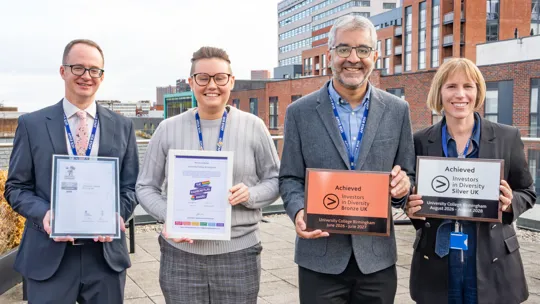
University College Birmingham strengthens its commitment to inclusion
National equality, diversity and inclusion accolades reflect our ongoing work to embed inclusion into university life.
Read more
University expands hospitality training with Beyond and Brocks
Investment programme set to transform the student experience and strengthen Birmingham's hospitality sector.
Read more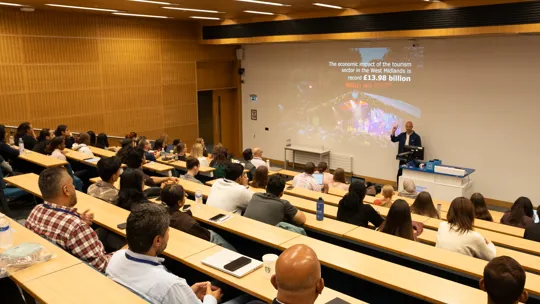
Hospitality and tourism conference inspires students to step up to Invictus Games
University College Birmingham students got a glimpse of how they could be part of one of the world's most ins…
Read more
University's first social work apprentices begin their studies
Developing the next generation of social workers and creating a learning community where apprentices feel that they belong.
Read more