Recent searches
You do not have any recent searches.

SPORTS THERAPY WITH FOUNDATION YEAR

BSc (Hons) / FdSc

Award

BSc (Hons)

Duration

4 years full-time

UCAS Code

C600

Placement

Opportunities available

Entry

September

Fees

View fees

Department of Sports
Discover more at our next open day

Saturday 27 June 2026

Join an open day

£44m invested in flagship facilities, including sport, to support your future career opportunities

Sports therapy careers span professional sport, private clinics, the NHS, and community health settings, offering diverse and flexible jobs and employment opportunities

Our Sports Therapy BSc (Hons) with foundation year is built for those with ambition, drive, and potential. The course widens access to those who may not meet traditional entry requirements or are returning to study.

The foundation year strengthens your knowledge of anatomy, physiology, and core professional and academic skills, giving you the support and confidence to enter degree-level study and future clinical practice.

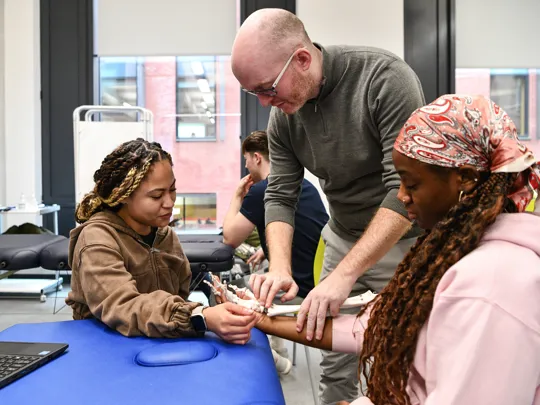
As you progress, you’ll develop hands-on expertise in injury assessment, treatment, and rehabilitation, learning how to guide individuals safely back to full performance. Practical experience is central, with access to specialist facilities including sports injury clinics and human performance labs, alongside opportunities to gain industry-recognised qualifications such as sports massage and first aid.

Graduating with a full BSc (Hons), you’ll also be eligible to join The Society of Sports Therapists. Whether your goal is to work in elite sport, clinical rehabilitation, or community wellbeing, this degree is designed to help you turn potential into a professional future that makes a real difference.

Financial support

We offer a range of financial suport for home and international students, to help you invest in your future. Explore all of our scholarships and fee waivers.

£6,000 Cost of Living Allowance

Home students

We provide all UK full-time undergraduate students starting in September 2026 with £6,000 each to support expenses like food, bills, and transport - completely free, with no need to pay it back.

Find out more

Early Action Scholarships

International students

International students applying for our BA/BSc undergraduate degrees, who meet all our deposit deadlines, can qualify for Early Action Scholarships of £4,500 or £3,500, depending on your course. More scholarships are also available.

Find out more

Kick-Start Scheme

Home students

All full-time UK students starting an undergraduate course may be eligible to receive financial support worth up to £800 in each year of study. Funds are provided as a credit which can be spent on the UCB Aspire website to buy course-related materials and products to support your studies. 

Find out more

Why should I choose Sports Therapy BSc (Hons) / FdSc?

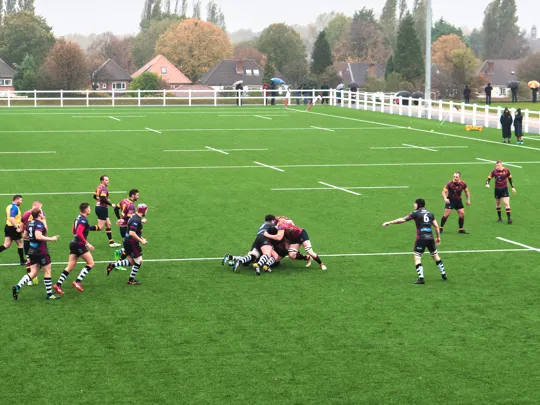
  • WORK PLACEMENTS – Build invaluable professional work experience through a variety of placement opportunities during your sports therapy course – past students have worked with top-level football and rugby clubs and national sports teams
  • PRACTICAL APPLICATION – Put your therapy skills into practice in our on-campus clinics and at major sporting events, such as the London Marathon and Ride Across Britain
  • ENRICHMENT – Enjoy a variety of industry trips including St George’s Park and King’s College London/Wembley Stadium, as well as our annual Sports Performance and Rehabilitation Conference
  • SPECIALISE YOUR STUDIES – Undertake your own research project on a subject of your choice using state-of-the-art equipment in our clinics and Human Performance Centre.
  • TOP LEVELS OF STUDENT SATISFACTION – More than 90% of students answered positively on questions relating to quality of teaching, support and development, representing a 2.5% increase on last year (National Student Survey 2025)

Our facilities

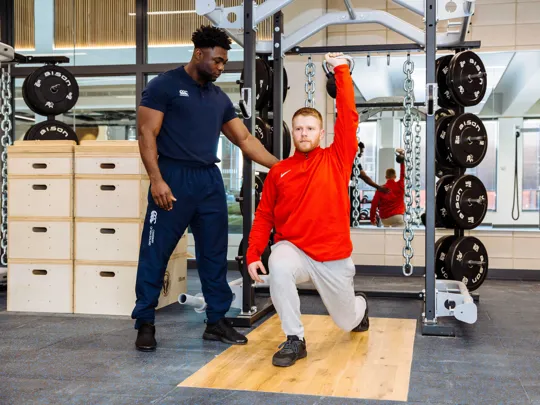
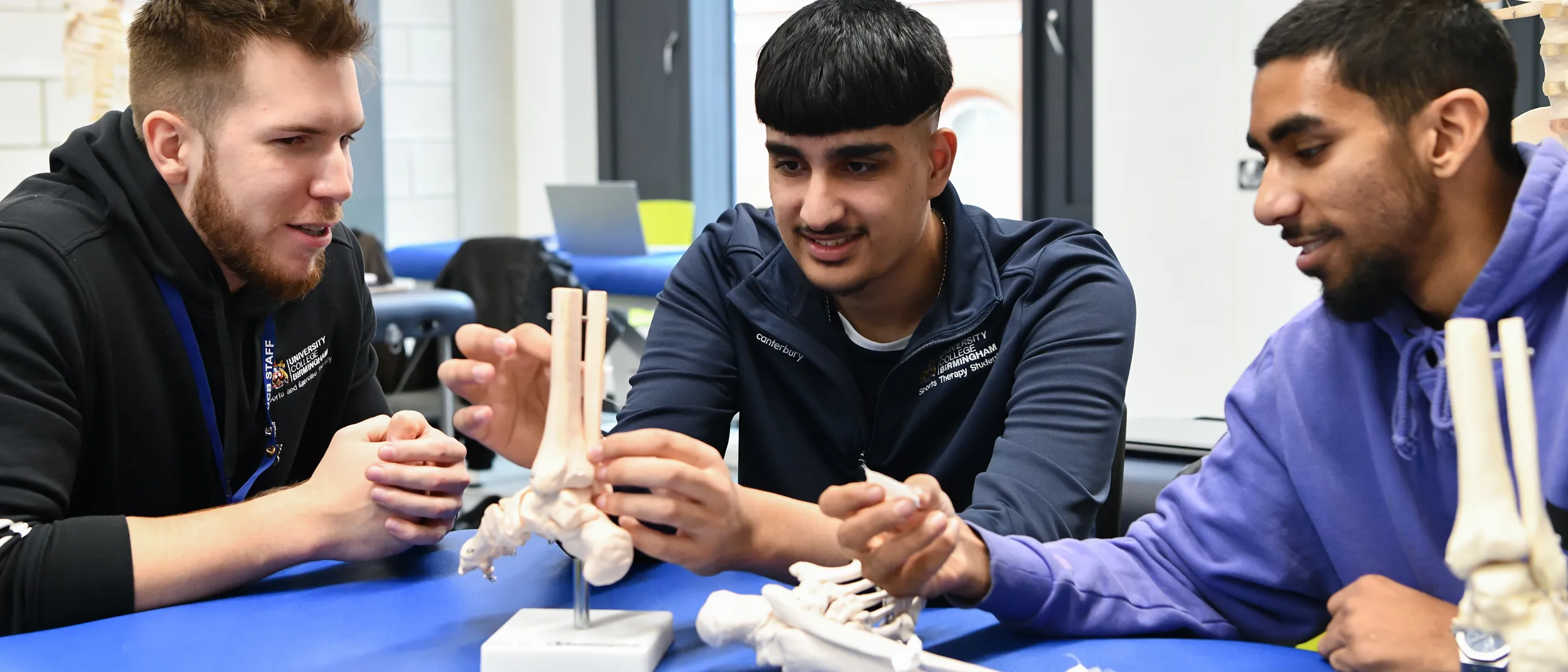
Students on our sports therapy university courses have access to outstanding training facilities at University College Birmingham, with two purpose-built sports injury/massage clinics on campus where you can hone your practical skills. We also have a variety of other state-of-the-art sports facilities, including our gym, Human Performance Centre and clinics.

Human Performance Centre 3D tour

Course breakdown

Students on the FdSc have the option of progressing onto the final year upon completion of the foundation degree.

  • Foundation Year
  • Year 1
  • Year 2
  • Year 4

Core modules

Academic and Study Skills For Professional Practice

This module is designed to support students in developing the academic and study skills necessary for success in professional practice-related degrees. Focusing on bridging the gap between foundational knowledge and degree-level study, it provides comprehensive support in key areas such as academic English, scientific writing, numeracy, and critical thinking. Students will build confidence in public speaking and self-advocacy while developing essential strategies to overcome systemic barriers in education. This module emphasizes the importance of academic integrity and equips students with the skills to effectively engage with professional data, research, and real-world problem-solving. Building resilience and the ability to reflect on challenges is a key component of this module, enabling students to navigate setbacks and continue to grow throughout their academic journey.

Applied Science and Human Biology

This module introduces you to the essential scientific principles underpinning human health, wellbeing and professional practice. Through an inclusive and applied approach, learners will explore the structure and function of the human body, common disease / illness processes, and the scientific foundations relevant to health and wellbeing. You’ll gain a practical understanding of anatomy and physiology, pathology, and the basic sciences that influence health and wellbeing. The module also highlights conditions that disproportionately affect certain cultural groups—supporting your awareness of population health and culturally responsive care. Whether you’re new to science or returning to study, this module is designed to build your confidence, scientific literacy, and readiness for degree-level health and wellbeing and professional education.

Contemporary Professional Practice

This module introduces students to the diverse and dynamic world professional practice, with a strong focus on inclusivity, equity, and effective communication. This module will give you the knowledge, confidence, and practical tools to succeed in a professional context and environments. You’ll explore what it means to be a professional—learning about key roles and responsibilities, ethical and legal frameworks, and the importance of working independently and within multi-professional teams. Throughout the module, we’ll shine a spotlight on diverse role models and underrepresented voices in areas of professional practice, helping you see where you fit and how you can make an impact.

Sport in action: Bodies, Lifestyle and Participation

Sport in Action: Bodies, Lifestyles and Participation is your starting point for understanding what sport and exercise really means in the real world. You’ll explore how the body moves, why people take part in physical activity, and how everyday life shapes health and wellbeing. Through practical sessions and real-life scenarios, you’ll discover how sport is experienced differently by different people—and how professionals support participation at all levels. This module is designed to build your confidence, develop your understanding, and help you find your place within sport, whether your interests lie in science, therapy, strength and conditioning, or health and wellbeing.

Core modules

Exercise Instruction for Sports Therapists

The module will prepare students to work as informed and knowledgeable exercise practitioners as a sports therapist. Students will acquire the relevant skills needed to perform satisfactory and safe health screening to an individual before exercise participation. Students will gain the relevant skills needed to provide safe, effective exercise programming and prescription to a client in the context of sports therapy.

Exercise Science for Sports Therapists

Students will develop an understanding of the key sports and exercise science principles relating to sports therapy. This will include areas such as applied biomechanics, bioenergetics and exercise physiology.

Fundamentals of Movement Assessment

The module will develop learners' understanding of functional musculoskeletal anatomy and ability to perform joint movement assessment skills.

Introduction to Sports Injury Management

The module will introduce learners to the events which may result from sports injury and the treatment options available and how to safely and effectively implement them.

Musculoskeletal Anatomy

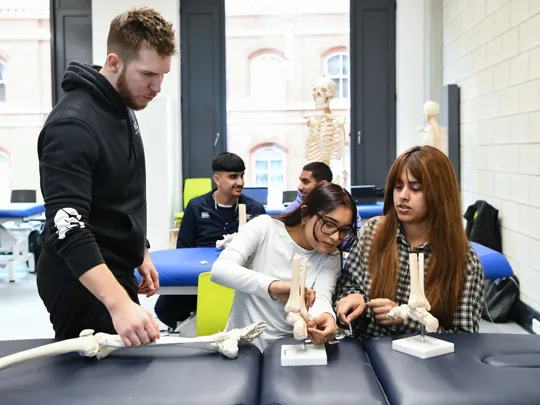
You will be introduced to basic anatomical structures of the body including bones, joints, muscles, tendons and ligaments as well as other tissues related to the musculoskeletal system. You will explore the basic functions of regional anatomy within a sporting context to understand its relevance within the industry.

Personal Development and Evidence Based Practice

This module will aim to give the learner an understanding of what attributes are needed to be a university sports therapy student. The module will also aim to facilitate the transition of learners from FE to HE via a structured delivery of academic study skills related specifically to their Sports Therapy programme.

Pathology of Sports Injuries

Pathology of Sports Injuries

This module aims to evaluate the predisposing factors for musculoskeletal injury, coupled with the common aetiology and presenting signs and symptoms. An appreciation of processes related to injury such as soft tissue healing and pain will also be considered in relation to regional musculoskeletal complaints.

Peripheral and Spinal Assessment

This module further develops key musculoskeletal assessment and examination skills in conjunction with basic clinical reasoning to provide you with the skills required to be able to carry out more detailed musculoskeletal assessments.

Research for Sports Therapists

The process of data collection and analysis will allow you to develop research techniques specific to a sports therapist. You will critique and analyse current research and scientific methods to develop your critical thinking abilities and key research skills.

Screening and Intervention for Injury Prevention

The module aims to explore the role of the Sports Therapist in identifying and reducing injury risk. Using a data collection project, students will recognise and apply methodological approaches to identify the epidemiology (distribution and determinants) of injury. Students will appraise injury prevention methods and from an analysis of the collected data, design and implement suitable methods to reduce the risk of injury.

Sport and Exercise Rehabilitation

This module introduces exercise rehabilitation in the management of sports injuries. It aims to provide students with an insight into exercise management, planning and prescription in a rehabilitation context.

Sport and Exercise Rehabilitation

This module further develops exercise rehabilitation in the management of sports injuries. It aims to provide students with the ability to return an athlete to sport following injury and enhance sporting performance.

Year 3

Exercise as Medicine

This module explores how exercise can be used as a powerful tool to prevent, manage and improve long-term health conditions. You’ll learn how physical activity influences systems of the body, how to screen and assess clients safely, and how to design evidence-based exercise programmes for different clinical and community populations. This module prepares you for roles in exercise referral, health promotion and applied sport and exercise science practice.

Multidisciplinary Practices in Sport

A common employment destination for Graduate Sports Therapists is sports teams. The focus of this module is to develop knowledge and understanding of how a Graduate Sports Therapist would operate in a sports team environment.

Professional Clinical Practice

This module will allow the development of the clinical skills required of a sports therapist via exposure of working in a supervised sports injury clinic. In support of the practical component, lectures and seminars will develop the use of evidence-based practice, clinical reasoning and personal critical analysis skills, by means of reflection and assessment of learning needs.

Sport Project

You are required to select a research question or topic aligned to your profession, formulate the best way to answer the question, and present your written findings in both a written and presentation format (poster presentation).

The modules listed above for this course are regularly reviewed to ensure they are up to date and informed by industry as well as the latest teaching methods. On occasion, we may need to make unexpected changes to modules – if this occurs, we will contact all offer holders as soon as possible.

Entry requirements

Sports Therapy BSc with Foundation Year (Hons)

A-levels: Grade profile of DD in any subject combination.

T-levels: T-level graded pass with a core component profile less than C.

BTEC: Grade profile of PPP from any subject. This can be achieved from either an Extended Diploma or a combination of smaller BTEC qualifications.

Tariff: Other Level 3 qualifications are accepted for entry to University College Birmingham. A minimum of 48 UCAS Tariff points will be required.

Access to Higher Education Diploma: 48 UCAS Tariff points.
Non-tariff: Non-UCAS Tariff-based Level 3 qualifications are also considered for entry. 

International students

For academic and English entry requirements for EU and international students, please visit the Country Specific Information page.

Please note: As an International Student, when choosing optional placement, a visa extension may be required.

Still interested in starting this September?

You may still be able to apply for this course before 30 June. After this date, applications usually go through Clearing.

Check how to apply

Key information

Teaching and assessment

Note: Indicative information only – actual timetables and assessment regimes will be issued at your induction. 

Teaching 

We won silver for our lecturing and teaching quality in the regional Whatuni Student Choice Awards 2026, as voted for by students themselves.

Example of a typical teaching week (up to 15 contact hours): 

  • Large group teaching – 3 hours 
  • Smaller group teaching – 9 hours 
  • Tutorials – 3 hours 
  • Field trips and sports events
  • Work experience 

You will also need to commit around 20 hours per week for individual study time. 

Assessment

Estimated breakdown of assessment for this degree course:

  • Coursework – 40%
  • Practical assessment – 44%
  • Written examinations – 16%

Our teaching and assessment is underpinned by our Learning and Teaching Strategy 2025-2030.

Additional qualifications and training

Alongside your degree, you will get the opportunity to complete other courses such as the Lubas FASE 1 and FASE 2 first aid courses (included in the degree cost), as well as the ITEC Level 4 massage course which is heavily subsidised at approximately £300.

Uniform and kit costs

This course incurs additional costs of approximately £100 for uniform and kit. (Prices are subject to change each year – exact costs and information on how to order required items will be provided to you prior to enrolment.)

Scholarships and bursaries

Sporting Excellence Scholarship

Students on our sports courses at University College Birmingham may be eligible to receive one of our Sporting Excellence Scholarships. These are open to applicants from any country who are able to demonstrate ongoing excellence in sporting achievement.

Two levels of support package are available, with awards of up to £3,000 towards competitions, training costs and equipment over three years of study. The scholarship also includes:

  • University-branded training kit 
  • Free gym membership 
  • Individually tailored programme - may include nutrition, sports psychology, strength and conditioning or lifestyle support 
  • Weekly sports therapy/massage 

To find out more about the levels of support and eligibility criteria, visit our scholarships and waivers page.

Timetable

We understand that you need to balance study with work, so wherever possible your lessons will be timetabled into 2-3 days a week.

Tuition fees for home students

If you are a home student enrolling on a bachelor's or foundation degree course at University College Birmingham, the 2026/2027 academic year tuition fee for full-time study is £9,790. For part-time study, the fee is £4,895.

The same fee applies to those enrolling on an HNC (Higher National Certificate) or an HND (Higher National Diploma) programme. 

View tuition fees for home students

Tuition fees for international students

If you are an international student (or have been fee assessed as an international fee payer) and are enrolling on a full-time [Band 1] bachelor's degree course in 2026/2027, the fee for the academic year will be £16,500. If you complete a placement year, there will be an administration fee of £500 for a full year or £250 for a half-year placement.

View fees for international students

Financial support for home students

£6,000 Cost of Living Allowance

If you are a full-time undergraduate student starting your course in September 2026, with home fee status and plan to pay your fees using a student loan, you’ll be eligible for a £6,000* Cost of Living Allowance.

Further information and terms and conditions can be found here: £6,000 Cost of Living Allowance.

*If you are studying a two-year accelerated degree or foundation degree, you will receive £5,000 over the duration of your course. If you decide you'd like to top up to a full BA or BSc (Hons) at the end of your foundation degree, you will also be entitled to the £1,000 in the third year.

Kick-Start Scheme funds (worth up to £800 per year)

As a new student studying this course full-time, you will receive £300 per year through our Kick-Start Scheme (UK students only, eligibility criteria applies). This scheme will support your studies and future career by contributing to course-related materials, uniform or selected items on campus. You may also qualify for an additional £500 per year. Find out more about the Kick-Start Scheme.

Scholarships

Available to eligible Home and EU students, our scholarships are designed to support students who demonstrate excellence in academic and sporting achievements, as well as to help students from economic and social hardship.

Financial support for international students

Scholarships

We offer a range of scholarships and fee waivers for international students. Students must have overseas international status and have received an offer to study on a full-time course at University College Birmingham in the current/upcoming academic year. 


Percentage
70%

of graduate employers say relevant experience is essential to getting a job with them
Work placements

Work placements are vital for gaining real-life experience and for building your confidence and skills before you finish your course – and they may even lead to a job when you graduate. Our Hired team can help find the ideal placement for you.

Placements are a requirement of The Society of Sports Therapists, so we encourage students on our Sports Therapy courses to gain work experience throughout your studies, working on placement with professional sports therapists.

Work alongside experts in your sector

A snapshot of some of the employers we have worked with:

  • Scotland Rugby team
  • Team Scotland (Commonwealth Games)
  • Aston Villa FC
  • Leicester Tigers RFC
  • West Bromwich Albion Ladies FC
  • West Midlands Fire Service
  • Royal Papworth Hospital, Cambridge (physiotherapy department)

I’ve wanted a career in sport for as long as I can remember. And, wow, what an unimaginable start. I’ve had the incredible opportunity to work alongside Scotland Rugby, especially during the World Cup in Japan, and I was very excited to get stuck in and help the team.

Kayleigh Jones Sports Therapy BSc

Career opportunities

Sports Therapy graduates can begin work as a graduate sports therapist with sports teams, injury clinics or private practices. Over time, you could progress to lead therapist roles, specialising in the management or rehabilitation of injury, or work with elite athletes within performance teams. Many graduates continue their learning with a master’s in Physiotherapy, Sport and Exercise Medicine or Strength and Conditioning.

Note: Some roles below may require further study/training. The roles and salaries below are intended as a guide only.

Sports physiotherapist

Average salary: £23,000 – £45,000

Occupational therapist

Average salary: £24,907 – £62,001

Sports therapist

Average salary: £17,000 – £37,000

Health promotion specialist

Average salary: £24,907 – £44,503

Personal trainer

Average salary: £27,000 - £37,000

Higher education lecturer

Average salary: £35,211 – £43,367

Want to take your studies to the next level? Completing the BSc (Hons) degree will enable you to move onto our postgraduate courses such as Strength, Conditioning and Performance MSc or Enterprise Management MSc/PGDip.

HIRED

We are here to support your career goals every step of the way. 

Find out more

Kenny’s Story

Kenny not only got to support the Scotland rugby team at the 2019 World Cup, but now works for a Championship rugby side.

Read Story

What our students on this course say...

100%

of students on this course say that teaching staff are good at explaining things

100%

of students say this course develops knowledge and skills they think they will need in their future

90%

of students at the University say their course is intellectually stimulating  

*National Student Survey (NSS) 2023
**Course statistics relate to the BSc (Hons) degree

Course statistics

  • BSc (Hons)
  • FdSc

Take the next step...


Back to top