of graduate employers say relevant experience is essential to getting a job with them
- University
- Undergraduate
- Courses
- Sports Therapy BSc (Hons) Top-up
Award
BSc (Hons)
Duration
1 year FT
UCAS Code
C600
Placement
Included in course
Entry
September
Fees
View fees

£44m invested in flagship facilities, including sport, to support your future career opportunities

Customise your course with a variety of optional modules to suit your career interests
Qualified sports therapists are in high demand, from treating professional footballers to working in a sports injury clinic. If you already have a background within this field, our specialist Sports Therapy top-up degree will enable you to further develop your practical therapy skills and open up a range of career options across the sports, health and leisure industries.
Our sports therapy top-up course is designed for anyone who has previously studied a relevant subject (up to Level 5), thereby giving you the chance to expand upon your existing academic understanding and practical abilities to an advanced level. You will also have the chance to put this training to the test in the real world, both by working with clients in our clinics on campus as well as through a range of sports events and work experience opportunities.
You will be able to drive the direction of your studies by choosing from a range of optional modules as well as undertaking a research project on a subject of your choice. Once you have completed our sports therapy course, you will also be qualified to join the industry’s professional body, The Society of Sports Therapists.
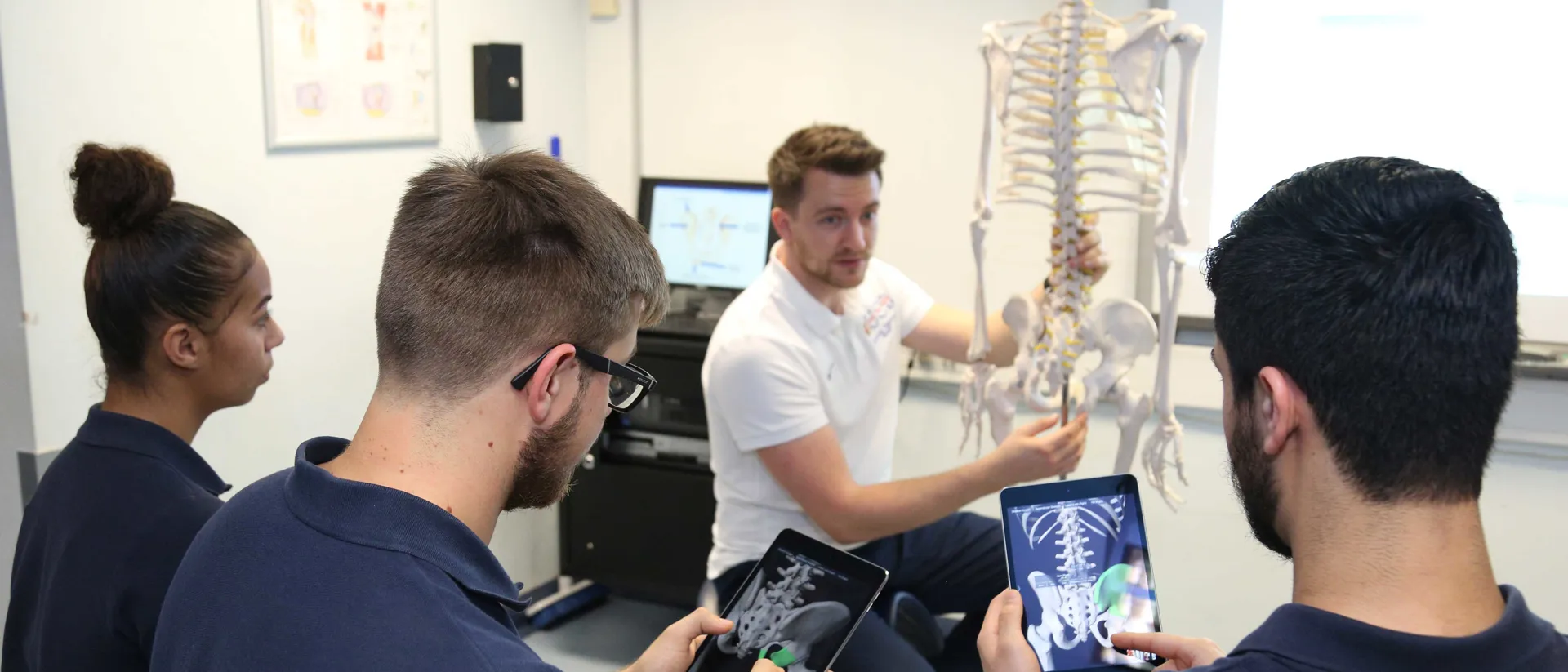
Why should I choose to study Sports Therapy BSc (Hons) Top-up?
- PRACTICAL APPLICATION – Put your therapy skills into practice by working in our sports injury/massage clinics and at major sporting events
- SPECIALISE YOUR STUDIES – Tailor your learning to suit your interests through a range of optional modules, including areas such as sports coaching and nutrition
- IN-DEPTH RESEARCH – Deepen your knowledge of a specialist area of the industry by carrying out an independent research project on a topic that interests you
- AWARD-WINNING UNIVERSITY – Study at the highest-ranking university in the region according to student choice (Whatuni Student Choice Awards 2023)
Our facilities
Students on our sports therapy and massage courses have access to outstanding training facilities at University College Birmingham, with two purpose-built sports injury/massage clinics on campus where you can hone your practical skills. We also have a variety of other state-of-the-art sports facilities, including our new gym and Human Performance Centre and Laboratory.

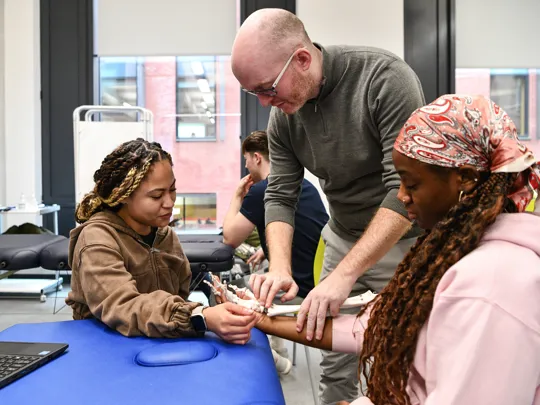
You will be able to train and work in our sports injury and massage clinics, which provide a variety of services to professional athletes, students and members of the public
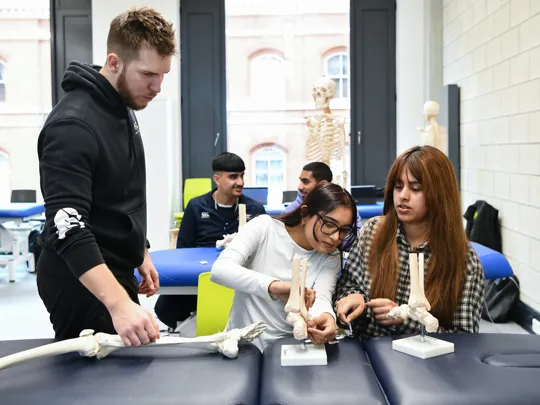
Our clinics offer a full range of professional equipment including ultrasound/electrotherapy equipment, a rehabilitation area and fully-equipped gym
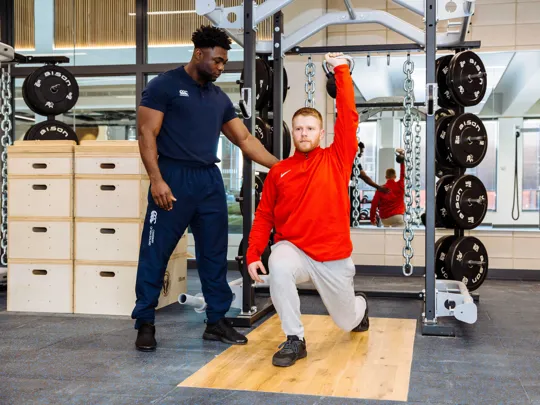
Our new Human Performance Centre and Laboratory features the latest equipment including a 35m sprint track, eight lifting platforms, an anti-gravity treadmill and much more
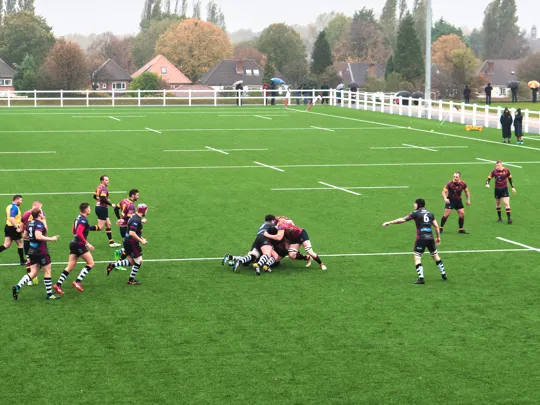
The impressive £3m Avery Fields complex – which we share with Bournville RFC – boasts an all-weather pitch, two grass pitches and a clubhouse with function room and modern changing facilities
Course breakdown
- Modules
Core Modules
Exercise as Medicine
The module aims to promote health and wellness through the increased use of physical activity and exercise in the prevention and treatment of disease. Students will be able to provide brief interventions on physical activity advice whilst protecting and promoting the health of patients.
Multidisciplinary Practices in Sport
A common employment destination for Graduate Sports Therapists is sports teams. The focus of this module is to develop knowledge and understanding of how a Graduate Sports Therapist would operate in a sports team environment.
Professional Clinical Practice
This module will allow the development of the clinical skills required of a sports therapist via exposure of working in a supervised sports injury clinic. In support of the practical component, lectures and seminars will develop the use of evidence-based practice, clinical reasoning and personal critical analysis skills, by means of reflection and assessment of learning needs.
Sport and Nutrition Project
You are required to select a research question or topic aligned to your profession, formulate the best way to answer the question, and present your written findings in both a written and presentation format (poster presentation).
The modules listed above for this course are regularly reviewed to ensure they are up to date and informed by industry as well as the latest teaching methods. On occasion, we may need to make unexpected changes to modules – if this occurs, we will contact all offer holders as soon as possible.
Entry requirements
Entry requirements
Academic: A relevant HND or a foundation degree in the area of Sports Therapy with 240 credits.
If you are unsure if your previous qualification is suitable, please contact us before completing an application. You can complete our enquiry form here or call us on 0121 604 1040
International students
Academic: European and International qualifications studied in a relevant subject matter will also be considered. Applicants will need to have achieved 120 ECTS or equivalent (European Credit Transfer).
If you are unsure if your previous qualification is suitable, please contact us before completing an application. You can call us on 0121 604 1040 or complete our enquiry form:
Key information
Teaching and assessment
Note: Indicative information only – actual timetables and assessment regimes will be issued at your induction.
Teaching
Example of a typical teaching week (up to 15 contact hours):
- Large group teaching – 3 hours
- Smaller group teaching – 9 hours
- Tutorials – 3 hours
- Field trips and sports events
- Work experience
You will also need to commit around 20 hours per week for individual study time.
Assessment
Estimated breakdown of assessment for this top-up degree course:
- Coursework – 38%
- Practical assessment – 42%
- Written examinations – 20%
Our teaching and assessment is underpinned by our Learning and Teaching Strategy 2025-2030.
Tuition fees for international students
If you are an international student (or have been fee assessed as an international fee payer) and are enrolling on a full-time [Band 3] bachelor's degree course in 2025/2026, the fee for the academic year will be £19,750. If you complete a placement year, there will be an administration fee of £500 for a full year or £250 for a half-year placement.
Kick-Start Scheme
As a new student studying this course full-time, you will receive £300 per year through our Kick-Start Scheme (UK students only, eligibility criteria applies). This scheme will support your studies and future career by contributing to course-related materials, uniform or selected items on campus. You may also qualify for an additional £500 per year.
Find out more about the Kick-Start Scheme here.
Unibuddy Community - meet other students on your course
Starting university is an exciting time, but we understand that it can sometimes feel a little daunting. To support you, you will be invited to join our Unibuddy Community, where you can meet other students who have applied for the same course at University College Birmingham, before you start studying here.
As soon as you have been made an offer, you will be sent an invitation email to complete your registration and join the Unibuddy Community. For more information, check out our Unibuddy Community page.
Latest updates
Join the conversation and check out the latest updates from the department of Sport and Nutrition.
| UCB Sports |
This course is accredited by the University of Warwick.
On completion of this top-up degree, you will be qualified to join The Society of Sports Therapists as a graduate sports therapist.
University College Birmingham was home of Team Scotland at the 2022 Commonwealth Games.
University College Birmingham adopts the UK Anti-Doping (UKAD) and World Anti-Doping Agency (WADA) position that cheating, including doping, in sport is fundamentally contrary to the spirit of sport and undermines the otherwise positive impact of sport on society. View our Clean Sport Commitment statement here.
Accreditations, endorsements and partnerships
University College Birmingham works with a wide range of organisations to ensure you receive the best possible training and qualifications recognised by industry.
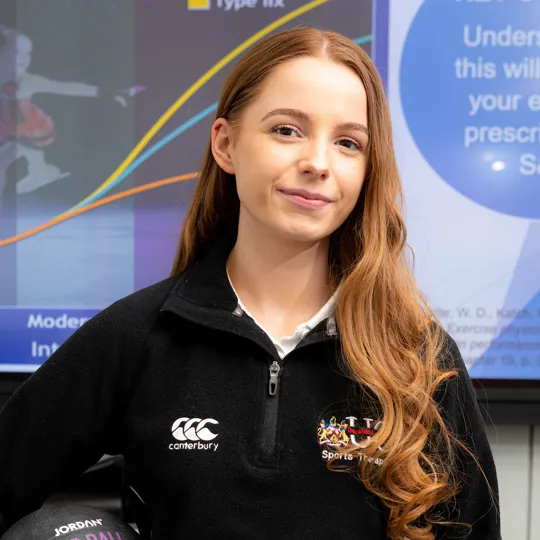
Work experience
Work experience is vital for learning how to apply your training in the real world and for building your confidence and skills before you finish your course – and it may even lead to a job when you graduate. Our Hired team can help you find suitable work experience.
We encourage students on our BSc Sports Therapy top-up course to gain work experience throughout your studies. The 'Work-Based Learning for Sport' module incorporates a work placement, while opportunities are available for you to provide sports therapy/massage to athletes at events such as the London Marathon and Ride Across Britain.
Work alongside experts in your sector
A snapshot of some of the employers we have worked with:
- Scotland Rugby team
- Aston Villa FC
- Leicester Tigers RFC
- West Bromwich Albion Ladies FC
- West Midlands Fire Service
- Royal Papworth Hospital, Cambridge (physiotherapy department)

I’ve wanted a career in sport for as long as I can remember. And, wow, what an unimaginable start. I’ve had the incredible opportunity to work alongside Scotland Rugby, especially during the World Cup in Japan, and I was very excited to get stuck in and help the team.
Kayleigh Jones Sports Therapy FdSc
Career opportunities
Note: Some roles below may require further study/training. The roles and salaries below are intended as a guide only.
Sports therapist
Average salary: £17,000 – £37,000
Occupational therapist
Average salary: £24,907 – £62,001
Sports physiotherapist
Average salary: £23,000 – £45,000
Health promotion specialist
Average salary: £24,907 – £44,503
Personal trainer
Average salary: £27,000 - £37,000
Higher education lecturer
Average salary: £35,211 – £43,367
Want to take your studies to the next level? Completing the BSc (Hons) degree will enable you to move onto our postgraduate courses such as Strength, Conditioning and Performance MSc or Enterprise Management MSc/PGDip.

Kenny’s Story
Kenny not only got to support the Scotland rugby team at the 2019 World Cup, but now works for a Championship rugby side.
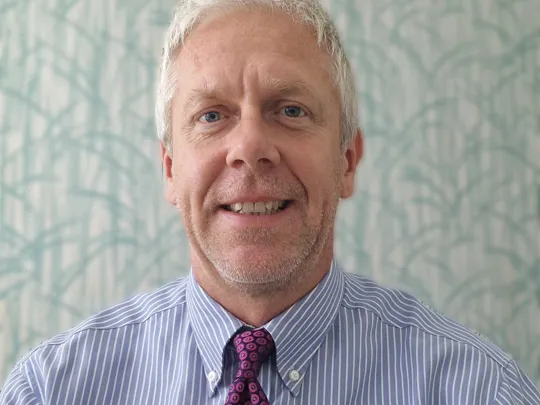
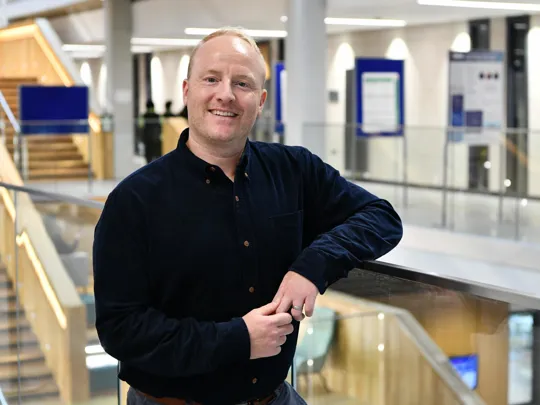
Meet your lecturers


Other courses you may like
Sports Therapy BSc (Hons) / FdSc
Want to work with professional athletes or treat patients in a sports injury clinic? This specialist course will arm you with advanced practical sports therapy skills and scientific knowledge, with excellent placement opportunities to test your training in the real world.
Strength, Conditioning and Sports Nutrition BSc (Hons) Top-up
‘Top up’ your existing qualifications for a full BSc (Hons) degree on our NSCA-accredited one-year Strength, Conditioning and Sports Nutrition course. Build upon your existing practitioner knowledge through theoretical and practical learning supported by our outstanding sports facilities.
Sports Management BA (Hons) Top-up
‘Top up’ your existing qualifications for a full BA (Hons) degree on our one-year Sports Management course. Enhance your management and practical skills to make the most of business opportunities in the sports industry, with support from our range of outstanding facilities.
