Recent searches
You do not have any recent searches.
Two-Day Degree

PRIMARY EDUCATION STUDIES WITH FOUNDATION YEAR

BA (Hons)

Award

BA (Hons)

Duration

3 years FT

UCAS Code

X200

Placement

Multiple placements

Entry

September

Fees

View fees

Department of Education
Discover more at our next open day

Saturday 15 August 2026

Join our Clearing open day

We work with over 1,000 employers to find you the right work placement

More than 280,000 primary teachers support children's learning across the UK - gov.uk

Do you have a passion for education and an interest in working with children in schools or other learning environments? Our Primary Education Studies with foundation year degree helps you explore how children learn and how primary education has developed in the UK and internationally.

If you choose the Primary Education Studies with Foundation Year pathway, you will complete an additional year designed to build your confidence, knowledge and academic skills before progressing onto the degree. You will be introduced to key concepts in child development, learning, relationships and professional practice, while developing an understanding of how children grow and learn within different family, social and educational contexts. The Foundation Year also strengthens academic writing, critical thinking, observation, enquiry and reflective practice, and introduces important areas such as safeguarding, inclusion, equality and the varied roles within the early childhood and education sectors.

Focusing on children aged three to 11, the course examines practitioner identity, the child as a learner, the learning environment, and political and cultural contexts. You will develop theoretical and practical understanding of learning and teaching across different settings, explore how educational policies and curricula are shaped, and build the skills to work collaboratively in a range of professional roles.

This course offers a swift route to qualified teacher training. It also opens career opportunities in primary schools, museums, cultural organisations, charities and educational research, supporting your development as a skilled graduate practitioner.

Financial support

We offer a range of financial suport for home and international students, to help you invest in your future. Explore all of our scholarships and fee waivers.

£6,000 Cost of Living Allowance

Home students

We provide all UK full-time undergraduate students starting in September 2026 with £6,000 each to support expenses like food, bills, and transport - completely free, with no need to pay it back.

Find out more

Early Action Scholarships

International students

International students applying for our BA/BSc undergraduate degrees, who meet all our deposit deadlines, can qualify for Early Action Scholarships of £4,500 or £3,500, depending on your course. More scholarships are also available.

Find out more

Kick-Start Scheme

Home students

All full-time UK students starting an undergraduate course may be eligible to receive financial support worth up to £800 in each year of study. Funds are provided as a credit which can be spent on the UCB Aspire website to buy course-related materials and products to support your studies. 

Find out more

Why should I choose this course?

  • 2 DAY DEGREE - The timetable for this course is already confirmed as just Wednesday and Thursday on campus each week in your first year, meaning you can fit your studies around your life. You can also apply for a one-night-a-week accommodation package. Find out more

  • NO EXAMS - If you are not keen on exams, this course is for you. Unlike many degrees in this field, you will have no written exams during or at the end of the course and will be assessed through practical assessments and coursework only

  • TOP FOR STUDENT SATISFACTION - We came third in the UK for overall student satisfaction among universities in the National Student Survey 2026 (when taking the average score for student satisfaction for each of the 26 questions in the NSS)

  • WORK PLACEMENTS – Test your training in the real world on multiple work placements in a variety of industry settings, from schools and charities to museums and theatres

  • SPECIALISE YOUR STUDIES – We work with you to provide experience suited to your career aims, allowing you to explore roles and sectors within education

Our facilities

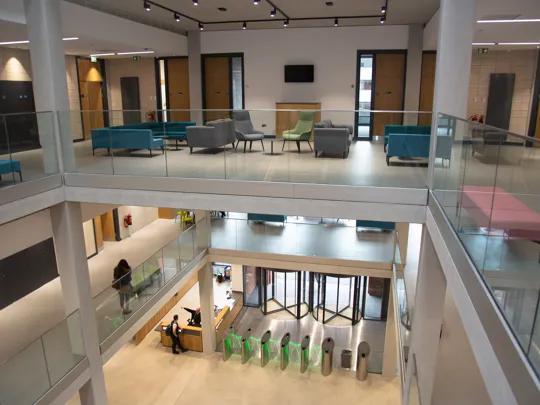
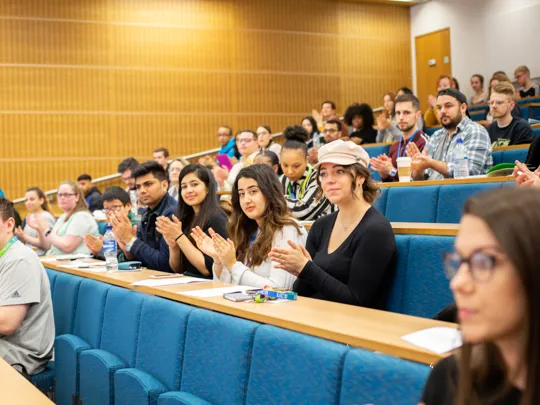
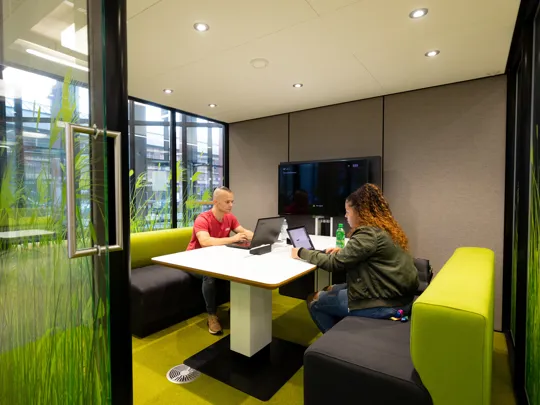
Our learning spaces at University College Birmingham ensure you have the right environments to build your knowledge, from lecture theatres to interactive group working spaces and extensive library resources.

Course breakdown

  • Foundation year
  • Year 1
  • Year 2

Modules

Academic Skills for Successful Learning In Education

This module is all about building the essential skills you need to thrive in the education sector. You will explore the basics of academic study such as communication, independent work, teamwork, and time management. You will develop the skills of enquiry and being curious about ideas in education and working with children. Plus, we'll help you sharpen your academic skills-think critical thinking, academic writing, and learning strategies. Preparing for a successful transition to Level 4.

How Learning Happens

How learning happens is a module that puts the experience of learning at the centre of your studies. This module takes you into the real world of education settings, through observation, hands-on experience, and reflection, to explore what learning looks like in practice. You will investigate the environments, relationships, routines, and moments of challenge and discovery that shape how children learn, and you will develop a clearer understanding of how you learn too.

Professional Practice in Education

This module is ideal for those of you who want to understand the human side of working with children and families including how we communicate, connect, and care across cultures and communities. It is especially supportive of those from marginalised or underrepresented backgrounds, with a focus on empowering your voice and preparing you for professional practice in educational settings.

Self in Context

This module is for those of you who want to understand not just what you do, but why you do it, and how your sense of self shapes every interaction with children, families, colleagues, and communities. It is especially relevant for those who want to work with vulnerable families, promote inclusion, and build the kind of authentic professional relationships that genuinely change lives in education contexts. You will leave with greater self-awareness, stronger professional skills, and a clearer sense of the practitioner you want to be.

Modules

Introduction to Education Studies

Education is a process, a subject and an academic discipline. This module aims to develop your awareness of all three and is designed to help you transition from previous experience and learning to undergraduate study. It provides you with essential skills to support you throughout your degree, including academic writing, presenting and collaborative working, as well as exploring all the elements that make education studies unique.

The Developing Learner 1

Children are born ready to learn, however it is the quality of a child's experiences in the first few years of life that can have a lasting impact on their ability to be mentally and physically healthy. The basic architecture of the brain is constructed through an ongoing process that begins before birth and continues into adulthood. This module will therefore invite you to explore the factors, both internal to the child and environmental influences, that may contribute to supporting healthy brain and physical development. It acknowledges that the developing brain is open to influential experiences, both positive and negative, and will examine key issues, theories and debates related to the developing learner.

History of Education in the UK

This module explores education in the UK, from early examples of formal schooling to the present day, to provide a context for historical and contemporary ideologies. It encourages you to take an analytical approach and enables you to challenge and critique educational policy, values and related provision. You will explore key themes such as societal impact, equality, special educational needs, the role of the state, social justice and economic influences while developing your ability to access, organise and evaluate information to develop coherent academic discussion.

Exploring the Learning Environment (WBL)

This work experience module is designed to help you identify the ways teaching and learning can be organised in a range of settings. It will offer you the chance to select contrasting opportunities to enable you to evaluate how environment impacts on the educational experience of all involved. WBL – Work Based Learning

Early Learning and the Primary Curriculum

This module invites you to explore how policy influences pedagogy and the differences between a curriculum and a framework for learning. You will learn about the Early Years Foundation Stage (EYFS) and the National Curriculum for England in order to begin to identify your own views on appropriate pedagogies for the primary age phase depending on subject and context. You will develop your planning skills and ability to reflect on practice as a developing professional.

Theories of Reflective Practice in Education

In this module, you will develop your understanding of the importance of reflection to inform professional practice in a primary education context. You will explore contemporary theories of reflection, examining how these can be applied in order to provide insight for teaching and learning. You will be encouraged to explore personal beliefs and the potential impact of these on your own professional practice, and on the practice of others, in order to equip you with reflection as a professional competence. Reflection fosters resilience by increasing self-awareness, improving problem-solving skills, and enhancing emotional regulation. Through reflection, individuals can re-frame challenges and build confidence in their ability to handle future difficulties, making it a key skill in your journey as an educator. You will work collaboratively, through discussion and applied tasks, to evaluate research related to reflective practice, in order to develop your understanding of how teaching and learning can be effectively tailored to meet learner requirements.

Ideology and Sociology in Primary Education

This module focuses on the purpose and impact of primary education on wider society. It examines underlying educational ideologies and agendas, as well as the organisation and delivery of primary education, in both historical and modern-day contexts. Exploration of theories associated with the sociology of education will support you to consider if and how the primary education system, and its associated practices, have challenged or created inequalities in society. You will also have opportunities to critically evaluate alternative educational approaches.

Modules

The Developing Learner 2

Learning is a complex and ongoing process based on how we make sense of our world using new information and experiences. This module builds on The Developing Learner 1 and explores the relationship between cognition, language and behaviour. You will examine key issues, theories and debates in relation to how children's patterns of thinking, language and behaviour are constantly changing in response to the interactions they have with others and their environment. You will be invited to consider the complexities associated with both the internal and external factors that may influence children's cognitive function, their language acquisition and behaviours.

Developing Professional Practice in Education (WBL)

This module will help you identify what professional behaviours are expected in education settings. You will explore the frameworks used by teachers and childcare workers in the UK to judge professional standards and competences, and then use these during work-based placements to identify the attributes associated with educational provision. WBL – Work Based Learning

Philosophy, Ethics and Values in Primary Education

The role of the educator has an important ethical dimension that should not be overlooked. Educators must uphold certain ethical standards within their practice to ensure that they act as a 'good' role model to their students and that they provide them with a 'good' education. But what constitutes a good role model or a good education? The moral education of children only becomes more ethically complex as the student population in the UK becomes increasingly more diverse, resulting in a more diverse set of identities and potentially conflicting values being encountered within the classroom. The modern digital world we live in adds further complexity to both the lives of children and those who must educate them to be able to manage this complexity successfully. Contemporary educators have to negotiate this ethical landscape and encounter challenging ethical dilemmas in carrying out their role. They must think and act with special care when making ethical judgements that concern the needs and interests of their pupils. In this module, you will explore some of the interesting and important ethical issues raised here and reflect on your own values and philosophical positions in consideration of how these influence educators' practice. Philosophy provides frameworks for understanding, interpreting, and responding to adversity, all of which are essential for developing resilience. Through this module you will develop insight into how to view challenges as opportunities for growth and develop insight in to managing difficult experiences that are frequently presented in practice situations.

Contemporary Issues and International Perspectives on Primary Education

Education is a global concern. This module aims to develop your awareness and understanding of key educational issues and debates from contemporary Britain and around the world. It will encourage you to select data sources, analyse current research and argue a personal position in relation to a self-selected topic, chosen from those studied during the module.

Inclusion, Diversity and Equality in Education

This module explores how social and cultural experiences have implications for diverse learners’ education in mainstream and SEN settings. You will explore issues of equality and difference in relation to primary education both in the UK and globally, looking at relevant legislation and practice in order to justify your own position based on principles of equality of access, provision and outcomes.

Research in Education (project)

Educational research helps us to understand the process of learning and teaching. In this module you will be introduced to the guidelines, skills and competences needed to explore a self-selected topic relevant to primary education. You will be supported by a dissertation tutor to plan and carry out a research project, including the development of an ethical approach, data collection methods and analytical skills.

The modules listed above for this course are regularly reviewed to ensure they are up to date and informed by industry as well as the latest teaching methods. On occasion, we may need to make unexpected changes to modules – if this occurs, we will contact all offer holders as soon as possible.

Entry requirements

Entry requirements

A-levels: An A-level grade profile of DD.

BTEC: A BTEC grade profile of PP. This can be achieved from either an Extended Diploma or a combination of smaller BTEC qualifications.

Access to Higher Education Diploma: 32 UCAS Tariff points.

Tariff: Other Level 3 qualifications are accepted at University College Birmingham for entry. A minimum of 32 UCAS Tariff points will be required.

Plus: English, Maths and Science GCSE at grade C/grade 4 or above (no equivalencies).

Students on this course are subject to the Code of Professional Conduct and Fitness to Practise Policy, together with a Disclosure and Barring Service (DBS) check. University College Birmingham will co-ordinate and fund the completion of the DBS check.

International students

For academic and English entry requirements for EU and international students, please visit the Country Specific Information page.

Please note: As an International Student, when choosing optional placement, a visa extension may be required.

Primary Education Studies with Foundation Year BA (Hons) is open for Clearing 2026

Still exploring your university options? Whether you are applying now, changing your plans or looking for a different course, you can apply to UCB through Clearing.

Apply through Clearing

Key information

Teaching and assessment

Note: Indicative information only – actual timetables and assessment regimes will be issued at your induction. 

Teaching 

We won silver for our lecturing and teaching quality in the regional Whatuni Student Choice Awards 2026, as voted for by students themselves.

Example of a typical teaching week (up to 12 contact hours): 

  • Large group teaching – 6-7 hours 

  • Smaller group teaching – 2-3 hours 

  • Tutorials – up to 2 hours 

This course runs throughout the entire academic year, from the end of September to July/August. Some weeks are timetabled as intensive study, requiring an increase in contact hours. The above reflects the minimum and a maximum number of hours expected. 

You will also need to commit around 25 hours per week for individual study time. 

Assessment

Estimated breakdown of assessment for this degree course:

  • Coursework/practical assessment – 100%

Our teaching and assessment is underpinned by our Learning and Teaching Strategy 2025-2030.

Timetable

This course is two days on campus each week, meaning you can fit your studies in around your life. For September 2026 starters, your on-campus days in your first year will be Monday and Wednesday. There will be a minimum 20 hours of independent study around this each week. Find out more

Tuition fees for home students

If you are a home student enrolling on this accelerated foundation degree in 2026/27, your fee for the academic year will be £11,750.

View tuition fees for home students

Tuition fees for international students

If you are an international student (or have been fee assessed as an international fee payer) enrolling on this accelerated foundation degree in 2026/2027, your fee for the academic year will be £19,000.

View fees for international students

Financial support for home students

£6,000 Cost of Living Allowance

If you are a full-time undergraduate student starting your course in September 2026, with home fee status and plan to pay your fees using a student loan, you’ll be eligible for a £6,000* Cost of Living Allowance.

Further information and terms and conditions can be found here: £6,000 Cost of Living Allowance.

*If you are studying a two-year accelerated degree or foundation degree, you will receive £5,000 over the duration of your course. If you decide you'd like to top up to a full BA or BSc (Hons) at the end of your foundation degree, you will also be entitled to the £1,000 in the third year.

Kick-Start Scheme funds (worth up to £800 per year)

As a new student studying this course full-time, you will receive £300 per year through our Kick-Start Scheme (UK students only, eligibility criteria applies). This scheme will support your studies and future career by contributing to course-related materials, uniform or selected items on campus. You may also qualify for an additional £500 per year. Find out more about the Kick-Start Scheme.

Scholarships

Available to eligible Home and EU students, our scholarships are designed to support students who demonstrate excellence in academic and sporting achievements, as well as to help students from economic and social hardship.

Financial support for international students

Scholarships

We offer a range of scholarships and fee waivers for international students. Students must have overseas international status and have received an offer to study on a full-time course at University College Birmingham in the current/upcoming academic year. 


Percentage
70%

of graduate employers say relevant experience is essential to getting a job with them

Work placements

Work placements are vital for gaining real-life experience and for building your confidence and skills before you finish your course – and they may even lead to a job when you graduate. Our Hired team can help find the ideal placement for you.

Our BA Primary Education Studies with foundation year degree course features two placement modules (in year 1 and 2), placing you within a range of settings in order to gain hands-on experience of the different areas where education professionals may work.

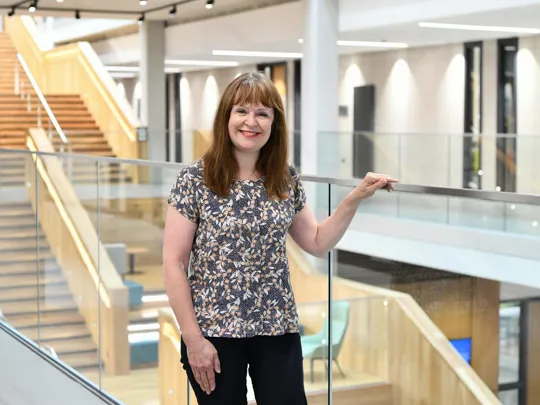
"Aimed at future education professionals, practitioners and policy-makers, our innovative, Primary Education with foundation year course is designed to provide students with a critical understanding of this phase of education – both in the UK and internationally – to help them evaluate how theory, policy, ideology and practice impact on young learners."

Alison Williams Senior Lecturer and Programme Lead

Career opportunities

Note: Some roles below may require further study/training. The roles and salaries below are intended as a guide only.

Community education officer

Average Salary: £28,000

Museum education officer

Average Salary: £24,000

Education administrator

Average Salary: £33,500

Education consultant

Average Salary: £34,171

Learning mentor

Average Salary: £22,500

Primary school teacher

Average Salary: £29,364
HIRED

We are here to support your career goals every step of the way. 

Find out more

Alison’s Story

"I was honoured to be recognised as 'The Student Whisperer' in the Education Department Staff Award, as I believe in creating a supportive learning environment where students can flourish both personally and professionally."

Read story

Course statistics

Take the next step...


Back to top