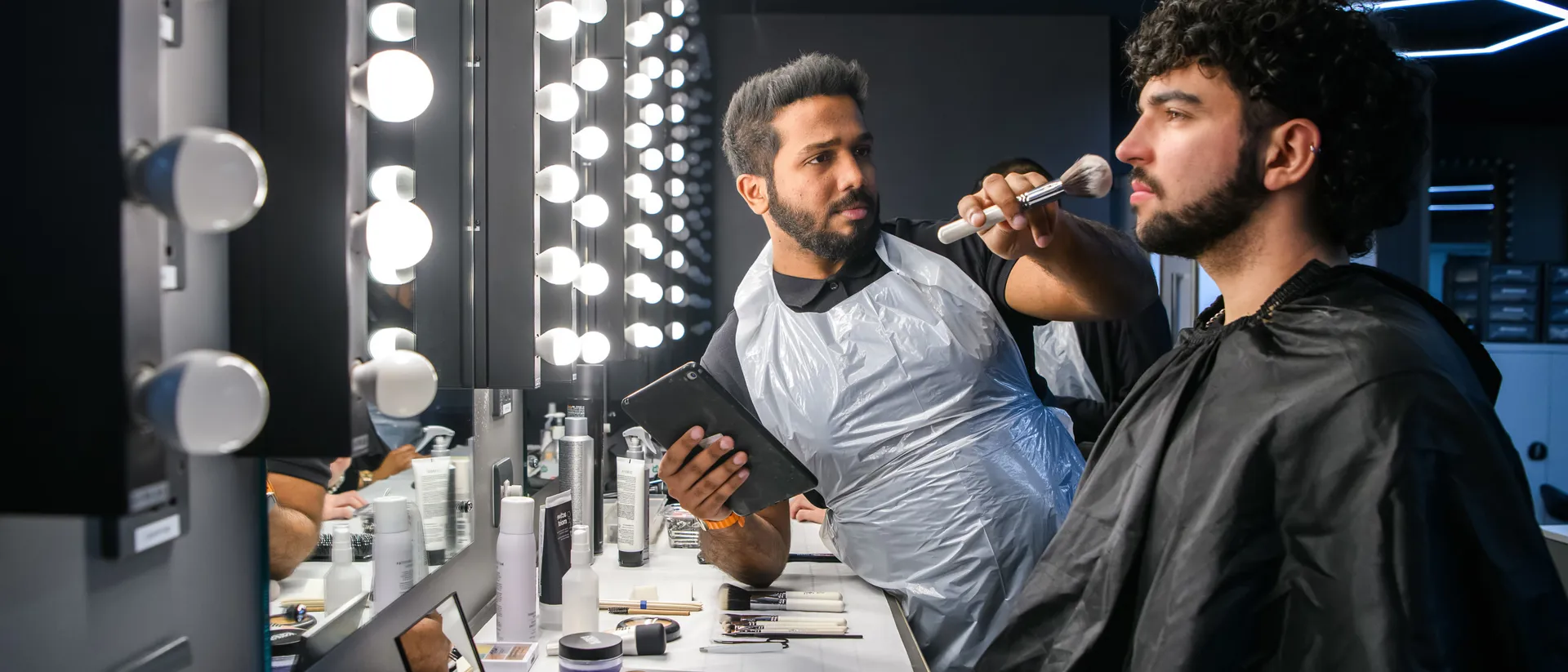
Male student apply make-up to a male model

Make-up and Hair artistry 

Higher National Certificate

Accredited by University College Birmingham

This course is subject to validation and approval
Award

HNC

Duration

1 year full-time

Entry

September

Fees

View fees

Department of Creative Industries

The UK film and TV production industry saw £5.6 billion in production spending in 2024, supporting jobs and opportunities across departments, including hair and make-up

BBC production spend in the West Midlands (including Digbeth) is set to almost double from £24m to £40m per year by the end of 2027, boosting local screen-industry activity

Are you passionate about creative hair and make‑up and ready to begin your journey into the creative industries? This Make-up and Hair Artistry HNC is designed to help you develop a strong foundation for a career in film, television, theatre, fashion and media, or progression to further study.

On this course, you will build essential professional hair and make‑up skills, while learning how hair and make‑up contribute to character creation and visual storytelling. You will explore both historical and contemporary practices, enabling you to design bespoke looks and respond confidently to creative briefs in line with industry expectations.

You will be introduced to specialist areas, including special effects (SFX), prosthetics and digital techniques, with opportunities to explore how emerging technologies are shaping the future of the industry. Teaching is highly practical and delivered through hands‑on workshops, research‑led projects and creative design development.

Throughout the course, you will also develop transferable skills such as creativity, problem‑solving, teamwork and adaptability, supporting progression into employment, freelance practice or progression onto the Make‑up and Hair Artistry HND.
£2k Cost of Living Allowance: for UK students starting a full-time HNC course in 2026.

Why should I choose this HNC in make-up and hair artistry?

  • INDUSTRY‑FOCUSED TRAINING – Develop core professional skills through industry‑inspired training that reflects current workflows across film, television, fashion and the wider creative industries
  • REAL‑WORLD CREATIVE BRIEFS – Work on practical, industry‑style briefs that mirror real working environments, helping you understand professional expectations and build confidence from the outset
  • PRACTICAL HANDS-ON SKILLS – Gain essential technical expertise through hands‑on learning in specialist facilities, using professional products and industry‑standard make‑up and hair techniques
  • PORTFOLIO‑BASED LEARNING – Begin building a professional portfolio throughout the course, supported by tutors with extensive industry experience, ensuring your work meets current industry standards
  • INNOVATION & SPECIAL EFFECTS – Explore contemporary practices including introductory SFX, prosthetics and digital design processes, encouraging creativity, experimentation and forward‑thinking approaches used in film, TV and fashion
  • CAREER AND PROGRESSION OPPORTUNITIES – Study within a growing creative hub with strong links to the film and TV industry, benefiting from industry engagement, guest speakers and enrichment opportunities, with clear progression routes into employment, freelance practice or further study, including progression onto the HND

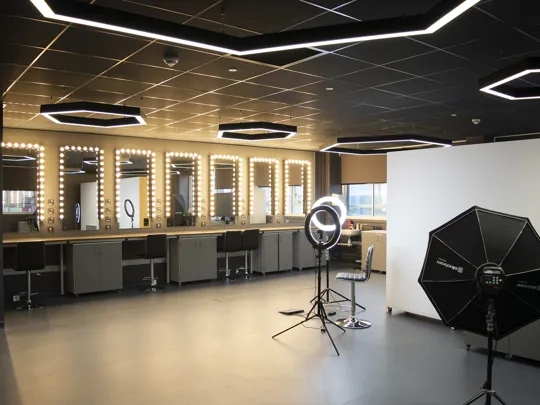
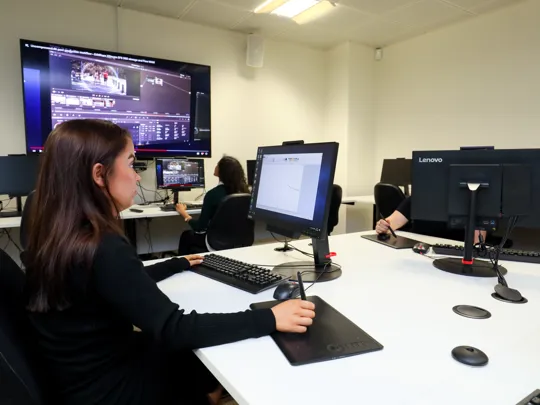
Our facilities

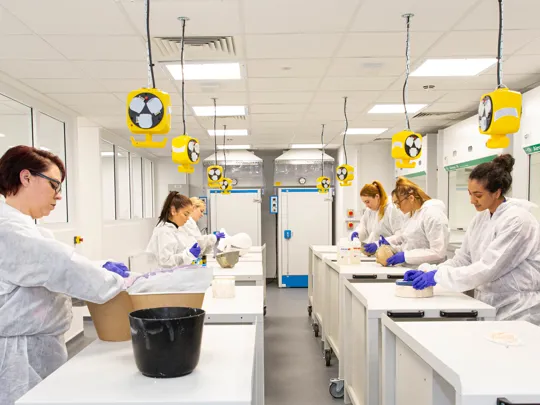
Our creative courses provide a balance of theory, digital and practical training. You will have the opportunity to develop a range of skills on campus in our specialist, purpose-built facilities.

Course breakdown

  • Year 1

Core Modules

Concept & Development in Make- up and Hair Artistry

This module introduces learners to the historical, theoretical, and contemporary contexts of make-up, hair, special effects, and digital technologies within creative practice. Students will explore how these disciplines have evolved and how they inform current industry standards and creative approaches. Through iterative, problem-solving methods, learners will develop and refine ideas in response to creative briefs, experimenting with materials, techniques, and emerging digital tools. The module builds essential technical knowledge and practical skills, including traditional and digital workflows, to support concept development and realisation. Students will also examine professional practices, behaviours, and expectations within the creative industries, gaining insight into collaborative working, ethical practice, and industry roles. Emphasis is placed on effectively communicating ideas and concepts through a range of techniques, media, and formats suitable for diverse audiences and professional contexts.

Creative Project in Make-up and Hair Artistry

This module enables learners to apply contextual, technical, and professional knowledge to develop and deliver a creative hair and make-up project. Students analyse briefs, conduct research, and apply iterative development processes to generate innovative solutions tailored to the project’s objectives. Learners will apply technical skills across hair, make-up, and special effects, ensuring high-quality outcomes that reflect industry standards. Professional behaviours, ethical practice, sustainability and sector-specific expectations underpin all aspects of the project, from planning to execution. The module also focuses on communication and presentation, requiring learners to effectively document and share their creative process and final outcomes with a specified audience. By the end of the module, students will have completed a fully realised project, showcasing their ability to integrate creativity, technical expertise, and professional practice within a real-world context.

The modules listed above for this course are regularly reviewed to ensure they are up to date and informed by industry as well as the latest teaching methods. On occasion, we may need to make unexpected changes to modules – if this occurs, we will contact all offer holders as soon as possible.

Key information

Entry requirements

A-levels: An A-level grade profile of EE.

T-levels: A T-level graded Pass with a core component profile less than C.

BTEC: A BTEC grade profile of PP. This can be achieved from either an Extended Diploma or a combination of smaller BTEC qualifications.

Apprenticeship: Achieve an advanced apprenticeship (Level 3).

Tariff: Other Level 3 qualifications are accepted for entry. A minimum of 32 UCAS Tariff points will be required.

Access to Higher Education Diploma: 32 UCAS Tariff points.

Non-tariff: Non-UCAS Tariff-based Level 3 qualifications are also considered for entry.

GCSEs: You should also have a minimum grade 4 in GCSE Mathematics, or Functional Skills Level 2.

Work-based: We also give equal consideration to applicants who are currently in work and wish to apply to University College Birmingham. To apply, you must have at least 3 years of relevant work experience demonstrating management or supervisory duties. Your application must also include a reference from your line manager supporting your entry to higher education. For further details, please contact Admissions.

Teaching and assessment

Teaching

This course will be delivered using a variety of methods, including theory lectures, demonstrations, practical activities and reflective learning. You will have the opportunity to interact with guest speakers and leading specialists from industry to develop knowledge and enhance your technical skillset. Independent reading and research will be engaged with to ensure an interactive and personalised learning experience.

Example of a typical teaching week:

  • Small group teaching - 12 hours
  • Large group teaching - 6 hours
  • Tutorials – 1-2 hours

You will also need to commit around 10 hours per week for individual study time.

Assessment 

Estimated breakdown of assessment for this course:

  • Coursework – 60%
  • Practical assessment – 40%
  • Written exams - 0%

The demonstration of practical ability will be assessed through a range of coursework and practical assessment methods.

Our teaching and assessment is underpinned by our Learning and Teaching Strategy 2025-2030.

Timetable

We understand that you need to balance study with work, so wherever possible lessons will be timetabled into 2-3 days a week, although you may wish to attend independent workshops across the week.

Uniform and kit costs

This course requires a uniform and kit costing approximately £500, depending on the items you purchase. (Prices are subject to change each year – exact costs and information on how to order required items will be provided to you prior to enrolment).

Kick-Start Scheme

As a new student studying this course full-time, you will receive £300 per year through our Kick-Start Scheme (UK students only, eligibility criteria applies). This scheme will support your studies and future career by contributing to course-related materials, uniform or selected items on campus. You may also qualify for an additional £500 per year.

Find out more about the Kick-Start Scheme here.

.

Work placements

Work placements are vital for gaining real-life experience and building your confidence and skills before you finish your course and may even lead to a job when you graduate. Our HIRED team can help you find the ideal placement for you.

Our HNC Make-up and Hair Artistry features voluntary work placements to help you engage with the industry and develop networking skills. These are often short-term and may require travel, so it is crucial to prepare for this. Throughout your academic journey, our collaboration with employers ensures you will make meaningful connections, enhancing your overall learning experience and laying the foundations for a successful career in hair and make-up.

Work alongside experts in your sector

A snapshot of some of the employers we have worked with:

  • Birmingham Fashion Council
  • Andrew Kruczek Photography
  • Youneek productions
  • QTMS - Queensbridge Musical and Theatrical Society
  • West Midlands Police
  • Keele Medical University
  • CREW Birmingham
  • Ukiyo Modelling Agency

"This new HNC Make-up and Hair Artistry course is designed to equip students with the technical expertise, creative skills, and industry knowledge needed to succeed in film, TV, fashion, and media. Through hands-on practice, professional guidance, and exposure to current trends, students will build a strong portfolio and gain real-world experience."

Deborah Freeman Interim Head of Department for Creative Industries

Career opportunities

The example roles and salaries below are intended as a guide only.

Film and TV make-up artist

£40,000–£45,000 per year

Teacher of hair and make-up

£33,874–£51,111 per year 

Wigs, hair and make-up technician

Variable depending on experience

Special effects prosthetic supervisor

£40,000 + per year 

Make‑up artist advertising and editorial

£28,000–£45,000 per year 

Want to take your studies to the next level? Completing the Higher National Certificate will enable you to move on to our Make-up and Hair Artistry Higher National Diploma.
HIRED

We are here to support your career goals every step of the way. 

Find out more

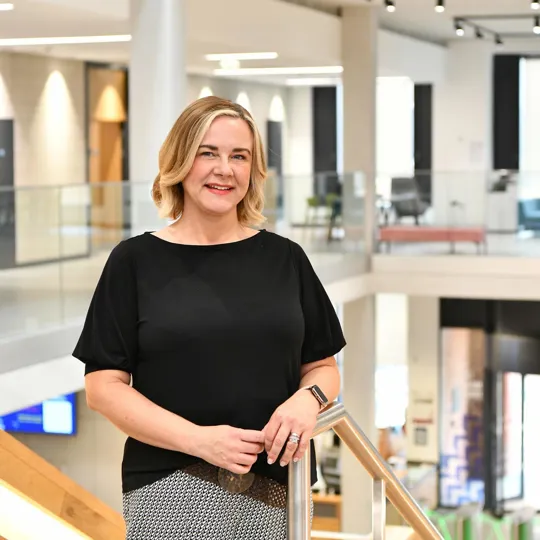
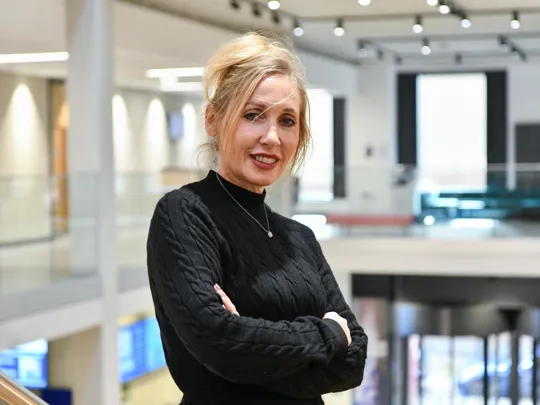
Led by Michelle, an experienced UCB lecturer and industry practitioner, this HNC offers hands‑on, industry‑standard training in make‑up, hair, special effects and digital skills.
You can gain real‑world experience, professional confidence and creative versatility to succeed in the creative industries.
Undergraduate students

Take the next step...


Back to top