CRIMINOLOGY WITH PSYCHOLOGY

BA (Hons) 

Award

BA (Hons)

Duration

3 years FT

Placement

No placement

Entry

September

Fees

View fees

Department of Psychology
Discover more at our next open day

Saturday 27 June 2026

Join an open day

The Ministry of Justice alone employs over 79,000 people 

The prison population is expected to rise between 95,700 and 105,200 by March 2029

Criminology with Psychology at University College Birmingham combines the study of crime, justice and human behaviour to help you understand why crime occurs and how society responds to it. This Criminology with Psychology BA (Hons) is a multidisciplinary degree that explores the social, cultural, and psychological factors shaping crime and justice in modern society.

During this criminology with psychology degree, you will investigate both the causes of crime and the psychological processes that influence behaviour, decision-making and justice systems.

You will explore topics such as:

  • The social and structural causes of crime and inequality
  • Psychological theories of behaviour, trauma and mental health
  • The criminal mind through perspectives from forensic psychology
  • Policing, punishment and the UK criminal justice system
  • Research methods used to investigate criminality and social harm

Studying this criminology with psychology degree in Birmingham places you in a diverse city where issues of crime, justice and social change are highly relevant. Through projects, community engagement and research, you will connect theory with real-world challenges and develop the skills to become a critical thinker, an ethical practitioner, and an engaged global citizen, ready to tackle social harms ranging from inequality and exploitation to violence and victimisation.

£6k Cost of Living Allowance

At University College Birmingham, we believe the cost of living shouldn’t hold you back from achieving your goals. That’s why we’re providing UK full-time undergraduate students starting in September 2026 with £6,000 each to support expenses like food, bills, and transport - completely free, with no need to pay it back.

Find out more

Pay early and save up to £4,500

International students applying for our BA/BSc undergraduate degrees, who meet all our deposit deadlines, can qualify for Early Action Scholarships of £4,500 or £3,500, depending on your course. Simply meet the payment deadlines and we'll do the rest - no application needed. International students can also apply for merit scholarships, worth up to the full amount of the tuition fee.
Early Action Scholarships 

International Merit Scholarships

Why should I choose this Criminology BA (Hons)?

  • EXPERT TUITION – You will be taught by seasoned criminologists, psychologists, and those with a background in industry
  • NO EXAMS – If you are not keen on exams, this course is for you. Unlike many degrees, you will have no written exams during or at the end of the course
  • ENRICHMENT – Learn from experts through real-world simulations, workshops, and guest lectures
  • STUDENT-CENTRED - Designed to reflect the real world, the programme is underpinned by diverse and inclusive reading lists and module content
  • MAKE AN IMPACT – Develop a global outlook by exploring issues across cultures, preparing you to make an impact in an increasingly globalised world
  • ADDITIONAL QUALIFICATION -  In your first year, you will undertake mental health first aid training to gain a certificate to use in your future work opportunities

Course breakdown

  • Year 1
  • Year 2
  • Year 3

Core Modules

Foundations of Criminology: Crime and Theory

Step into the world of criminology by exploring the big ideas that shape how we understand crime. From classic theories to modern debates, this module lays the foundation for your journey, addressing the questions about why people offend and how society responds.

Inside the Criminal Justice System

Ever wondered how the criminal justice system really works? Explore the world of policing, courts, and prisons as this module takes you behind the scenes to uncover how our institutions were built, how they interact, and what they mean for justice today.

Understanding Crime Through Research

Research isn't just for dissertations; it’s a tool for change. In this module, you will learn to ask the right questions, design ethical studies, and collaborate to explore real-world problems. This module equips you with the practical skills to support your career and make a meaningful difference.

Mental Health and Wellbeing

This module gives you a practical and holistic understanding of mental health and wellbeing. You’ll explore key topics from socio-cultural, biological, and clinical perspectives, learning what influences mental health across our lifespan and how to manage challenges such as stress, anxiety, and confidence. Through the sessions, you’ll discover techniques and interventions that promote wellbeing, while reflecting on your own thoughts and emotions to support personal growth and resilience. Mental Health First Aid training and certification are embedded in the module, earning you a recognised qualification that demonstrates your expertise and commitment to supporting others.

Crime, Power, and Inequality

Challenge your assumptions and explore the intersection between power, privilege, and inequality. Dive into global issues and explore how our backgrounds and institutions influence our experiences of justice.

Core Modules

Contemporary Criminological Perspectives

Take your learning to the next level and begin to shape your own criminological identity as we explore concepts like green criminology, crimes of the powerful, queer and critical criminology. In this module, you will explore the field of criminology through the eyes of others to gain insight into how we can make our systems and processes more reflective of our society.

Policing and Punishment: Power, Control, and Reform

What does justice look like, and who gets to decide? Take a deep dive into the world of policing and punishment. Ask tough questions about reform, control, and accountability as we explore our institutions and societal response to crime and criminality.

The Criminology Research Lab

Build on your research skills and become a data-savvy criminologist. Design research projects, use statistics to uncover hidden patterns, and apply mixed methods to complex social problems. Learn by doing and boost your skills and confidence as you begin to think about your final project.

Positive Psychology

Psychology as a discipline has often been seen to focus on the negatives and problems that exist, with a view to offering solutions and support to overcome them. Positive psychology takes an alternative approach in that it explores how character strengths and behaviours can help us live optimum lives and how we can flourish. It even looks at how we can grow positively following trauma (post traumatic growth). In this module, you will explore some of the concepts associated with positive psychology, such as hope, gratitude, humour and resilience, and analyse the research around their contribution to thriving and living a full meaningful life. You will then apply this theoretical understanding to a range of contexts where positive psychology is applied and consider effectiveness of interventions which utilise this approach. This could be across health care, educational or forensic services where the use of positive psychology interventions may be beneficial for the individual and for wider communities.

Crime in a Connected World: Global and Digital Criminology

Do you want to understand crime in our increasingly connected world? This module examines how technology and globalisation influence transnational crimes and the networks that perpetuate them. You’ll examine the role of media, disinformation, and how virtual spaces influence our understanding of crime on a global platform.

Core Modules

Research in Action

This is your chance to lead your own research or capstone project. Use your passion to tackle the issues that matter to you. Apply what you have learned to make a difference; it's your moment to shine.

Real-World Criminology: Making Change Happen

This module connects you with contemporary criminological debates and challenges facing your city. In this larger module, you’ll build a professional toolkit, developing skills in leadership, teamwork, public speaking, and project management, while exploring how criminology can drive social change.

Smarter Justice: AI, Big Data and Ethics

Step into the future of justice. Examine how digital technologies are transforming the criminal justice system and what this means for society. You'll critically assess the risks and rewards of data-driven decision-making through the ethical and global perspectives that influence its use.

Applied Forensic Psychology

Step into the world of forensic practice. You’ll learn how psychology helps us understand why offenders commit crimes, assess the risk of future behaviour, and design interventions to meet offender needs. The module also explores the victim experience, including treatment needs after victimisation. You’ll complete offender assessments and create treatment plans, practising skills that are relevant to careers in prisons, probation, policing, or victim services. This is your chance to apply psychology in real-world contexts and build expertise for impactful roles in the criminal justice system.

Entry requirements

Entry requirements

A-levels: An A-level grade profile of CCC 

T-levels: A T-level graded Pass with a core component of grade C

BTEC: A BTEC grade profile of MMM. This can be achieved from either an Extended Diploma or a combination of smaller BTEC qualifications

Tariff: Other Level 3 qualifications are accepted for entry at University College Birmingham. A minimum of 96 UCAS Tariff points will be required.

Access to Higher Education Diploma: 96 UCAS Tariff points including a minimum of 15 Level 3 credits at Distinction

International students

EU/international students 

For entry requirements for EU and international students, please visit the Country Specific Information page.

Key information

Teaching and assessment

Note: Indicative information only – actual timetables and assessment regimes will be issued at your induction.

Teaching
Example of a typical teaching week (up to 15 contact hours):
- Large group teaching - 6 hours
- Smaller group teaching/workshops - 6 hours
- Tutorials - 2 hours 

You will also need to commit around 20 hours per week to individual study time.

Assessment
Estimated breakdown of assessment for this course:
- Coursework – 100%

Our teaching and assessment is underpinned by our Learning and Teaching Strategy 2025-2030.

Tuition fees for home students

If you are a home student enrolling on a bachelor's or foundation degree course at University College Birmingham, the 2026/2027 academic year tuition fee for full-time study is £9,790. For part-time study, the fee is £4,895.

The same fee applies to those enrolling on an HNC (Higher National Certificate) or an HND (Higher National Diploma) programme. 

View tuition fees for home students

Tuition fees for international students

If you are an international student (or have been fee assessed as an international fee payer) and are enrolling on a full-time [Band 1] bachelor's degree course in 2026/2027, the fee for the academic year will be £16,500. If you complete a placement year, there will be an administration fee of £500 for a full year or £250 for a half-year placement.

View fees for international students

£6,000 Cost of Living Allowance

We are committed to supporting students who may be facing financial challenges due to the rise of living costs. If you are a full-time undergraduate student starting your course in September 2026, with home fee status and plan to pay your fees using a student loan, you’ll be eligible for a £6,000* Cost of Living Allowance.

Further information and terms and conditions can be found here: £6,000 Cost of Living Allowance.

*If you are studying a two-year accelerated degree or foundation degree, you will receive £5,000 over the duration of your course. If you decide you'd like to top up to a full BA or BSc (Hons) at the end of your foundation degree, you will also be entitled to the £1,000 in the third year.

Kick-Start Scheme

As a new student studying this course full-time, you will receive £300 per year through our Kick-Start Scheme (UK students only, eligibility criteria applies). This scheme will support your studies and future career by contributing to course-related materials, uniform or selected items on campus. You may also qualify for an additional £500 per year.

Find out more about the Kick-Start Scheme here.

Disclosure and Barring Service (DBS)

As you may come into contact with vulnerable individuals during this course, a DBS check is required. University College Birmingham will coordinate and fund the completion of the DBS check.

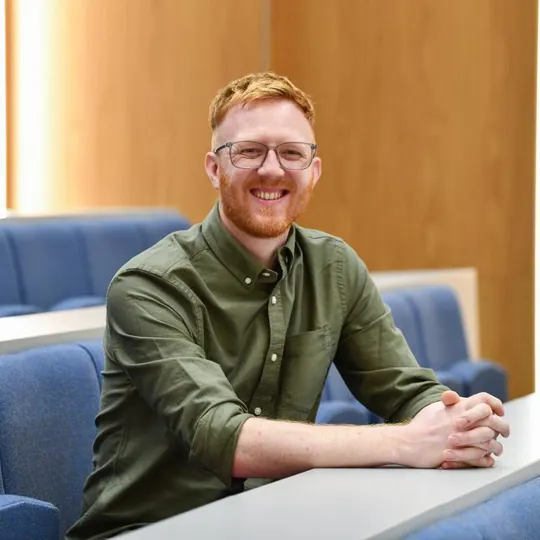
Bringing together criminology and psychology, this programme gives you a unique interdisciplinary approach to understanding crime and social harm. Utilise your psychological insights to critically analyse behavior, criminal justice systems, and design interventions to effect change. 

Scott Banks Senior Lecturer in Criminology

Career opportunities

The example roles and salaries below are intended as a guide only.

Social science researcher

Average Salary: £38,000

Probation officer

Average Salary: £40,000

Prison officer

£30,000 - £44,000

Youth offending team officer

Average Salary: £39,000

Intelligence analyst

Average Salary: £52,000

Political risk analyst

Average Salary: £60,000

Want to continue your studies? Completing this BSc will give you the opportunity to move onto our MSc Psychology or MSc Public Health degree.

Hired

We are here to support your career goals every step of the way. 


Find out more


Our student-voted awards and accolades

When it comes to student feedback, our university stands out. Our students value their time with us, as can be seen from the outcomes of several nationally-recognised student surveys.  

Read story

Take the next step...


Back to top