AUTOMATED MANUFACTURING ENGINEERING
Higher National Diploma
Accredited by University College Birmingham
- University
- Undergraduate
- Courses
- Automated Manufacturing Engineering Higher National Diploma
Award
HND
Duration
2 years FT, 3 years PT
UCAS Code
H70D
Entry
September, February
Fees
View fees
The UK needs 124,000 engineers and technicians with core engineering skills every year, but faces a shortfall of up to 59,000 skilled professionals
Projections for the workforce indicate a growing need for higher-level skills, with 71% of the workforce expected to need to be educated at Level 4 or above
Do you want to help drive the future of smart manufacturing? From automation and robotics to battery technologies and digital production systems, advanced manufacturing is transforming the UK's industrial landscape. With manufacturing accounting for around one in eight jobs in the West Midlands and a recognised need for more higher-level engineering skills, graduates are well positioned to enter a growing and innovative sector. Our Higher National Diploma (HND) in Automated Manufacturing Engineering will equip you with the technical expertise, practical experience and industry-focused skills needed to succeed.
Designed for students progressing from BTECs, T-levels, A-levels and Access to HE, this course combines engineering theory with hands-on learning through real-world simulations, workshops and specialist laboratories. You'll develop expertise in automation, robotics, mechatronics, manufacturing systems and Industry 4.0 technologies, while strengthening your analytical, problem-solving, communication and project management skills.
Using industry-standard software including SolidWorks, AutoCAD, MATLAB and Python, you'll gain practical experience in engineering design, simulation and data-driven decision-making. You'll also learn how to develop innovative, sustainable and safe engineering solutions while working collaboratively within diverse teams.
Why should I choose to study Automated Manufacturing Engineering HND?
ENGINEERING FOR THE FUTURE OF MANUFACTURING - Develop the engineering, automation, robotics and digital manufacturing skills needed by modern industry, preparing you for career opportunities across advanced manufacturing, automotive, aerospace and other technology-driven sectors
INDUSTRY EXPERIENCE AND EMPLOYER CONNECTIONS - Gain valuable industry insight through employer visits, guest speakers, live projects and opportunities that connect learning to real-world engineering challenges.
EXPERT TEACHING AND PROFESSIONAL SKILLS - Build expertise in automation, robotics, manufacturing processes and digital manufacturing while developing highly valued skills in teamwork, communication, problem-solving and project management. Study with experienced engineering professionals in a supportive learning environment, with personalised guidance throughout your studies.
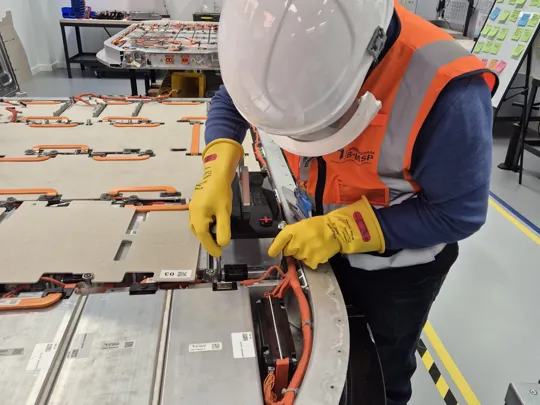
BATTERY TRAINING AND EMERGING TECHNOLOGIES - Benefit from industry-informed learning through an Innovate UK-funded battery training project, developed with input from employers including Jaguar Land Rover (JLR), helping students gain insight into emerging technologies and future skills needs.
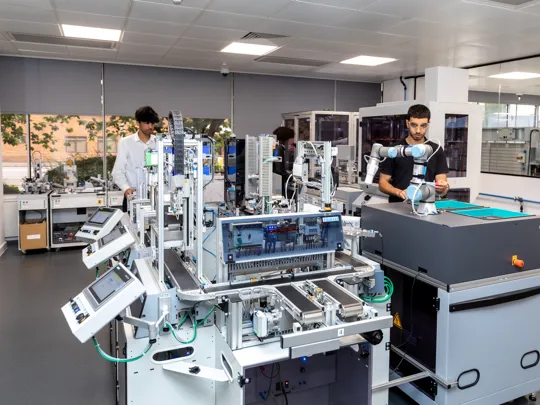
ADVANCED ENGINEERING FACILITIES - Learn in specialist facilities at our Camden House campus, including manufacturing, robotics, mechatronics and testing laboratories, while using industry-standard software such as SolidWorks, AutoCAD, ANSYS, MATLAB and Python.
TOP FOR STUDENT SATISFACTION - We came third in the UK for overall student satisfaction among universities in the National Student Survey 2026 (when taking the average score for student satisfaction for each of the 26 questions in the NSS).
Our facilities
Students on our engineering courses learn in industry-standard facilities designed to develop practical, career-ready skills. At our Camden House campus, you'll have access to specialist engineering labs, workshop spaces and professional software used across the engineering sector.
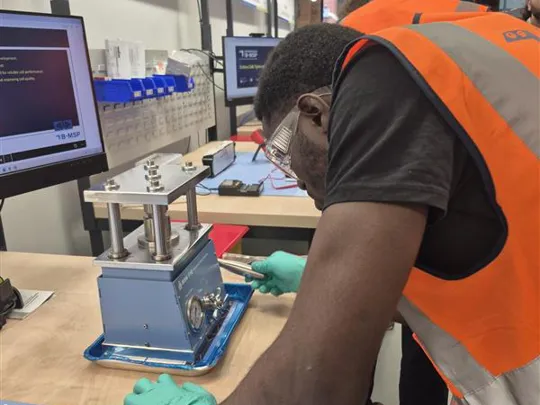
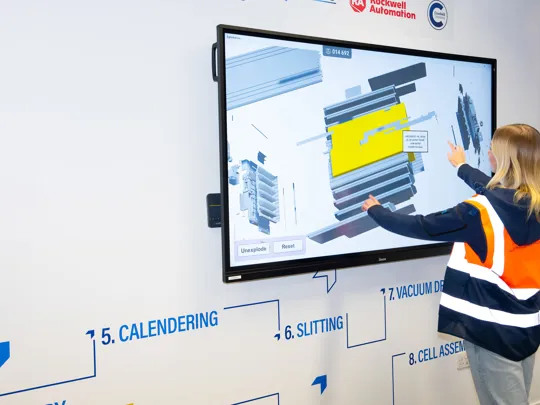
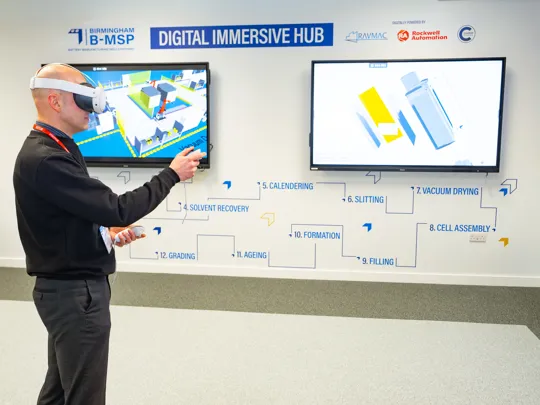
You'll also benefit from our innovative Battery Manufacturing Skills Pathway facilities at the James Cond Building. Featuring immersive virtual reality (VR) training and a dedicated battery manufacturing workshop, these facilities provide hands-on experience with the technologies supporting the future of sustainable transport, energy storage and advanced manufacturing.
Our facilities include:
Mechanical and materials testing labs for exploring the properties and performance of engineering materials.
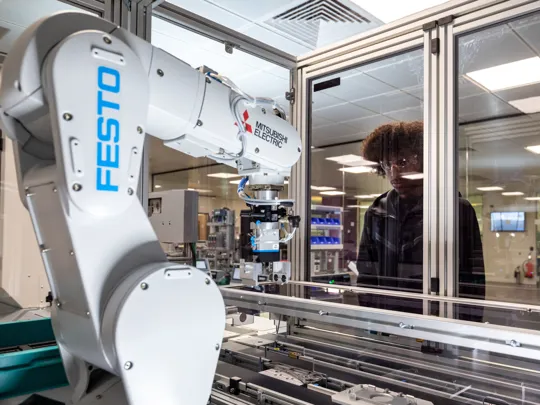
Mechatronics and robotics labs featuring robotic arms, sensors and automation equipment.
Thermodynamics and fluid mechanics labs for studying energy, heat transfer and fluid systems.
Industry-standard software, including SolidWorks, MATLAB, AutoCAD and Fusion 360 for design, simulation and engineering analysis.
Control systems and programming tools, including LabVIEW, Arduino and Raspberry Pi platforms for automation and smart engineering projects.


Course breakdown
- Year 1
- Year 2
Core Modules
Applied Engineering Mathematics
Engineering relies on mathematics to model, analyse, and solve real-world problems. This module equips students with the core mathematical tools required across engineering practice. Through practical, engineering-focused examples, students will develop confidence in using calculus, differential equations, transforms, and statistical methods to analyse systems and interpret data encountered in modern engineering practice.
Digital Design and CAD for Engineering
Modern engineering design is increasingly digital, integrated, and data-driven. This module introduces students to 3D CAD modelling, computer-aided manufacture, and engineering computation. Students will develop practical skills in creating parametric models, generating manufacturing documentation, and using software tools to support and improve design quality. The module also highlights how mechanical designs interface with electrical and control systems in real engineering environments.
Electrical and Electronics Principles
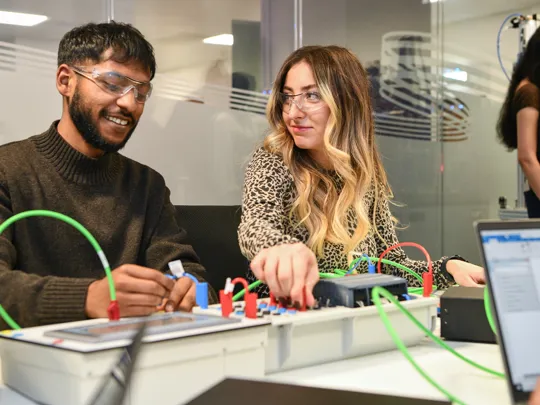
Electrical and electronic systems underpin modern engineering technologies. This module provides a practical introduction to circuit analysis, electronic components, digital logic, and programmable control. Through hands-on laboratory work, students will develop confidence in building and testing circuits safely while gaining essential knowledge of programmable logic controllers (PLCs) and control systems used widely in industry.
Engineering Science and Principles
Engineering systems are governed by core scientific principles. This module provides a foundation in engineering science, covering forces and motion, energy and heat transfer, fluid behaviour, and vibration. Students will gain the knowledge needed to understand how real engineering systems behave, forming a strong base for advanced modules.
Fundamentals of Engineering Practice
Engineering is about more than technical skill; it also involves responsibility, teamwork, and professional judgement. In this module, students will apply engineering design methods to a practical build project while developing an understanding of health and safety, ethics, inclusivity, and sustainability. Through teamwork and reflection, students will begin to build the professional skills and behaviours expected of modern engineers.
Material and Manufacture
Materials and manufacturing are at the heart of all engineering systems. This module introduces students to the key engineering materials used in industry and the processes used to shape and manufacture them. Students will explore how material properties influence performance and cost, gain hands-on experience through laboratory testing, and learn how to make informed, sustainable material choices for real engineering applications.
Core Modules
Automated Manufacturing Processes
Modern manufacturing relies on the integration of advanced processes and automation technologies. This module introduces students to casting, forming, machining, additive manufacturing, and automated production systems. Students will evaluate process capabilities, match materials to processes, integrate automation tools, and apply quality management and continuous improvement principles to optimise manufacturing performance.
Control Systems Engineering
Control systems are central to modern engineering, from automated manufacturing to electromechanical devices. This module equips students with the knowledge and skills to model, analyse, and design control systems, including PID controllers, and to evaluate performance using simulation tools. Students will gain hands-on experience in understanding system behaviour, stability, and response characteristics, preparing them for advanced engineering applications.
Engineering Management
Effective project management is essential to successful engineering practice. This module equips students with the tools and techniques to plan, monitor, and control engineering projects. Students will also explore ethical, environmental, and legal responsibilities, as well as quality and operations management principles. The module provides practical insights into managing change within engineering assets and operational contexts.
Robotic Systems Fundamentals
Robots are central to modern automated manufacturing. This module introduces students to industrial robotics, covering motion control, programming, safety, and system integration. Students will gain hands-on experience with robotic workcells, learning to integrate sensors and PLC signals while analysing performance and understanding the limitations of robotic systems in manufacturing applications.
Sustainable Engineering and Renewable Energy
Sustainable engineering is central to modern industry and society. This module introduces students to renewable energy technologies, sustainability principles, and the environmental and societal impacts of engineering solutions. Students will learn to assess system efficiencies, compare renewable integration strategies, and make informed, sustainable decisions in the design of engineering systems.
Thermo-Fluids and Energy Systems
Energy and fluid systems are at the core of modern engineering. This module introduces students to thermodynamic cycles, heat transfer, and fluid flow in engineering applications. Students will explore fluid machine design and turbomachinery, apply analytical methods to real systems, and develop practical skills through experimental work, interpreting results with attention to accuracy and uncertainty.
The modules listed above for this course are regularly reviewed to ensure they are up to date and informed by industry as well as the latest teaching methods. On occasion, we may need to make unexpected changes to modules – if this occurs, we will contact all offer holders as soon as possible.
Entry requirements
Entry requirements
A-levels: DD (Engineering, Physics or Mathematics are desirable, but not mandatory).
BTEC: A BTEC grade profile of PPP for a National Extended Diploma, MP for a National Diploma, or D for a National Extended Certificate. Equivalent combinations of BTEC Level 3 qualifications achieving the required standard will also be considered.
Apprenticeship: Successful completion of an Advanced Apprenticeship (Level 3).
Tariff: Other Level 3 qualifications are accepted for entry. A minimum of 48 UCAS Tariff points will be required.
Access to Higher Education Diploma: A recognised Access to Higher Education Diploma, achieving a minimum of 48 UCAS Tariff points or equivalent.
GCSEs: You should also have a minimum grade 4 in GCSE Mathematics, or Functional Skills Level 2.
Work-based: We also give equal consideration to applicants who are currently in work and wish to apply to University College Birmingham. To apply, you must have a minimum of 3 years’ relevant work experience, demonstrating management or supervisory duties. Your application must also include a reference from your line manager supporting your entry to higher education. For further details, please contact Admissions.
Key information
Teaching and assessment
We won silver for our lecturing and teaching quality in the regional Whatuni Student Choice Awards 2026, as voted for by students themselves.
The course design emphasises a blend of theoretical knowledge and practical experience through diverse methods. You will be expected to commit around 20 hours per week for individual study time in addition to scheduled contact hours.
Contact hours at university are typically 12 hours per week with a variety of different teaching methods:
Lectures, tutorials, and seminars
Laboratory practicals and workshops, supported by cutting-edge teaching facilities and an Advanced Manufacturing Festo facility
Real-world simulations and computer practical classes
Problem-solving classes, example sheets, and research projects
Group and independent practical tasks
Directed reading and resource-based learning
Project supervision
Assessment
The estimated breakdown of assessment for this HND course varies by year, reflecting the progression of learning and skill development.
1st Year:
Coursework – 30%
Written Examinations – 50%
Practical assessment – 20%
2nd Year:
Coursework – 60%
Practical Assessment – 20%
Written Examinations – 20%
Our teaching and assessment is underpinned by our Learning and Teaching Strategy 2025-2030.
Timetable
We understand that you need to balance study with work, so your lessons will be timetabled into one day a week for part-time study.
Tuition fees for home students
If you are a Home student or an EU student with settled/pre-settled status enrolling on a full-time HND in 2026/2027, your fee for this academic year will be £9,790. UK students do not pay tuition fees for any placement periods. The part-time fee for this academic year is £4,895.
View tuition fees for home students
Please note: the fees stated are subject to parliamentary procedure. Tuition fees are expected to increase each academic year in line with the maximum permitted value set by the Government for that academic year. The expected rise for Home undergraduate students (including those on a foundation year course) may impact both new and continuing students.

This course is delivered in partnership with the Greater Birmingham and Solihull Institute of Technology (GBSIoT).
Accreditations, endorsements and partnerships
University College Birmingham works with a wide range of organisations to ensure you receive the best possible training and qualifications recognised by industry.
Career opportunities
The example roles and salaries below are intended as a guide only.
Manufacturing engineer
Average salary: £45,000 – £55,000 per year (industry guide)
Automation engineer
Average salary: £35,000 - £45,000
Industrial engineer
Average salary: £30,000 - £38,000
Graduate manufacturing engineer
Salary Range: £25,000 – £34,638 per year
Process engineer
Average salary: £33,000 - £42,000
Research and development engineer
Salary Range: £30,000 – £50,000 per year

Rachael’s Story
Senior engineering lecturer Rachael has witnessed first-hand the rapid changes in industry and is now sharing her vast experience with our students.

Other courses you may like
Applied Mechanical Engineering Higher National Diploma
Study Applied Mechanical Engineering HND and develop industry-ready skills in mechanical design, manufacturing engineering, materials technology and engineering analysis through hands-on learning and expert teaching.
Electromechanical Engineering BEng
The world is crying out for skilled engineers and our Electromechanical Engineering BEng degree will give you all the key disciplines – essential math's, mechanical and electrical science, electronics, design and programming, learning in Industry 4.0 facilities.
Mechanical Engineering BEng (Hons)
BEng (Hons) Mechanical Engineering at University College Birmingham develops core and advanced skills in mechanical systems design, smart manufacturing, thermofluid mechanics, CAD/FEA simulation, and Industry 4.0 technologies. Ideal for students seeking careers in automotive, aerospace, energy, and sustainable engineering. Combines theoretical knowledge with real-world application in cutting-edge labs.
Automated Manufacturing Engineering BEng (Hons)
Manufacturing engineering sits at the centre of modern industry, combining engineering expertise with advanced automation and digital technologies to transform how products are designed and produced. Our forward-looking manufacturing engineering degree is designed to prepare you for careers in smart factories, robotics and automated production systems.
Construction Management Higher National Certificate
Our part-time Higher National Certificate course enables you to study for a widely-recognised Level 4 qualification alongside your work commitments. Boost your knowledge in a range of key construction topics including construction technology, surveying, science and materials.
Computer Science BSc (Hons) / FdSc
Open the doors to a future in the modern world of technology. Our Computer Science degree lets you explore the latest cutting-edge topics in the computing industry and will help you become confident with everything from networks and databases to programming and cyber security.
Cyber Security BSc (Hons) / FdSc
Become part of the fight against cyber attacks and cyber crime by taking this cutting-edge course. Our degree will give you key cyber security skills and up-to-date knowledge in a range of technical areas, applying your training in our cyber security laboratory and on placement.
Applied Engineering Higher National Certificate
If you want to work in engineering and are looking to boost your skills through part-time study, our Higher National Certificate course lets you explore core subjects such as engineering design, maths and science to gain widely-recognised Level 4 qualification alongside your work commitments.