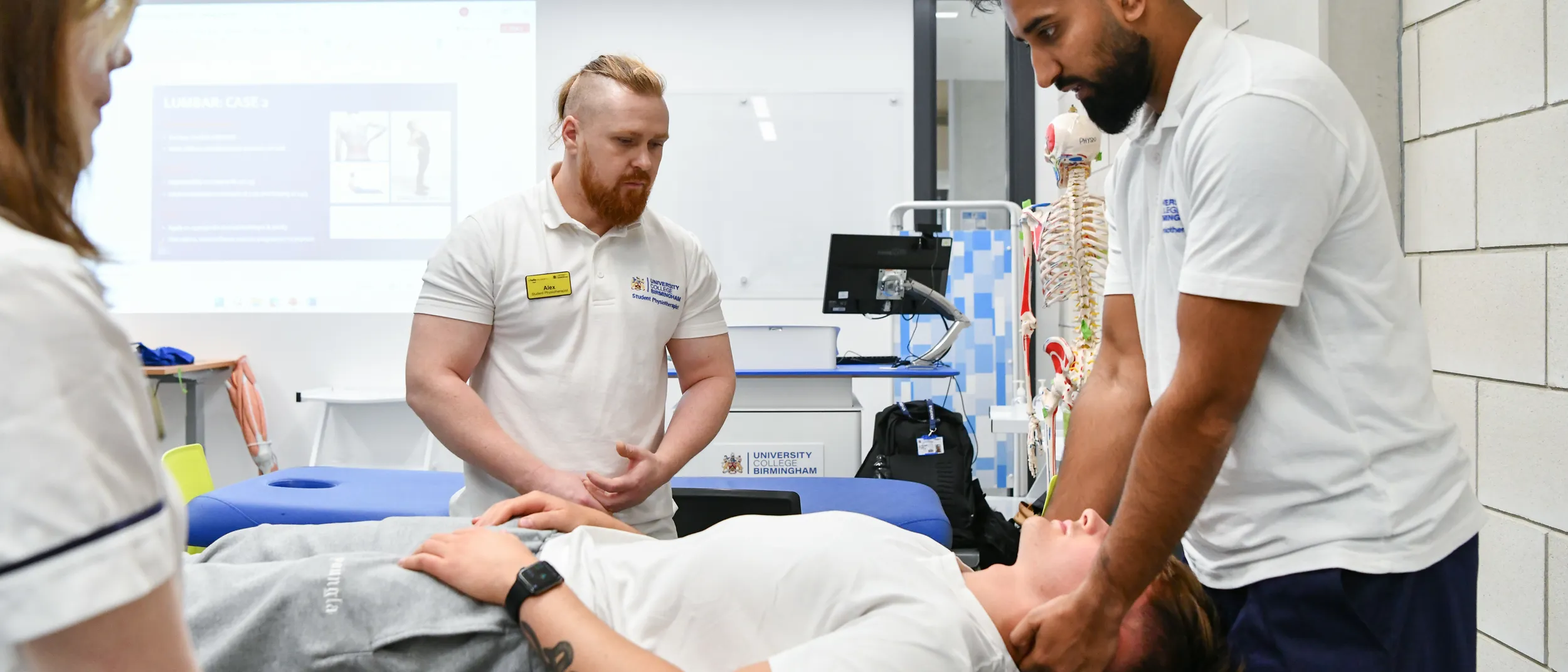
PHYSIOTHERAPY DEGREE APPRENTICESHIP
BSc (Hons)
Accredited by the CSP and approved by the HCPC
- Apprenticeships
- Courses
- Physiotherapy Degree Apprenticeship BSc (Hons)
Course Level
Level 6
Duration
3 years FT
90% of apprentices will remain in employment after completing their apprenticeship
This apprenticeship is 3 years instead of the typical 4 year apprenticeship
The BSc (Hons) Physiotherapy Degree Apprenticeship at University College Birmingham prepares apprentices to become confident, compassionate, and competent Allied Health Professionals capable of delivering safe, evidence-informed, person-centred care across diverse healthcare settings.
Grounded in UCB’s values of excellence, empowerment, and equity, the programme blends academic study with extensive workplace learning, enabling apprentices to apply theoretical knowledge in real-world clinical environments under professional supervision. It fosters critical thinking, cultural humility, and professional judgment, ensuring graduates meet HCPC Standards of Proficiency and uphold CSP values.
Aligned with UCB’s inclusive curriculum and practice principles, the programme promotes equity, belonging, and representation in all learning and assessment activities. Apprentices draw on lived experiences to enrich collaborative learning and inclusive healthcare practice.
Training emphasizes hands-on physiotherapy skills, evidence-based decision-making, and multidisciplinary teamwork. Apprentices learn to assess patients, design treatment plans, and deliver interventions while engaging in research and continuous professional development.
On completion, graduates register with the HCPC as physiotherapists ready to work independently in the NHS, private practice, or community settings, with the capability to progress into specialist or leadership roles. This transformative programme equips learners to make a meaningful impact on patient care and drive positive change in healthcare delivery.
Why choose this apprenticeship?
- BOOST YOUR SKILLS – Gain essential knowledge and skills for the field of physiotherapy as well as transferable skills such as leadership and management
- PRACTICAL APPLICATION – Hone your practical skills on-the-job in your workplace as well as off-the-job in our state-of-the-art training facilities
- INDUSTRY APPROVED – Register as a physiotherapist with the HCPC on completion of your apprenticeship
- EXPERT TEACHING – Get excellent support from our experienced academic lecturers and guest speakers with clinical expertise in a variety of areas
- EARN A WAGE – Apprentices are classed as employees, which means getting paid while gaining valuable work experience. You'll be learning while applying new skills in a real working environment
Our facilities
University College Birmingham offers a variety of cutting-edge facilities to support your physiotherapy training, including our new Health Skills and Simulation Suite, providing a specialist learning environment which replicates real-life care settings to enhance your practical experience.
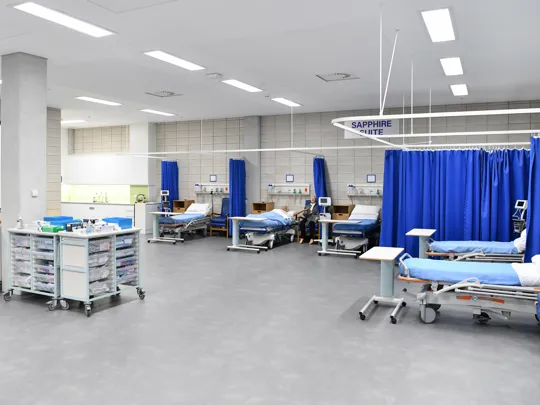
Our facilities include a replica hospital ward complete with simulation manikins and integrated filming and audio equipment

Our simulation facilities also include a community care environment, allowing you to practise working in the variety of settings you may encounter in your future career
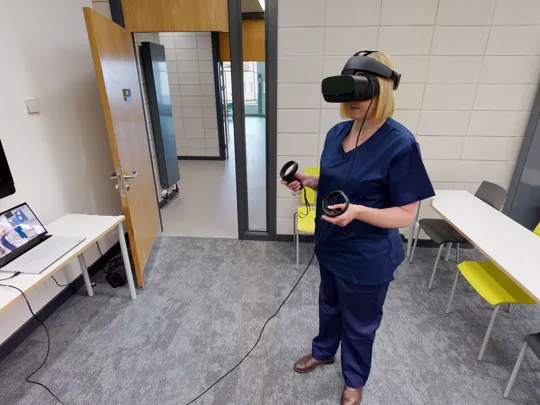
We have a clinical skills teaching room with virtual reality technology to support your training, along with additional study and teaching areas

Our gym and Human Performance Laboratory features the latest equipment and is used on our physiotherapy courses for exercise progression sessions.
Course breakdown
- Year 1
- Year 2
- Year 3
Core modules
Role Of Physiotherapy (APP)
This module introduces students to the diverse and evolving role of physiotherapists across healthcare settings. Students will explore how physiotherapy fits into both primary and secondary care, gain insight into professional standards, and discover the wide range of specialisms within the field. The module also highlights the importance of working within a multidisciplinary team (MDT), helping students understand how physiotherapists collaborate with other healthcare professionals to support patient care. This module offers a practical and engaging foundation for future learning and clinical practice.
Foundations of Physiotherapy Practice: Cardiorespiratory (APP)
This module introduces the foundational principles of cardiorespiratory anatomy and physiology, providing a vital platform for developing clinical reasoning skills in the context of cardiorespiratory conditions. As the course progresses, you’ll build a strong understanding of normal cardiovascular and respiratory function, alongside techniques for effective assessment. Through a combination of interactive lectures, practical workshops, and simulation-based learning, you’ll gain hands-on experience in a supportive and safe environment—preparing you for real-world clinical practice.
Health Promotion And Inequalities Across The Healthcare Setting (APP)
This module explores the evolving role of physiotherapists in promoting health and preventing disease across the lifespan, in line with national strategies such as the NHS Long Term Plan. Students will investigate how physiotherapy contributes to public health initiatives and examine the impact of health inequalities on individuals and communities both in the UK and globally. Through analysis and practical learning, students will develop communication skills and begin to understand how they can actively contribute to reducing health disparities within their scope of practice. The module encourages students to compare approaches to health promotion and reflect on their role in supporting equitable healthcare delivery.
Foundations Of Physiotherapy Practice: Neurology (APP)
This module introduces students to the structure and function of the neurological system—from the brain and spinal cord to peripheral nerves. Through a blend of theoretical learning and practical simulation, students will explore normal neurological function and begin applying this knowledge to develop clinical reasoning skills, laying the groundwork for more advanced practice in their second year. Hands-on experience is a key feature of this module, with simulated assessments providing a safe and supportive environment to develop essential assessment skills in neurology
Foundations Of Physiotherapy Practice: Musculoskeletal Systems (APP)
This essential module introduces apprentices to fundamental principles of musculoskeletal physiotherapy, establishing the foundation for clinical practice and professional development. Through integrated theoretical learning and practical application, students explore the structure and function of the musculoskeletal system with emphasis on movement analysis and clinical assessment. The module covers comprehensive anatomy and physiology of bones, joints, muscles, and connective tissues, alongside systematic assessment techniques. Students develop proficiency in professional conduct, safety protocols, accurate test performance, effective communication, patient handling, positioning techniques, and selecting outcome measures. Practical sessions reinforce theoretical concepts through hands-on experience with palpation, range of motion measurement, and functional movement analysis. This foundational module prepares students for advanced Level 5 studies in complex assessment methodologies and pathology management, ensuring apprentices develop the essential knowledge and clinical skills required for safe, effective musculoskeletal physiotherapy practice
Physiotherapy Evidence-Based Practice (APP)
The evidence-based practice module is designed to begin to develop the skills needed to interpret and analyse research, laying the groundwork for applying evidence to real-world clinical scenarios. As part of this module, students will explore how evidence supports safe, effective, and patient-centred care, and how it contributes to the development of clinical reasoning throughout their studies. Through interactive learning and guided activities, students will gain confidence in using evidence to support their practice and prepare for more advanced applications in later stages of the course.
Core modules
Clinical Physiotherapy Practice: Cardiorespiratory (APP)
This module provides students with an in-depth understanding of the cardiovascular and respiratory systems, focusing on their relevance to physiotherapy practice. Through a blend of theoretical teaching, practical workshops, and simulation-based scenarios, students will develop the clinical reasoning skills necessary to assess, treat, and rehabilitate patients with cardio-respiratory dysfunction across a range of healthcare settings. Students will explore the anatomy and physiology of the cardio-respiratory system and apply this knowledge to real-life patient cases. They will learn to identify signs and symptoms of dysfunction in both acute and chronic conditions, select appropriate treatment strategies, and evaluate outcomes using evidence-based approaches. The module also emphasises the importance of person-centred care, encouraging students to consider the psychological, emotional, social, cultural, and environmental factors that influence patient management. By critically engaging with current research, students will be equipped to integrate evidence into their clinical decision-making and physiotherapy intervention.
Clinical Physiotherapy Practice: Musculoskeletal Systems (APP)
This module develops students’ understanding of the MSK system and its role in movement, assessment, and rehabilitation, focusing on the assessment, treatment, and rehabilitation of MSK conditions across the body. Through a blend of theoretical learning and practical simulation, students will develop essential clinical reasoning and hands-on skills to support their professional development. Students will explore the relationship between anatomy, physiology, and movement, and apply this knowledge to real-world clinical scenarios. They will learn to identify signs and symptoms of both acute and chronic MSK dysfunctions, select appropriate treatment interventions, and evaluate outcomes effectively. The module also emphasises the importance of person-centred care, encouraging students to adapt their approach in response to the psychological, emotional, social, cultural, and environmental needs of service users. In addition, students will critically engage with current research to inform evidence-based physiotherapy practice.
Clinical Physiotherapy Practice: Neurology (APP)
This module provides students with a deeper understanding of the neurological system and its role in movement, function, and rehabilitation. Students will learn to assess and treat a range of neurological conditions, exploring both acute and long-term presentations. Through a combination of theoretical study and simulated practice, students will develop clinical reasoning and decision-making skills essential for effective neurological physiotherapy. The module also emphasises the integration of evidence-based practice into everyday clinical work, preparing students to deliver safe, effective, and person-centred care. Students will be encouraged to consider the diverse needs of service users, including psychological, emotional, social, cultural, and environmental factors, and adapt their approach accordingly.
Holistic Community Physiotherapy Approach (APP)
This module prepares students to deliver holistic, person-centred care across a range of healthcare settings, with a particular focus on community-based practice in line with evolving NHS priorities. Students will develop the confidence and autonomy to work effectively in diverse environments, including those with limited resources, and support patients from varied socioeconomic backgrounds. Through practical learning and critical engagement with current research, students will enhance their communication, leadership, and teamwork skills—essential for collaborating with healthcare professionals, patients, and caregivers. The module also encourages students to integrate evidence-based practice into their clinical decision-making, ensuring safe, ethical, and effective physiotherapy interventions.
Leadership in Health Care (APP)
This module is designed to equip students with the knowledge, skills, and critical understanding required to lead effectively within complex and evolving health and social care environments. Through exploration of leadership theories, organisational dynamics, and policy frameworks, students will develop the ability to evaluate leadership approaches, apply evidence-based strategies, and reflect on their own leadership style. Learners will gain insight into how leadership influences patient safety, team performance, and service delivery, while also considering ethical practice, equality, and inclusion. By the end of the module, students will be able to analyse real-world challenges, propose innovative solutions, and demonstrate leadership competencies essential for driving positive change in healthcare settings.
Project (APP)
This module equips students with the skills and knowledge needed to explore service development and research within physiotherapy, laying the groundwork for their final-year dissertation. Over the course of the year, students will identify areas of personal and professional interest, allowing them to design a meaningful research or service development proposal. Students will gain a solid understanding of different types and sources of evidence to inform and advance clinical practice. They will critically appraise research principles, methodologies, and ethical considerations, and apply this knowledge to create a proposal that reflects both academic rigour and person-centred values. In addition to developing research literacy, the module fosters leadership skills and encourages students to build a strong sense of professional identity within their chosen specialist area.
Core modules
Applied research in Physiotherapy (APP)
This final-year module provides students with the opportunity to undertake an independent research project that explores a topic of relevance to physiotherapy practice, education, or service delivery. Through guided supervision, students will develop and apply research skills, critically engage with evidence, and contribute to the advancement of professional knowledge. Students may choose to conduct an empirical study, a systematic review, or a literature-based investigation. The module supports the development of ethical research practice, analytical thinking, and academic writing, culminating in a formal dissertation.
Practice-Based Learning (APP)
Practice Based Learning 3 enables you to experience the role of physiotherapists first-hand whilst developing professional, clinical, and interpersonal skills. This is achieved through a range of practice-based learning activities and placements across diverse health and social care settings and in the university.
Preparing for Practice: Managing Complexity in the Acute Setting (APP)
This module is designed to prepare students for the realities of clinical practice within the modern NHS, focusing on the assessment and management of complex patient presentations in acute inpatient settings. Students will explore the full patient journey—from Emergency Department (ED) and Intensive Critical Care Unit (ICCU) through to hospital discharge—across musculoskeletal (MSK), cardiovascular-respiratory (CVR), and neurological (Neuro) specialisms. Through simulated scenarios and case-based learning, students will consolidate their clinical knowledge and reasoning developed throughout the programme. The module provides a safe and supportive environment for students to refine their physiotherapeutic assessment, treatment, and handling skills before entering professional practice.
Preparing for Practice: Managing Complexity in the Community Setting (APP)
This module prepares students for the dynamic and complex nature of physiotherapy within community settings. It focuses on developing holistic, adaptable therapists with advanced clinical reasoning and practical skills, capable of working collaboratively across professional boundaries. Through a blend of theoretical teaching, hands-on practice, and simulation-based learning, students will gain the confidence and competence to deliver safe, effective, and person-centred care across diverse environments—including home-based, outpatient, and community rehabilitation settings.
Entry requirements
Entry requirements
Access to Higher Education Diploma: 120 UCAS Tariff points including a minimum of 30 Level 3 credits at Distinction in one of the following subjects: health science, health professional, biomedical science, biosciences, social science and health, science, science for health practitioners.
A-levels: Grade profile of BBB, including grade B in biology or physical education.
T-levels: A T-level in Science with an overall Merit grade.
BTEC: Grade profile of DDM from one of the following subjects:
-
Applied science, applied biomedical science, applied human biology.
-
Sports and exercise science, health and social care - These two subject areas must include an anatomy and physiology unit.
DDM can be achieved from either an Extended Diploma or a combination* of smaller BTEC qualifications.
*If you are not studying an Extended Diploma in one of the related course subjects above, we will also consider 6, 9 or 12 Unit BTECs in the subject areas stated, provided you are also studying additional level 3 qualifications that would sufficiently meet our tariff requirements.
Irish Leaving Certificate: Grade profile of three subjects at H2, including biology and one subject at H3. The remaining tariff points can be made up of Higher or Ordinary subject grades.
Tariff: Other Level 3 qualifications are accepted at University College Birmingham for entry, and a minimum of 120 UCAS Tariff points will be required from a vocationally relevant subject matter. To determine if your qualifications are suitable for application, please contact our Admissions team at 0121 604 1040 or complete our enquiry form here.
GCSEs: GCSE/IGCSE maths and English language grades 9-4 (grade A*-C) or equivalent. GCSE equivalent qualifications include Functional Skills Level 2, Key Skills Level 2 or Learn Direct Level 2.
Irish Leaving Certificate grades of the following will be accepted as GCSE equivalencies in the subjects above:
-
O1-O4 or A1-C3 (Ordinary Level)
-
H1-H7 or A1-D3 (Higher Level)
We would expect you to have achieved GCSE qualifications prior to applying for this course. However, we will consider applications from students with one GCSE qualification pending.
Students must also complete an Enhanced Disclosure and Barring Service (DBS) check. The University will coordinate and fund the completion of the DBS check. Further information is available regarding the DBS check – the requirements prior to entry onto the course can be found here, and a summary of the documents required for the application process can be found here.
Graduate Entry: A 2:2 or above in a related area will also be considered.
Key information
Teaching and assessment
Note: Indicative information only – actual timetables and assessment regimes will be issued at your induction.
Teaching
- Practical lessons
- Small seminars
- Self-directed study
- Placement learning opportunities
- Simulation
Assessment
- Practical exams
- Written assignments
- Vivas
Our teaching and assessment is underpinned by our Learning and Teaching Strategy 2025-2030.
Other courses you may like
Physiotherapy BSc (Hons)
Kick-start a career as a physiotherapist by studying our Physiotherapy degree. This course will give you advanced training to diagnose and rehabilitate across a range of conditions, aiding recovery from surgery, accidents, strokes or sports injuries and supporting people with disabilities.