June 2026
Rethinking the MBA for a new generation of leaders

By Claire Huggins
Share post:Read time: approx 5 mins

We are an ISEP accredited training centre
Authenticity: a soft skill or a strategic advantage
This isn’t an MBA for those climbing a single ladder - it’s for those building entirely new ones.
Whether you’re stepping into the workforce for the first time or pivoting across sectors, our MBA recognises a simple truth: potential is not defined by years served, but by mindset, adaptability, and the ability to learn fast and apply faster.
At its core, this MBA is about authenticity. Not performative leadership, but real, reflective practice. We challenge students to understand who they are as leaders before asking them to lead others.
Because in a world of uncertainty, self-awareness is not a soft skill, it’s a strategic advantage.

Bruce Morrison, MBA programme lead
Agility: the world won’t wait for you
Recent market disruptions have shown just how quickly industries can pivot or fail. Employers are no longer asking, “What do you know?” They’re asking, “How quickly can you respond when what you know becomes obsolete?”
This MBA embeds that agility through authentic assessment, live projects, real-world problem solving, and industry engagement that ensures learning is never disconnected from practice.
Let’s be clear: writing essays about leadership is not the same as practising it.
That’s why our approach prioritises skills development that translates. Students collaborate across disciplines, work with industry partners, and tackle challenges that reflect the messy, complex reality of modern organisations. They don’t just learn frameworks, they test them, question them, and then adapt them.
And critically, they do so in diverse, inclusive learning environments that reflect the workplaces they are about to enter and the communities they call home. Diversity here is not a module. It is the context.
Because better decisions come from broader perspectives and the ability to work across difference is no longer optional.
Check out our latest news stories

University College Birmingham renews £6,000 Cost of Living Allowance for 2027
The University renews its committment to student support.
Read more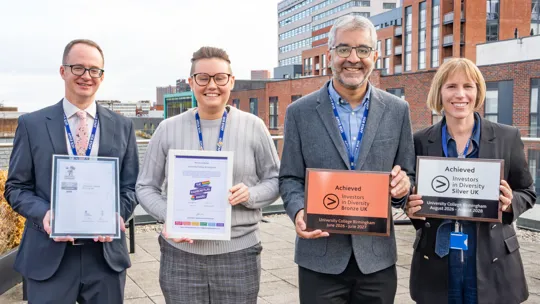
University College Birmingham strengthens its commitment to inclusion
National equality, diversity and inclusion accolades reflect our ongoing work to embed inclusion into university life.
Read more
University expands hospitality training with Beyond and Brocks
Investment programme set to transform the student experience and strengthen Birmingham's hospitality sector.
Read more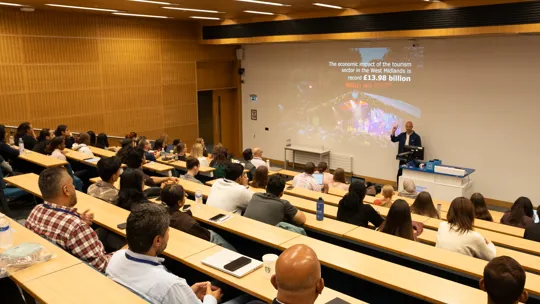
Hospitality and tourism conference inspires students to step up to Invictus Games
University College Birmingham students got a glimpse of how they could be part of one of the world's most ins…
Read more
University's first social work apprentices begin their studies
Developing the next generation of social workers and creating a learning community where apprentices feel that they belong.
Read more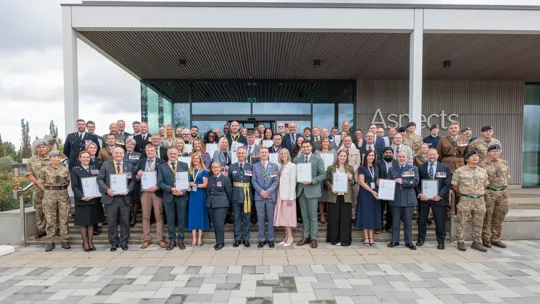
University College Birmingham earns Armed Forces Covenant Silver Award
The University continues to strengthen its engagement with the Armed Forces sector.
Read more