June 2026
Academics shine in new publications - strengthening research-led teaching and student success
- About us
- News and Insights
- Academics shine in new publications - strengthening research-led teaching and student success

Read time: approx 6 mins
University academics have been making their mark across national and international platforms, with a series of research publications that highlight the depth, diversity and real-world relevance of the expertise behind our teaching.
Here, we round up how research-active academics directly enhance the learning experience for our students, and how that culture inspires learners to publish and contribute to global conversations themselves.
October 2025: Participation, belonging and inclusive academic practice
Dr Kate Cuthbert (Associate Professor, Deputy Dean Learning and Teaching, School of Health, Life Sciences and Education) co-authored chapter six of Delivering and Evaluating Participation after Access, a book that examines how higher education providers can meaningfully support students after enrolment.
Her contribution explores practical, evidence-based approaches to strengthening participation, belonging and student engagement, work that directly informs the University’s commitment to inclusive teaching and ensures learners feel supported throughout their time with us.
November 2025: Sports Journalism and Identity
The book ‘Sports Journalism and Identity’, “critically examines the professional experience of sports journalists and the impact that has on the content the industry produces. In particular, it interrogates race, sexuality and disability through an intersectional lens”.
Deputy Dean- Quality Accreditation and Apprenticeships for the School of Health, Life Sciences and Education, Beth Fielding Lloyd’s co-edited collection connects sports journalism practice with issues of diversity, identity and representation, drawing on lived experience within the sector. Her insights help prepare students for ethical, thoughtful careers in media, sport and beyond, and are a strong example of our industry-informed provision.
March 2026: public engagement and critical research
Psychology lecturer Dr Luan Cassal’s co-authored article ‘Queering migration, migrating queer studies: a discourse analysis of Traces of Displacement and (Un)Defining Queer at the Whitworth Gallery’ uses qualitative methods in psychology to critically analyse ideas of gender, sexuality, race and nationality in two public art exhibitions held at Manchester’s Whitworth Gallery.
This kind of critical, research-informed thinking feeds directly into how psychology students are taught to question and analyse the world around them, strengthening the University’s adoption and integration of research-led learning. His work has also inspired our postgraduate students to use similar approaches in their assignments.
April 2026: hospitality research and evidence-based practice
Badawy Sayed is a lecturer in business and enterprise; his contributions to two articles for the International Journal of Hospitality Management extend our reach into applied professional practice. His work demonstrates how evidence-based research can improve decision-making in real organisations, while also feeding contemporary debates and industry insights back into the classroom.
Students benefit from teaching that reflects the latest challenges, innovations and professional expectations within the hospitality sector.
June 2026
Supporting neurodiverse educators
Helen Waters (senior lecturer in education) and Katarina Trumm (senior lecturer (health) and physiotherapy practice-based lead) have contributed to sector-wide conversations on supporting neurodiverse educators, reframing inclusion as something that must extend to staff as well as students.
Their blog piece for the Staff and Educational Development Association (SEDA), ‘How can observation become a tool for empowerment rather than judgment?’ explores how reflective practice and flexible systems create stronger, more responsive and inclusive teaching and learning environments for staff and students alike.
Collaborative writing in higher education
In Writing Partnerships in Higher Education, Kate Cuthbert’s co-authored chapter 12 explores how collaborative writing can transform academic practice. By demystifying co-writing and partnership with the inclusive use of technology, it models the communication and problem-solving skills we actively foster and encourage in our students.
Professional standards in dietetics
Kathleen Hennessy Priest’s (senior lecturer and programme lead Dietetics MSc (pre-registration)) co-authored chapter on adolescent nutrition in the Manual of Dietetic Practice (7th edition) places the University’s teaching firmly within contemporary professional standards and practice. Students learn from the same evidence-based frameworks used by qualified dietitians across the profession, strengthening the link between university learning and real-world practice.
Endorsed by the British Dietetic Association (BDA), the Manual of Dietetic Practice is widely recognised as the definitive reference text for dietitians throughout their careers and is considered the gold standard in dietetic practice. The manual provides a comprehensive and authoritative guide to contemporary dietetics, underpinned by the latest research and evidence.
When our academics lead, our students follow
This culture of active, outward-facing scholarship doesn’t stop with staff. When our academics are front and centre with their published works, it’s no wonder our students follow suit.
A recent feature in the Good Tourism Blog showcased the perspectives of Global South students on sustainable tourism- a powerful example of learners stepping confidently into global conversations. Their success in being published, contributing and challenging assumptions grows from being taught by academics who do the same.
What this means for our students
Across this range of published pieces, a clear message emerges: University College Birmingham students learn from research-active academics who shape their fields, not just teach them.
This gives our learners:
- teaching informed by current research and industry debate
- assessment grounded in real-world expectations and professional standards
- the confidence to contribute to sector conversations themselves.
It’s this blend of scholarship, practice and care that defines the UCB experience - preparing students to step into their chosen fields with credibility, curiosity and a strong sense of professional identity.
In pictures

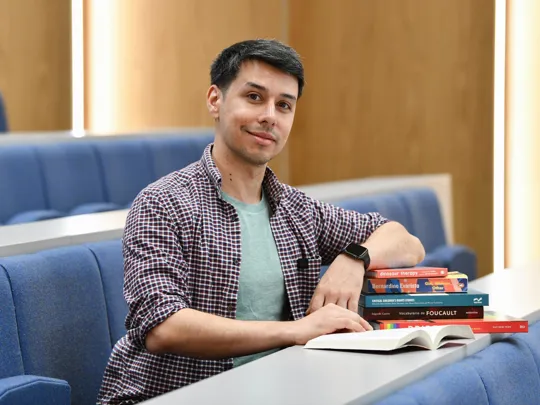
Dr Luan Cassal

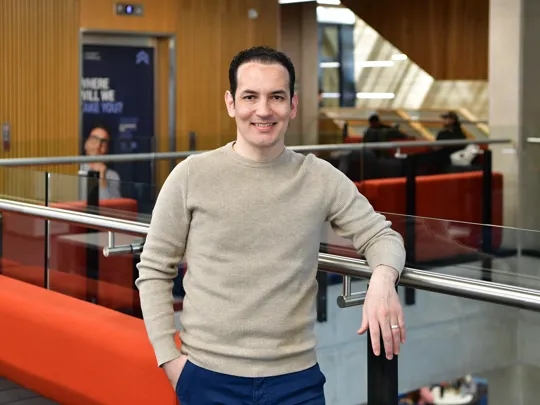
Badawy Sayed

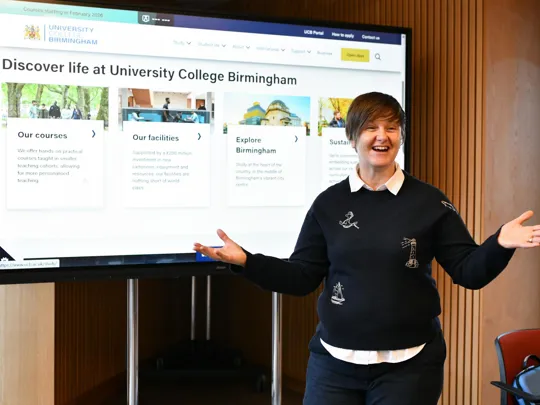
Helen Waters
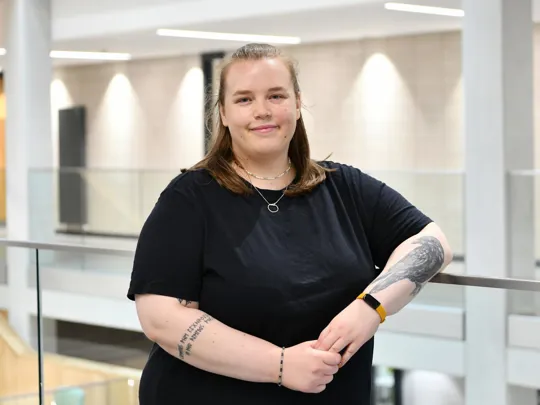
Katarina Trumm

Kathleen Hennessy-Priest

L-R: Calliope Elwood, Prasanna Katuwal and Regan Rushton
Check out our latest news stories

Academics shine in new publications - strengthening research led teaching and student…
How our published academics are inspiring students to do the same.
Read more
Impact Challenge sees students lead the way in sustainability innovation
Sustainability Challenge Competition celebrates student-led innovation under the theme Small Actions, Big Impact.
Read more
University lecturer showcases research on visual storytelling at LABRC 2026
Arwen Zheng shares her visual storytelling research at transdisciplinary conference.
Read more
University celebrates double GRAFTA shortlisting
Award shortlisting recognises the impact of HLSM Plus and Graduate Re‑Tune in boosting graduate employability across Birmingham.
Read more
Star graduates celebrated with ‘30 Under 30’ Acorn hospitality award
Two enterprising UCB graduates have been recognised as rising stars of the hospitality industry at the 2026 Acorn Awards.
Read more
Rethinking the MBA for a new generation of leaders
Why the pace and scale of change mean organisations can no longer rely on experience alone - they need adaptable, reflective leaders.
Read more