Recent searches
You do not have any recent searches.

October 2026

Preparing students for complexity, not certainty: rethinking what teaching and learning looks like in education, health and social care
By Claire Huggins

Share post:

Read time: approx 7 mins

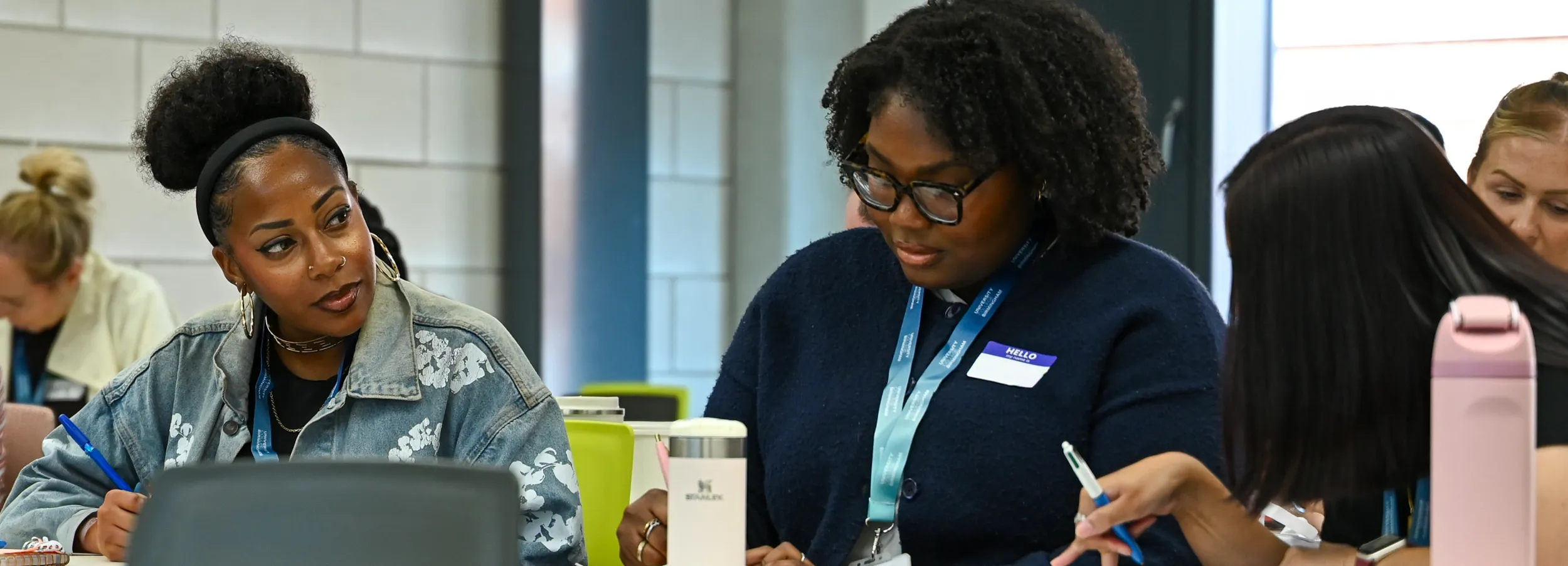
Main photo shows some of the University's first Social Worker Degree Apprenticeship (BA (Hons) and PGDip) learners at their induction event

Health, life sciences and education professionals are entering some of the most rewarding and demanding professions in society. Whether they go on to work in social work, healthcare, education, community services or specialist support settings, they will encounter people whose lives are shaped by a complex combination of circumstances, experiences and challenges.

In this insight piece, Dr Gemma Hunt (Head of Department for Social Work and Social Care), Jayne Hackett (Senior Lecturer in education) and Laura Holloway (Lecturer in education), have come together to explore how University College Birmingham champions academic expertise, professional practice and lived experience to prepare students for complexity, not certainty, in the working world.

Dr Gemma Hunt

The realities of the working world for health, life sciences and education professionals raise important question for educators.

Are we preparing students and apprentices simply to follow procedures and meet professional standards, or are we preparing them to navigate complexity, uncertainty and lived experience?

Of course, technical knowledge matters. Professional competencies matter. Regulatory standards matter. But increasingly, we believe that modern health and social care education must do more than transfer knowledge. It must help all learners develop curiosity, reflection, empathy, resilience and a deeper understanding of the people they will support throughout their careers.

At University College Birmingham, that belief is shaping how we think about professional education.
Learning with people, not just about them

If we want students to work in genuinely person-centred ways, then we must also think carefully about how they learn.

For many years, universities have invited people with lived experience to contribute to programmes. While those contributions are valuable, there is a growing recognition across the sector that lived experience should play a much more meaningful role in shaping education.

That belief sits at the heart of our work with Experts by Experience.

These are individuals who bring personal experience of health, social care, education and support services into our programmes. Their insight helps us challenge assumptions, improve teaching and ensure that students encounter perspectives that might otherwise be absent from academic discussion.

Importantly, they are so much more than guest speakers.

Our Experts by Experience help develop learning activities, contribute to teaching, provide feedback on curriculum content and participate in assessment processes. In doing so, they help ensure that the voices of people who access services are represented throughout the student journey.

Recently, that approach was demonstrated through an innovative escape-room activity developed within our health and social care provision. While the activity itself was engaging and enjoyable, its real value lay in the conversations it generated. Experts by Experience worked alongside academics to evaluate the exercise and suggest improvements, helping us strengthen its authenticity and relevance for future students.

This is co-production in its truest sense: academic expertise and lived experience informing one another to create richer, more meaningful learning.

"Our responsibility is not simply to prepare students to pass assessments or achieve professional registration.

Our responsibility is to prepare them to work alongside people."

Dr Gemma Hunt Head of Department for Social Work and Social Care

Jayne Hackett

Understanding the experiences behind the individual

Another important aspect of preparing students for contemporary practice is helping them understand how people's experiences can influence their interactions with services, education and support.

That is where trauma-informed and attachment-aware approaches have an increasingly important role to play.

Trauma-informed education encourages students and practitioners to look beyond behaviour or circumstances and consider the full range of experiences that may have shaped an individual's journey.

This is not about lowering expectations or creating special treatment. It is about recognising that understanding context can be critical to building effective relationships, promoting engagement and creating environments where individuals feel safe, respected and able to thrive.
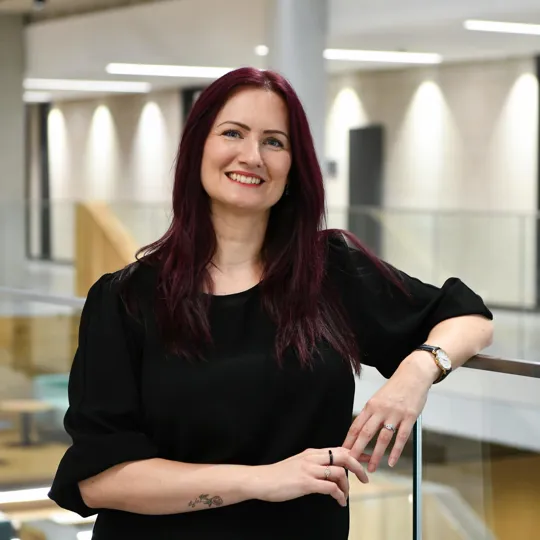
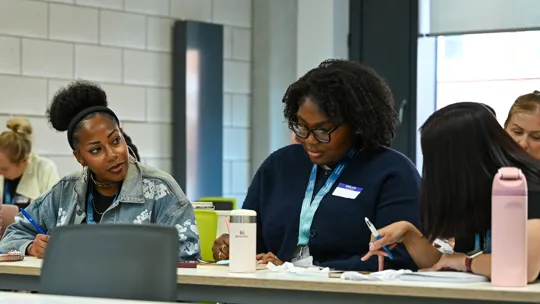
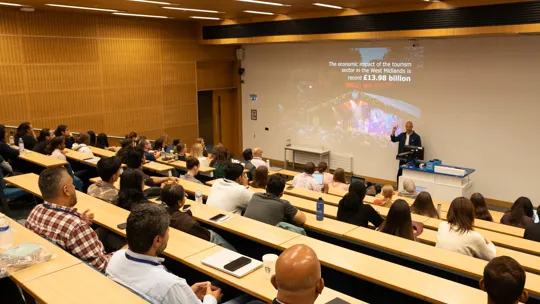
That philosophy was explored in depth at University College Birmingham's second annual Education Conference. Hosted by Jayne Hackett and Laura Holloway, the conference brought together students, practitioners and professionals for a day of learning, reflection and collaboration.

Despite the disruption presented by national rail strikes, the conference was extremely well-attended, reflecting the strong commitment within our community to developing trauma-informed and attachment-aware practice across education and professional settings.

The conference featured keynote contributions from Andrew Wright OBE, representing the Attachment Research Community, and guest speaker Alma Aganović (Bosnian war survivor and UCB’s Director of Marketing and Admissions), whose contribution highlighted the importance of hearing and understanding lived experience.

Ahead of the event, Alma wrote:

"Honoured to be part of this and a little nervous too. Sharing this part of my story is never easy, but it needs to be heard."

That simple statement captures something powerful. Meaningful learning often begins when people are willing to share experiences that challenge assumptions and encourage reflection.

Laura Holloway

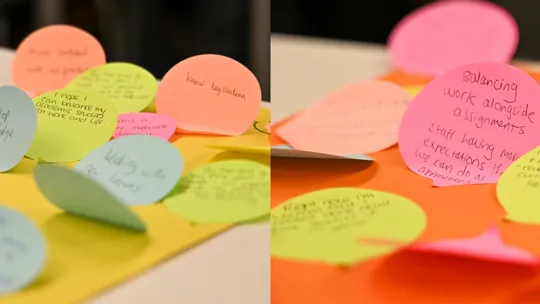
Workshops led by practitioners, academics and Experts by Experience explored how trauma-informed approaches can be applied across a range of educational and professional contexts, helping attendees connect theory with practical application.

Feedback from participants was overwhelmingly positive. Attendees described the conference as insightful, relevant and impactful, with many highlighting the value of hearing personal experiences alongside professional expertise.

One participant reflected that the learning would stay with them throughout their career. Another described it as an opportunity to think deeply about the educator they wanted to become.

The conference represented more than a successful annual event. It formed part of a broader aspiration, shared by Jayne and Laura, to embed joined-up learning across disciplines, creating opportunities for trauma-informed principles to be explored in a range of programmes, including areas such as sport and paramedic science.

That ambition reflects the increasingly interdisciplinary nature of professional practice itself.

Preparing professionals for complexity

When we look across these different initiatives, from apprenticeships and employer partnerships to co-production with Experts by Experience and trauma-informed learning, a common theme emerges.

They are all attempts to move beyond certainty and fixed frameworks.

The reality is that the people our graduates will support rarely arrive with neatly defined problems or clear solutions. Their lives are shaped by relationships, environments, opportunities and experiences, sometimes including significant adversity.

Preparing students for that reality requires more than academic instruction alone.

It requires opportunities to learn in real-world environments.

It requires meaningful engagement with people who have lived experience.

It requires reflection on how experiences can shape behaviour, relationships and outcomes.

And it requires educators who are willing to bring together different forms of expertise in pursuit of better learning.

As a higher education provider, our responsibility is not simply to prepare students to pass assessments or achieve professional registration.

Our responsibility is to prepare them to work alongside people.

In an increasingly complex world, that may be the most important lesson of all.

Explore the School of Health, Life Sciences and Education.

Back to top