July 2026
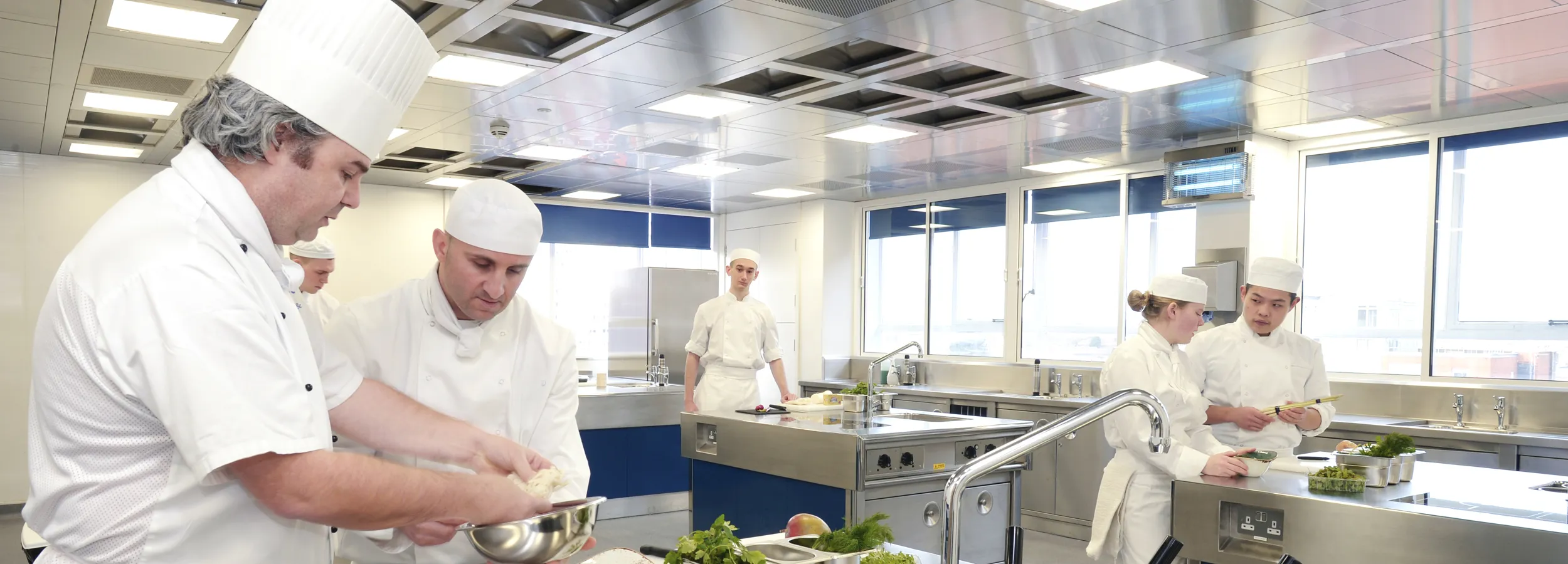
Specialist dysphagia training now integrated within Commis Chef Apprenticeship
By Claire Huggins
Share post:Read time: approx 6 mins
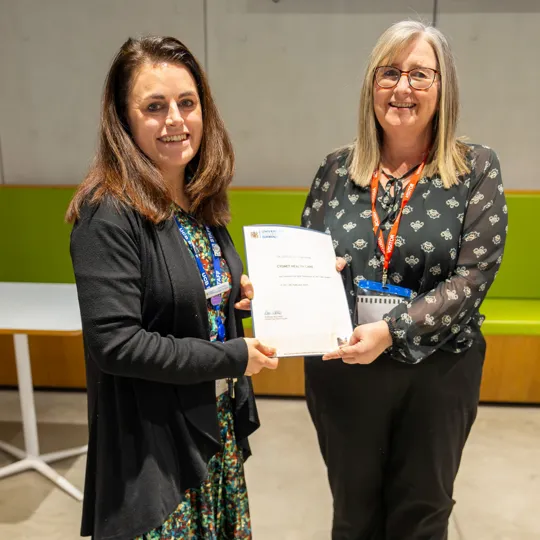
Faye Malkin collects UCB's ‘Apprenticeship Employer of the Year’ from Professor Rosa Wells.
One employer already championing the apprenticeship is Cygnet Group, a leading provider of health and social care services for adults and young people in the UK. Last year, the company won UCB’s ‘Apprenticeship Employer of the Year’ at the University’s inaugural Apprenticeship Recognition Awards.
“The launch of this new specialism is a significant milestone for our partnership,” says Faye Malkin, Group Training Manager (Apprenticeships) for Cygnet Group.
“The care sector is urgently calling for professionals who not only understand the impact of this condition but also possess the practical expertise to safely prepare food and drink for those in their care.
"I’m delighted that the experts at University College Birmingham and OHK have put their heads together to create this innovative offer, providing the high-quality training that has a service user focus, ensuring safe and dignified care for everyone we support.”

Why add the Molila dysphagia training
UCB’s existing Level 2 Commis Chef Apprenticeship is a long-standing course that has seen graduates excel in the basics of culinary preparation, cooking and finishing, as they prepare to enter a professional kitchen environment.
Through this collaboration with OHK, the University is enhancing its training through Molila, an embedded dysphagia catering approach. Aligned to the International Dysphagia Diet Standardisation Initiative (IDDSI) framework, the Molila method that underpins the training was born out of a need for caterers with the right knowledge and skills to prepare medically critical diets for environments such as care homes, hospitals and supported living services.
“At OHK we’re passionate about good food and the pleasure mealtimes can bring,” explained James Ball, co-founder of OHK.
Check out our latest news stories

University College Birmingham renews £6,000 Cost of Living Allowance for 2027
The University renews its committment to student support.
Read more
University College Birmingham strengthens its commitment to inclusion
National equality, diversity and inclusion accolades reflect our ongoing work to embed inclusion into university life.
Read more
University expands hospitality training with Beyond and Brocks
Investment programme set to transform the student experience and strengthen Birmingham's hospitality sector.
Read more
Hospitality and tourism conference inspires students to step up to Invictus Games
University College Birmingham students got a glimpse of how they could be part of one of the world's most ins…
Read more
University's first social work apprentices begin their studies
Developing the next generation of social workers and creating a learning community where apprentices feel that they belong.
Read more
University College Birmingham earns Armed Forces Covenant Silver Award
The University continues to strengthen its engagement with the Armed Forces sector.
Read more