Recent searches
You do not have any recent searches.

ProstheticS, PROPS AND SIMULATION EFFECTS

MA / PGDip / PGCert

Accredited by University College Birmingham

Choose Award
Duration

16 months FT / 28 months PT

UCAS Code

MW20

Entry

September

Fees

View fees

Department of Creative Industries
Choose Award
Duration

8 months FT / 20 months PT

UCAS Code

DW20

Entry

September

Fees

View fees

Department of Creative Industries
Choose Award
Duration

4 months FT / 8 months PT

UCAS Code

CW20

Entry

September

Fees

View fees

Department of Creative Industries
Discover more at our next open day

Thursday 12 November 2026

Bookings will open soon

£1.3m invested in practical facilities for our creative industries students

Wide range of career opportunities across prosthetics, props, simulation effects and the wider screen industries

With record investment in the UK screen sector and Birmingham's Digbeth emerging as a major creative hub, there has never been a more exciting time to develop as a hybrid creative. Across film, television, immersive experiences, live events and simulation training, employers increasingly seek artists who can combine digital technologies with traditional making skills, moving seamlessly between 3D design, digital sculpting and additive manufacturing, while retaining expertise in sculpting, moulding, casting and hand-finished fabrication.

Our Prosthetics, Props and Simulation Effects MA / PGDip / PGCert course will equip you with the advanced technical and creative skills needed to work across both digital and physical production pipelines. Guided by experienced professionals, you will develop expertise in character prosthetics, anatomical simulation and prop making, integrating digital modelling, additive manufacturing and workshop-based fabrication techniques to create innovative, industry-ready outcomes.

Through professional critiques that reflect real-world production environments, you will refine your technical precision, creative problem-solving and collaborative skills. Graduating with a portfolio that showcases both your digital and physical capabilities, you will be well positioned for careers across the screen, performance, simulation and experiential sectors as a versatile next-generation hybrid artist.

Why should I choose to study Prosthetics, Props and Simulation MA / PGDip?

  • THRIVING CREATIVE HUB – Study in Birmingham, just moments from Digbeth Studios and one of the UK's fastest-growing screen and creative industry hubs

  • EXPERT TEACHING - Learn from industry professionals whose credits include Harry Potter, Game of Thrones and major West End productions

  • FLEXIBLE STUDY OPTIONS – Choose a standalone module for professional development or complete the full MA and gain a recognised postgraduate qualification

  • HYBRID SKILLS – Develop advanced prosthetics, props and simulation effects skills using both traditional techniques and digital technologies, including 3D scanning and printing

  • REAL-WORLD PROJECTS - Build professional experience through live briefs and projects with external organisations, including West Midlands Police Disaster Victim Identification training and commercial partners

  • ENRICHMENT – Enhance your learning through industry visits, networking events and guest speakers from across the creative and screen sectors

  • INDUSTRY CONNECTIONS – Expand your professional network through specialist guest experts and our annual networking event

  • SPECIALIST FACILTIES – Access state-of-the-art prosthetics studios designed to support careers in film, television, theatre, events and simulation training

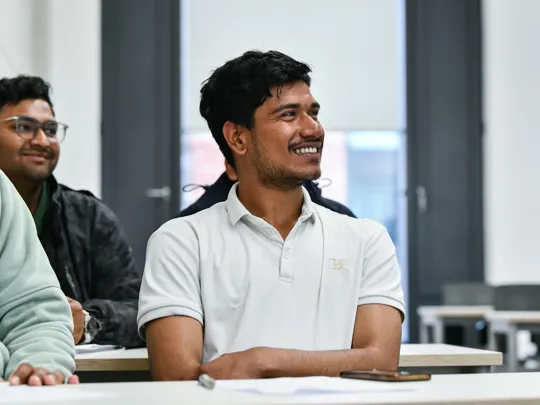
A student in a lecture session at University College Birmingham

Pay early and save up to £4,500

International students who meet all our deposit deadlines can qualify for Early Action Scholarships of £4,500 or £3,500, depending on your course. Simply meet the payment deadlines and we'll do the rest - no application needed. International students can also apply for merit scholarships, worth up to the full amount of the tuition fee.

Early Action Scholarships 

International Merit Scholarships

Our facilities

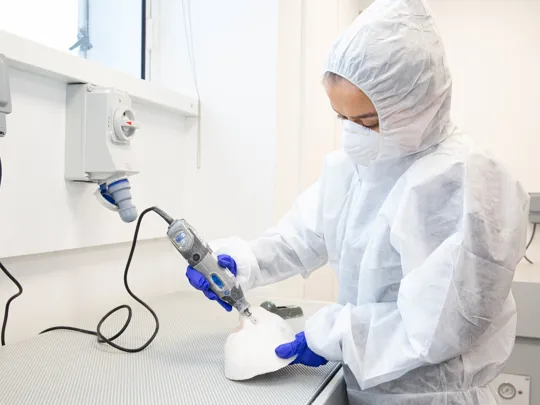
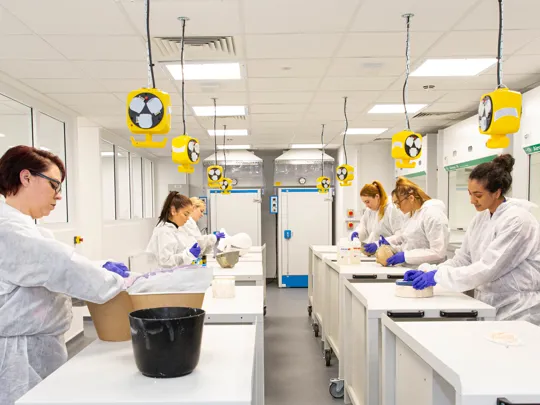
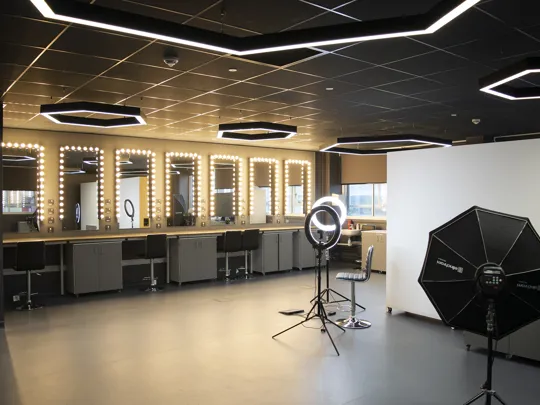
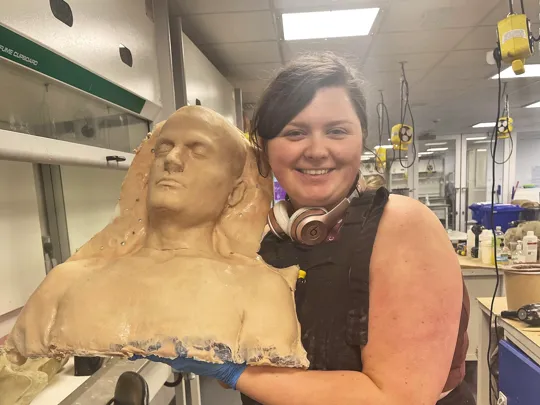
Our purpose-built prosthetics workshops at University College Birmingham are designed to encourage innovation and inventiveness, giving you the ideal environment to develop the advanced technical skills you need to flourish in the sector.

Specialist prosthetics studio – Includes extraction facilities, silicone degassers in each studio, foam latex mixers and industrial sized foam latex ovens, 3D scanners and 3D printers (resin and filament).

Access to online resources – Access to Stan Winston School of Character Arts Video Tutorial suite subscription and Online Prosthetics Magazine archives. They provide on-demand tutorials, industry insights, prosthetics research, creature design techniques, and behind-the-scenes learning from leading special effects artists-supporting both practical studio work and independent creative development.

Digital technologies – With industry-leading software such as Adobe Creative Cloud and ZBrush, this space empowers students to bring their digital visions to life and sharpen their skills in cutting-edge design technology.

Prosthetics studio tour

Course breakdown

  • MA / PGDip
  • PGCert

Core Modules

Prop Design and Fabrication

Develop professional standard props through a research-led, practical project inspired by a choice of narratives and industry scenarios. You will conceptualise, design and fabricate props using a hybrid of traditional and digital techniques, including 3D scanning and printing where appropriate. At key stages of your iterative design and fabrication process, you will respond to staged professional critique simulating feedback from directors, producers, production managers and other creative industry professionals to refine and elevate your work.

Anatomy Simulation Effects

Bring anatomy to life by designing and building hyper-realistic simulation props for performance and professional training. Working to industry scenarios and budgets, you will research human or animal anatomy and storyboard sequences using AI tools to inform and create functional props incorporating blood and air rig systems for applications such as medical or veterinary training, accident simulations or screen dramas. Through this process, you will develop advanced fabrication, rigging and budgeting skills, alongside a deep understanding of anatomy and physiology. This prepares you for specialist roles in screen production and simulation-based training environments.

Character Prosthetics for Screen

Master the creation and application of seamless character prosthetic make-up for screen. You will conceptualise, design and manufacture prosthetic appliances inspired by scripts, using professional techniques such as collapsible core moulding to produce durable, seamless and reproducible pieces. You will then apply your prosthetics to live models, test functionality through filming, and repair or recreate damaged elements under time pressure to maintain continuity. This module develops advanced technical expertise, digital design skills, continuity management and on-set professional practice, preparing you for specialist roles across film, television and high-end commercial production.

Collaborative Industry Practice

Step into a professional production environment with this hands on module in prosthetics and prop creation. Working as part of a creative team, you will design and produce high quality, industry standard prosthetics or props for a real client, leading one production area such as design, sculpting, moulding, casting, painting or hair/fur application, while also contributing as a technician in other areas. This module is enriched by opportunities to engage with industry, with previous examples of collaborators including Backface, Those Guys, West Midlands Police and Exciting Game. Alongside developing advanced technical abilities, you will refine essential professional skills including leadership, collaboration and project management. You will receive peer and client feedback, reflect critically on your own performance and analyse how competently your technical and transferable skills meet industry expectations. By the end of the module, you will have the experience and professional insight to work effectively in collaborative creative production environments.

Final Enterprise Project (MA only)

Take full creative and professional ownership of an independent prosthetic or prop project that responds to a real market need, skills gap, or entrepreneurial opportunity. You will research, conceptualise, design and manufacture a high quality, industry-standard solution, applying advanced technical expertise, enterprise thinking and ethical practice throughout. The module develops your ability to manage a project from initial idea to market-ready outcome. You will present your research, innovation, and business rationale through a professional video pitch, demonstrating project viability, budgeting, and enterprise potential. Your completed prosthetic or prop, together with supporting marketing materials, will be exhibited in a live showcase. A written critical reflection on the project outcomes will encourage evaluative thinking and support professional development, helping you identify how your enterprise project could translate into industry practice. By the end of this module, you will have honed autonomy, strategic project management and entrepreneurial skills, leaving you fully prepared for professional careers in media, performance, entertainment and training industries.

Compulsory Modules if studying Full time:

Prop Design and Fabrication

Develop professional standard props through a research-led, practical project inspired by a choice of narratives and industry scenarios. You will conceptualise, design and fabricate props using a hybrid of traditional and digital techniques, including 3D scanning and printing where appropriate. At key stages of your iterative design and fabrication process, you will respond to staged professional critique simulating feedback from directors, producers, production managers and other creative industry professionals to refine and elevate your work.

Anatomy Simulation Effects

Bring anatomy to life by designing and building hyper-realistic simulation props for performance and professional training. Working to industry scenarios and budgets, you will research human or animal anatomy and storyboard sequences using AI tools to inform and create functional props incorporating blood and air rig systems for applications such as medical or veterinary training, accident simulations or screen dramas.

Part time students can chose ONE module from the above, and ONE module from the below:

Character Prosthetics for Screen

Master the creation and application of seamless character prosthetic make-up for screen. You will conceptualise, design and manufacture prosthetic appliances inspired by scripts, using professional techniques such as collapsible core moulding to produce durable, seamless, and reproducible pieces. You will then apply your prosthetics to live models, test functionality through filming, and repair or recreate damaged elements under time pressure to maintain continuity.

Collaborative Industry Practice

Step into a professional production environment with this hands on module in prosthetics and prop creation. Working as part of a creative team, you will design and produce high quality, industry standard prosthetics or props for a real client, leading one production area such as design, sculpting, moulding, casting, painting, or hair/fur application, while also contributing as a technician in other areas.

The modules listed above for this course are regularly reviewed to ensure they are up to date and informed by industry as well as the latest teaching methods. On occasion, we may need to make unexpected changes to modules – if this occurs, we will contact all offer holders as soon as possible.

Entry requirements

Entry requirements

  • A grade classification of 2:2 is required, or international equivalent.

  • A subject-related UK or International honours degree from a recognised institution (with a sound knowledge of prosthetics make-up).

  • We will have applicant days where you will be able to showcase your prior work to the teaching team, allowing them to get a better understanding of your core skill sets so as to ensure you have an excellent transition onto this programme.

In line with the principles of the UK Quality Assurance Agency (QAA) for recognising prior learning, applicants who do not meet the standard academic entry criteria may be considered on the basis of relevant professional experience and prior experiential learning.

Such applicants must demonstrate substantial, subject-related industry experience, evidenced through a portfolio of work and/or professional references. This experience should be in one or more of the following areas:

  • Prosthetics

  • Props fabrication

  • Simulation effects

  • Digital character design and additive manufacturing (3D printing)

All applicants may be required to attend an interview and present a portfolio. Offers will be made based on an assessment of the applicant’s ability to engage with and benefit from postgraduate level study.

If you have any questions, please send us an email:

Home and EU applicants: pg@ucb.ac.uk

International applicants: international@ucb.ac.uk

International students

For academic and English entry requirements for EU and international students, please visit the Country Specific Information page.

Please note: As an International Student, when choosing optional placement, a visa extension may be required.

Key information

Teaching and assessment

Teaching

A diverse range of teaching and learning strategies is employed to support student engagement and the development of professional practice. These include, but are not limited to, lectures, practical workshops, guest lectures, live industry briefs, scenario-based studio practice, video tutorials, independent study and research, peer discussion, collaborative projects, individual tutorials, and experimental and experiential learning activities. Collectively, these approaches are designed to foster an interactive, inclusive and professionally relevant learning environment.

Please note: The information provided is indicative. Detailed timetables and assessment schedules will be confirmed during induction.

Indicative Structure of a typical week (full-time MA)*

  • Scheduled lectures: 4 hours

  • Scheduled practical sessions: 12 hours

  • Scheduled tutorials: 1 hour

  • Independent studio-based practical workshops (optional): 12 hours

Scheduled teaching activities, including lectures, tutorials, practical sessions and independent practical workshops are typically delivered across approximately three days per week*. Please note, in line with industry and the high practical requirements of this MA, these days are expected to be long, with start times from 9am and finish times between 7pm-9pm.

Students are expected to undertake substantial independent study to support their learning. This includes research, design development, technical refinement and reflective practice, all of which are essential for the successful completion of assessments. While attendance at independent studio-based practical workshops is optional, it is strongly encouraged, as it provides valuable opportunities to enhance practical skills and achieve optimal outcomes.

*If studying the full MA part-time, the contact hours and study days will be approximately halved.

Assessment

You will be assessed through a range of methods, which may include, but are not limited to, practical prosthetic make-ups and props, live demonstrations, timed practical examinations, digital design development, technical and continuity documentation, written research reports, project proposals, reflective evaluations and professional video presentations.

The programme assessments include both written coursework and practical assessment, reflecting the professional balance required within prosthetics and prop production industries. Across the five modules, some assessments are equally weighted between practical and written components, while others focus more strongly on professional reflective coursework or live practical exhibition and demonstration.

Estimated breakdown of assessment for this course:

Coursework – 60%
Live practical assessment – 40%

Our teaching and assessment is underpinned by our Learning and Teaching Strategy 2025-2030.

Tuition fees for home students

If you are a home student enrolling on a [Band 4] postgraduate degree course at University College Birmingham in 2026/2027, the tuition fee for full-time study will be £12,000.

For students enrolling on the PGDip award, the tuition fee for 2026/2027 full-time study will be £9,000.

For students enrolling on the PGCert award, the tuition fee for 2026/2027 full-time study will be £4,500.

View tuition fees for home students

Timetable

We understand that you need to balance study with work, so wherever possible lessons will be timetabled into 2-3 days a week, although you may wish to attend independent workshops across the week.

Tuition fees for international students

If you are an international student (or have been fee assessed as an international fee payer) and enrolling on a full-time [Band 1] postgraduate degree course in 2026/2027, the fee for the academic year will be £17,500. If you complete a placement year, there will be an administration fee of £500 for a full year or £250 for a half-year placement.

For 2027/2028, the fee for the academic year will be £18,000.

View fees for international students

Please note: international fees are subject to change for 2028/2029.

Uniform and kit costs

This course requires a uniform and kit costing approximately £600, depending on the items you purchase. (Prices are subject to change each year – exact costs and information on how to order required items will be provided to you prior to enrolment.)

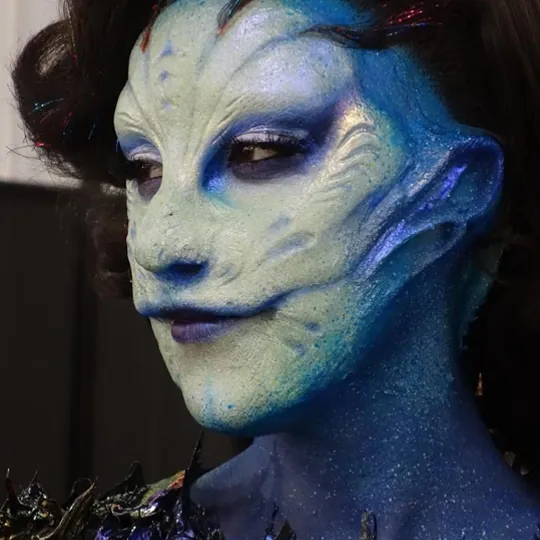
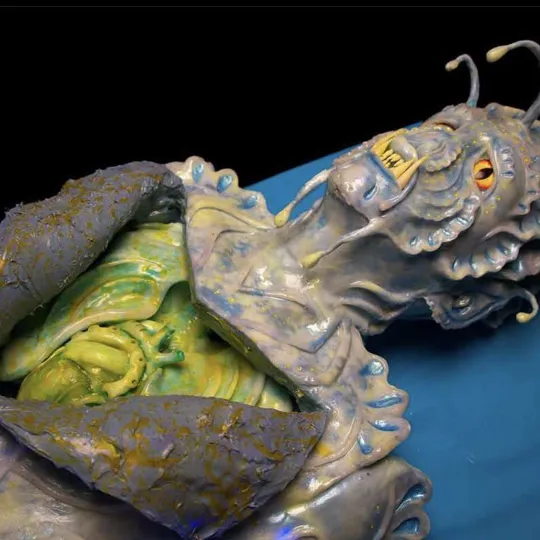
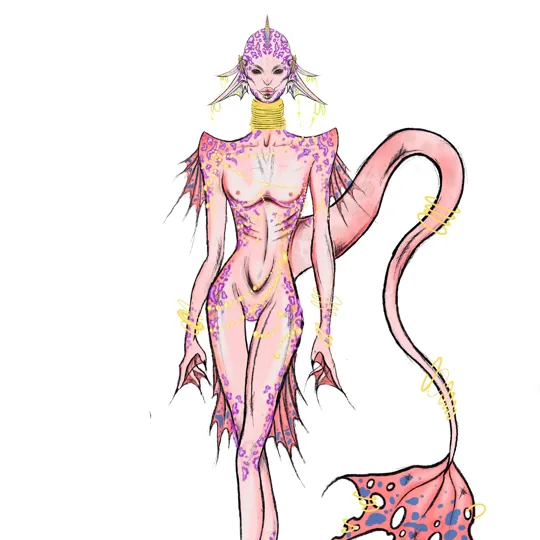
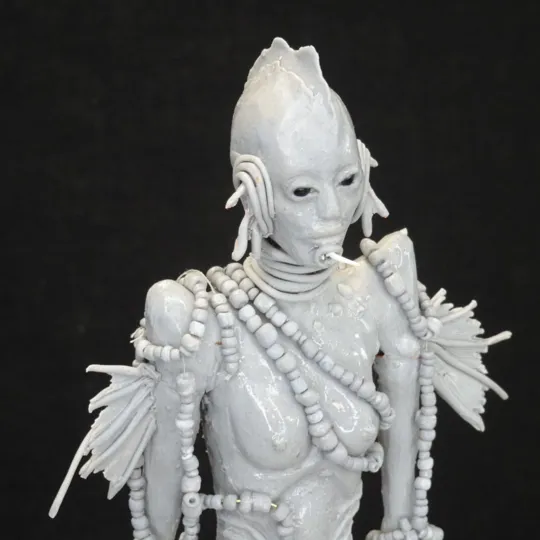
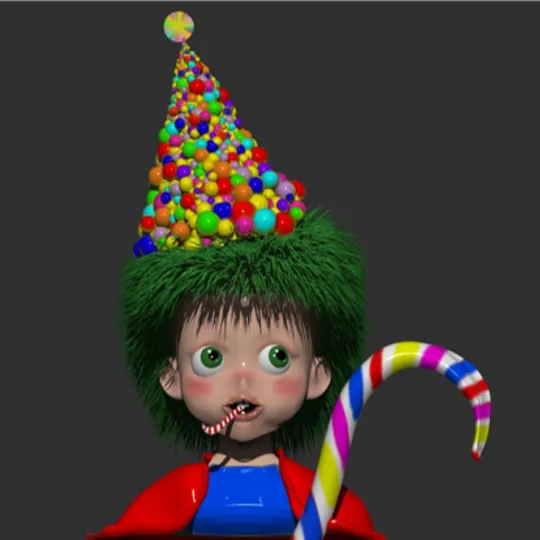
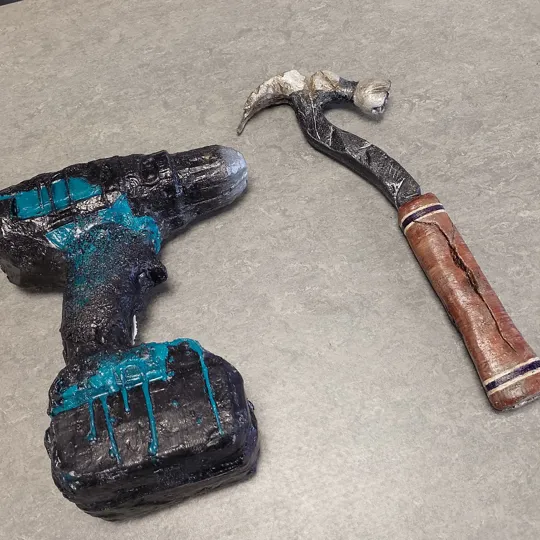
Check out these examples of our students' work:

Percentage
70%

of graduate employers say relevant experience is essential to getting a job with them
Work placements

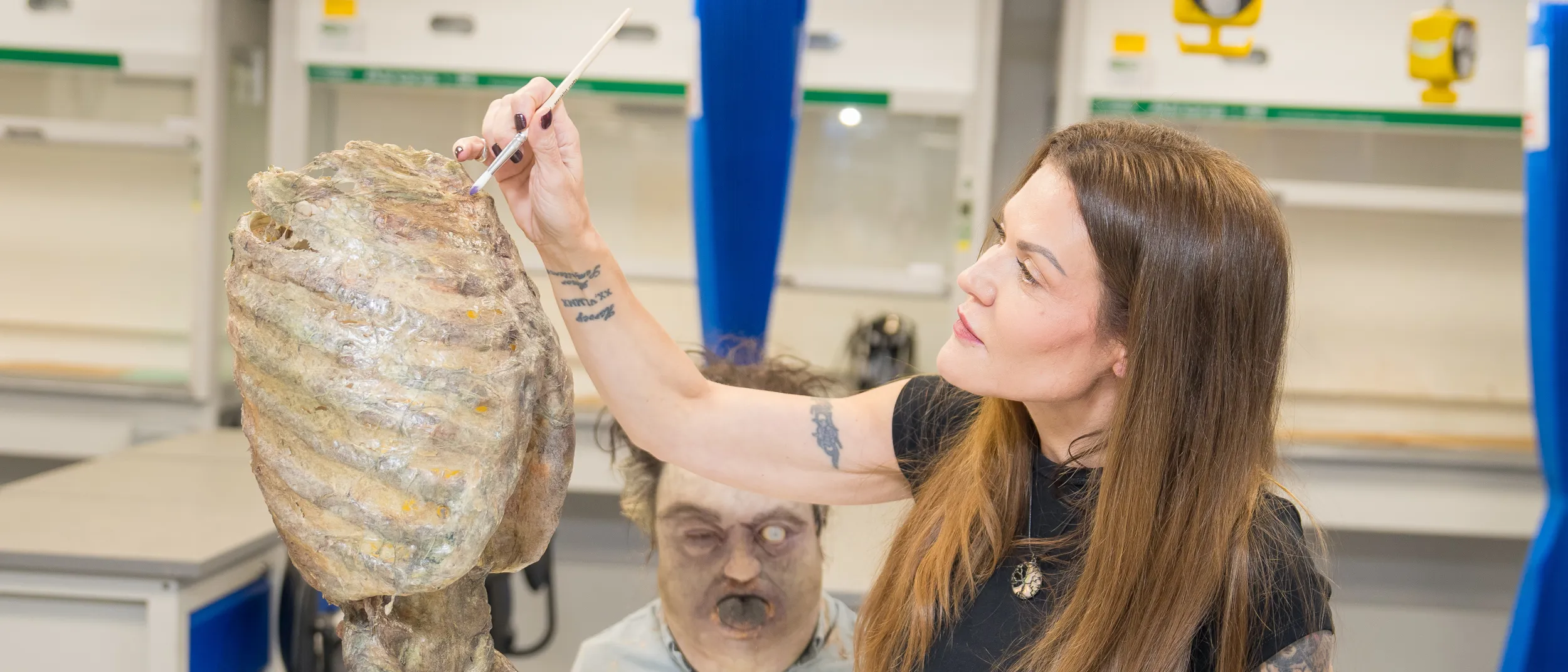
Work placements are a vital part of gaining real-life industry experience, helping you build confidence, refine your technical skills and apply your learning in professional contexts before you graduate. They can also create valuable networking opportunities and, in some cases, lead directly to employment. Our dedicated HIRED team supports you in identifying and securing placements that align with your interests and career ambitions.

The MA Prosthetics, Props and Simulation Effects programme features voluntary work placements, giving you the opportunity to engage directly with industry, develop professional networks and enhance your long-term career prospects. These placements are often short-term and may require travel, so it is important to be prepared and flexible when opportunities arise.

The Collaborative Industry Practice module incorporates live project briefs set in partnership with professionals. These allow you to respond to real-world creative and technical challenges, work to professional standards and deadlines, and gain insight into current industry expectations.

Our ongoing collaboration with employers ensures that meaningful industry connections are developed, enriching your learning experience and helping to lay strong foundations for a successful career in prosthetics and props for media and performance.

Work alongside experts in your sector

A snapshot of some of the employers we have worked with:

  • Shrek the Musical - Crescent Theatre

  • West Midlands Police

  • National Crime Response Team

  • Keele University - Trauma simulation for medical and paramedical students

  • Black Diamonds Creations - Alumni CIC that has provided students opportunities to work on shoots and short films

"We are very proud to offer our unique MA Prosthetics, Props and Simulation programme, delivered by highly-experienced industry professionals and academic experts. The master's degree offers an exciting opportunity to advance upon technical skills and deepen your understanding of prosthetics across various sectors. You will graduate equipped with the essential expertise and knowledge needed to excel in professional roles within the industry."

Chelsey Mallett Head of Department for Creative Industries

"You gain a wide range of skills on the course, from refining core practical techniques to pushing into new, industry-relevant areas. I developed my digital sculpting skills, experimented with new materials, and really expanded my understanding of both traditional and current processes. Having the space to test ideas, problem solve and experiment allowed me to properly develop and strengthen my abilities. By the end of the course, I felt far more confident in my skills and genuinely prepared to venture out into industry." 

Tina-Louise Oldfield Goode MA prosthetics student 2024-2026

Career opportunities

The example roles and salaries below are intended as a guide only.

Make-up artist

£40,000

Artworker

Average Salary: £28,500

Production designer, theatre/television/film

Variable

Runner, broadcasting/film/video

Variable

Prosthetics technician

Variable

Prosthetics artist

Variable
HIRED

We are here to support your career goals every step of the way. 

Find out more

Madeleine’s Story

Now developing a career as a special effects artist, Madeleine found University College Birmingham's master's course offered her unique opportunities she could not find anywhere else.

Read story

Take the next step - International fees and funding for students

Take the next step...


Back to top