
Group of construction student collaborating over a laptop

BUILDING SERVICES ENGINEERING

BEng Top-up

Accredited by University College Birmingham

This course is subject to validation and approval
Award

BEng

Duration

2 years FT/ 4 years PT

Entry

September

Fees

View fees

Department of Engineering
Discover more at our next open day

Saturday 06 December 2025

Join an open day

Buildings consume 40% of energy, 25% of water, 40% of resources, and construction remains a major CO2 emitter

The West Midlands aims to achieve net zero by 2041, investing £3.6 billion in energy-efficient homes, low-carbon heating and job creation

Buildings account for 40% of global energy use. The world needs engineers who can design smarter, more sustainable systems. Our BEng Building Services Engineering Top-up (Level 6) takes you from HNC or Level 4 study to a full honours degree. Available full-time or part-time, it’s flexible and designed to fit around work and life.

You’ll gain practical skills in renewable energy design, building management systems and mathematical modelling. You’ll master industry software such as IESVE and CFD, explore thermofluids and acoustics, and learn project management with PRINCE2. You’ll also study IoT, AI and cybersecurity in building systems, plus sustainability frameworks including BREEAM, LEED and EPC. A major design project ties your learning to real-world challenges and the UN Sustainable Development Goals.

Whether you’re exploring different career paths or seeking structured progression, this degree opens doors across energy, design and building performance. The programme is progressing towards CIBSE accreditation, and students finishing Level 5 may also gain a DipHE

For those interested in alternative study routes, see our Building Services Engineering apprenticeship offer.
  • FUTURE SKILLS READY – Step up from your HNC to a full BEng with advanced training in Smart Buildings, IoT, AI and cybersecurity. You’ll gain hands-on experience with industry-standard tools such as IESVE and CFD, preparing you for careers that drive net zero change.
  • ACCREDITATIONS - This programme is progressing towards CIBSE accreditation, giving your qualification added professional recognition. A highlight of the course is the Major Design Project, where you’ll tackle real building services challenges linked to the UN Sustainable Development Goals.
  • LEADERSHIP – You’ll move beyond technical knowledge to develop analytical and managerial expertise. From advanced mathematics to PRINCE2 project management and asset management skills, you’ll be equipped to lead projects and teams in industry.
  • PRACTICAL APPLICATION – Teaching is interactive and problem-based, combining lectures, seminars and demonstrations. You’ll use specialist software in our labs, apply your knowledge through presentations and projects, and graduate with skills you can immediately use in the workplace.

Our facilities

  • IESVE (Integrated Environmental Systems Virtual Environment): model energy performance, airflow, and thermal comfort in buildings.

  • Computational Fluid Dynamics (CFD): analyse ventilation and cooling strategies, such as atriums and stacks, for real building designs.

  • BIM and Revit: apply digital collaboration tools for facilities management, cost estimating, and clash detection.

  • Controls and Building Management Systems (BMS): explore smart building technologies and automation.

  • Matlab and project management tools: develop analytical skills and apply frameworks such as PRINCE2.

  • Dedicated IT labs: access industry-standard software and complete hands-on assessments through practical presentations and simulations.

Course breakdown

  • Modules

Year 1

Further Mathematics for Construction

This module advances your mathematical knowledge from Level 4, specifically for use in the building services engineering industries. It teaches you to analyse and model building services engineering situations using advanced mathematical techniques. Topics covered include complex numbers, matrix theory (for solving linear equations), numerical methods, and expanding calculus knowledge to model and solve problems using first and second order differential equations.

Construction Maintenance Management

This module enables you to effectively design and implement repair and maintenance strategies for the built environment estate. It develops knowledge of the role of maintenance/facilities management from a strategic perspective, including the scope of facilities management and the benefits of asset management programmes. Key areas include evaluating construction materials and their deterioration mechanisms, and studying the legal standing of dilapidation reports, statutory controls, and assessing the costs of repairs.

Renewable Energy

This module develops knowledge of renewable options that system designers utilise in construction and the built environment. Students explore renewable energy systems globally for both domestic and non-domestic buildings. The main learning outcome is the ability to design and calculate a renewable energy system for a non-domestic building, comparing options suitable for the UK, such as photovoltaic, solar, wind, and hydro systems.

Thermofluids and Acoustics

The study of thermofluids is critical to the design, specification, and operation of building services engineering systems. Students explore thermofluids, heat transfer, thermodynamics, fluid mechanics, and combustion, focusing on their calculation and application. Students gain knowledge to work on heating and refrigeration systems. The module also covers acoustics, including the causes of noise and vibration, calculating noise levels, and developing strategies to manage the acoustic environment.

Controls and BMS

This module focuses on understanding Building Management Systems (BMS), common in commercial, public, and domestic properties. It explores how automatic control of heating, cooling, lighting, and security has become the norm, driven by the priority of energy efficiency. The content covers the influence of IoT devices (like NEST and Hive) and predicts how AI will make BMS more intelligent. A critical focus is placed on analysing how cyber security is becoming critical when related to controls, BMS, and the Internet of Things (IoT).

BIM / Revit (FM and Cost estimates)

This module provides students with an understanding of the detailed processes that support construction professionals within the context of Building Information Modelling (BIM). Students explore how BIM helps with costings and assists Facilities Managers (FM) in the day-to-day running and maintenance of assets in large commercial buildings. The knowledge gained focuses on how BIM enables better information management across the life of a building and allows students to determine its relevance when looking at costs and FM.

Year 2

Smart Buildings and IoT, AI

This module examines rapid developments in Artificial Intelligence (AI) and its relation to smart buildings, considering current industry applications. It explores Internet of Things (IoT) devices (non-standard computing hardware like sensors and actuators) and critically assesses their security in commercial and domestic settings. The module analyses how IoT and AI can make a building more energy efficient and environmentally friendly, addressing Sustainable Development Goal 11.

Sustainability in Construction

This module enables students to gain knowledge of environmental assessment methods used in the construction industry. It covers methods for individual elements and whole projects. Students explore a project’s environmental issues and how its impact can be reduced and mitigated. The content includes examining key tools for project sustainability, such as BREEAM, LEED, NABERS, and EPC, and comparing these methods.

Project Management for Building Services

This module provides an understanding of techniques and practices for effective project management of building services engineering. Students explore constraints on large, complex construction projects, focusing on time, cost, quality, and labour shortages. The module involves developing project plans, solutions to problems, and comparing project management tools, including PRINCE2.

Advanced BIM or IES and CFD

This module focuses on advanced computational analysis and modelling. It involves using specialised software for Integrated Environmental Solutions (IES) on real buildings and undertaking internal airflow and thermal studies using Computational Fluid Dynamics (CFD). Students analyse airflows, seasonal effects, produce a design for a specific office (e.g., a three-storey design), and demonstrate how elements like an atrium or stack can cool a building with models.

Major Design Project

This compulsory double module develops skills for lifelong professional development. The project assesses the student’s ability to apply knowledge and analytical skills gained throughout the degree to solve complex, interrelated building problems. The design proposal must address innovation, sustainability, contracts, health, welfare, and safety in a real-life scenario. Students produce quantitative and qualitative data and analyse how the design supports Sustainable Development Goals.

The modules listed above for this course are regularly reviewed to ensure they are up to date and informed by industry as well as the latest teaching methods. On occasion, we may need to make unexpected changes to modules – if this occurs, we will contact all offer holders as soon as possible.

Entry requirements

Entry requirements

Academic: A relevant HNC or a foundation degree in the area of engineering, with 120 credits.

If you are unsure if your previous qualification is suitable, please contact us before completing an application. You can call us on 0121 604 1040 or complete our enquiry form here.

Key information

Teaching and assessment

Note: Indicative information only – actual timetables and assessment regimes will be issued at your induction. 

Teaching 

You’ll learn through a mix of traditional and practical methods designed to support different types of learners.

  • Weekly contact time: Around 3 hours per week for each 20-credit module (36 hours over a semester).

  • Major Design Project: A 40-credit capstone module with dedicated support sessions.

  • Delivery methods: Lectures, seminars, tutorials, demonstrations and workshops.

  • Independent study: You’ll be expected to carry out your own research, reading and project work alongside timetabled sessions.

  • Formative support: In-class workshops and feedback sessions help you prepare for assignments and build confidence.


Assessment

Your progress will be assessed in ways that reflect real industry practice, combining written, practical and collaborative work.

  • Overall breakdown:

    • Coursework – 50%

    • Written examinations – 33%

    • Practical assessments – 17%

  • Coursework: Scenario-based assignments, research projects and group tasks.

  • Examinations: Written and online tests across key modules.

  • Practical presentations: Showcase your designs and simulations using software such as BIM, IESVE and CFD.

  • Group work: Develop teamwork and communication skills through collaborative projects in modules like Controls and BMS or Project Management.

Our teaching and assessment is underpinned by our Learning and Teaching Strategy 2025-2030.

Tuition fees for home students

If you are a home student enrolling on a bachelor's or foundation degree course at University College Birmingham, the 2025/2026 academic year tuition fee for full-time study is £9,535. For part-time study, the fee is £4,767.50.

View tuition fees for home students

Kick-Start Scheme

As a new student studying this course full-time, you will receive £300 per year through our Kick-Start Scheme (UK students only, eligibility criteria applies). This scheme will support your studies and future career by contributing to course-related materials, uniform or selected items on campus. You may also qualify for an additional £500 per year.

Find out more about the Kick-Start Scheme here.

Unibuddy Community - meet other students on your course

Starting university is an exciting time, but we understand that it can sometimes feel a little daunting. To support you, you will be invited to join our Unibuddy Community, where you can meet other students who have applied for the same course at University College Birmingham, before you start studying here.

As soon as you have been made an offer, you will be sent an invitation email to complete your registration and join the Unibuddy Community. For more information, check out our Unibuddy Community page.

"This BEng top-up degree is about shaping the next generation of engineers who will lead the West Midlands to net zero by 2041. By combining vital digital skills in BIM, IES and AI/IoT with advanced project management, we empower our graduates to design and deliver buildings that are safer, smarter and truly sustainable.”

Edward Bird Deputy Dean of School, Engineering, Digital and Sustainable Construction

Career opportunities

The example roles and salaries below are intended as a guide only.

Building Services Engineer

Average Salary: £35,000

Facilities manager

Average salary: £35,000 to £50,000+

Project manager

Average salary: £45,000 to £65,000+

Sustainability consultant

Average salary: £32,000 to £48,000+

HVAC design engineer

Average salary: £35,000 to £50,000+

BMS / building controls specialist

Average salary: £30,000 to £45,000+

Want to take your studies to the next level? Completing the BEng degree will enable you to move on to our postgraduate course, Construction Project Management MSc
HIRED

We are here to support your career goals every step of the way. 


Find out more

Phil’s Story

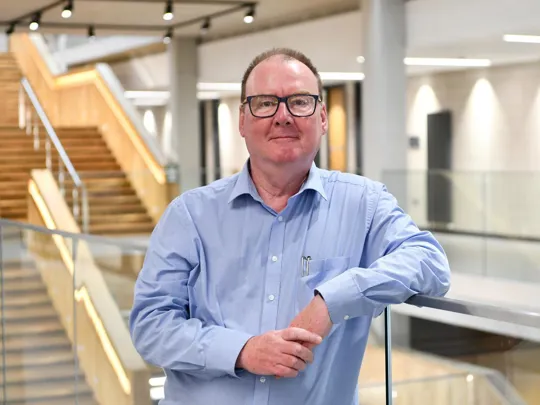
With over 20 years of industry experience and two decades of teaching building services, Phil specialises in sustainable design and future-ready construction skills.

Read story

Undergraduate students

Take the next step...


Back to top