of graduate employers say relevant experience is essential to getting a job with them

ELECTRICAL INSTALLATION
Level 2, Level 3 Diploma in Electrical Installations (Buildings and Structures)
- College and sixth form
- College
- Courses
- Electrical Installation Level 2, Level 3
Course Level
Level 2, Level 3
Duration
1 year FT per level
Placement
Included in course
Entry
September
Fees
View fees

Get a widely recognised, work-related qualification to support your future

Gain real-life experience on work placement to boost your career prospects
Do you want to train as an electrician? From installing and maintaining electrical equipment and machinery to fitting and repairing circuits and wiring in homes and businesses, electricians play an essential role in everyday life and are always in demand. If this sounds like a field you want to work in, our Electrical Installation course will equip you with the essentials to spark your career ambitions to life.
Available for entry at either Level 2 or Level 3 depending on your existing knowledge and qualifications, our course covers a variety of key topics including electrical science and principles, the process of inspecting, testing and commissioning electrical systems, and how to diagnose and correct faults. You will also learn about environmental technology systems including heat pumps, wind turbines and solar/photovoltaic technology, as well as construction and retrofitting skills.
To support your learning, you will develop your practical skills in our cutting-edge Centre for Sustainable Construction, featuring a wide variety of equipment to provide you with a real-world training environment during your studies. Our Level 3 course also gives you the opportunity to put your skills to the test in industry on a work placement, ensuring you finish your studies not only with a nationally-recognised qualification but real-life experience to boost your employability.
Why choose this electrical installation college course?
- BOOST YOUR SKILLS – Gain key electrician skills and knowledge including installation design and craft, safety regulations and green technologies
- RECOGNISED QUALIFICATION – Our electrician course gives you a recognised work-related qualification to enable progress onto higher education and professional careers
- PRACTICAL APPLICATION – Develop your practical skills using our state-of-the-art training facilities on campus
Our facilities
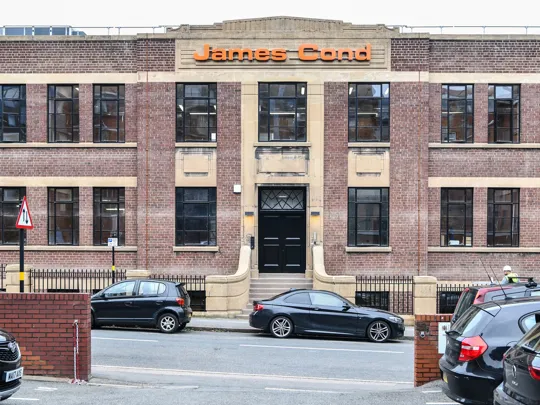
Students on our construction and engineering courses learn in real-world training environments at University College Birmingham. Our Centre for Sustainable Construction at the iconic James Cond building offers state-of-the-art facilities specifically designed to develop skills that support employers and their supply chains, along with further new facilities at Camden House. These include:
-
Training rigs
-
Green technologies workshops
-
Multiple electrical bays and workshops
-
CAD and BIM suites
-
Enhanced IT facilities

Formerly the James Cond print works, this retrofitted building is now our Centre for Sustainable Construction.
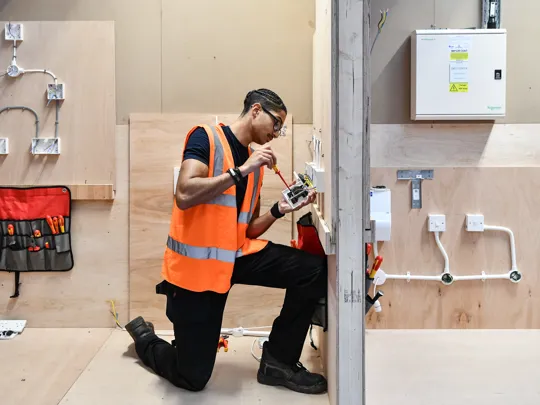
State-of-the-art facilities specifically designed to develop skills that support employers.
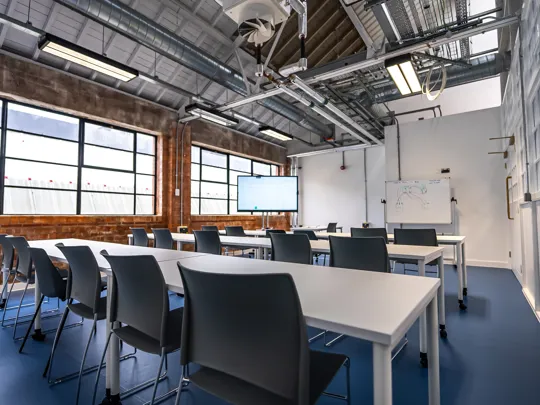
Study in one of many modern classroom spaces across our James Cond and Camden House campuses.
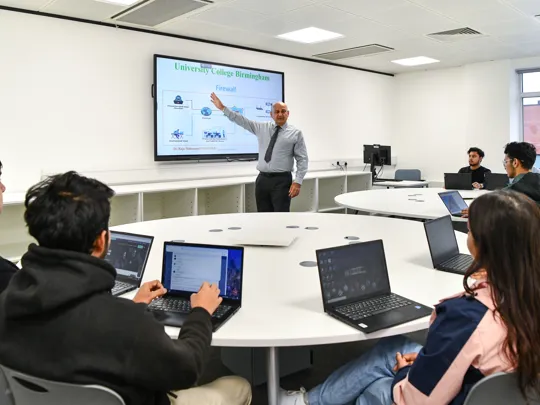
Enhanced IT facilities to support you alongside your practical training.
Course breakdown
Topics you will study:
Level 2
- Health and safety in building services engineering
- Principles of electrical science
- Electrical installations technology
- Installation of wiring systems and enclosures
- Communicating with others within building services engineering
Level 3
- Health and safety in building services engineering
- Fundamental principles and requirements of environmental technology systems
- Principles of electrical science
- Electrical fault diagnosis and rectification
- Electrical inspection, testing and commissioning
- Electrical systems design
- Career awareness in building services engineering
Please note: Units/topics of study are subject to change
You will also have an individual study programme to help you build the skills and experience you need to progress onto higher education or gain employment.
Essentials you will need (also for parents and carers)
Personal Protective Equipment (PPE)
One of the most important things on our sustainable construction courses is Personal Protective Equipment (PPE).
PPE stands for Personal Protective Equipment and without the correct PPE, you cannot participate in practical activities - it's to keep you safe.
Firstly, all electrical installation students must have steel toe capped boots, which you can buy once you have enrolled. These boots must be worn in all practical lessons.
Students on these courses must also have proper work trousers (no shorts) and any other clothing you wear, you mustn't mind getting this dirty.
Don't forget, you need to get your essential PPE bought and ready before your induction day. Once you start, you can request a free locker to store your PPE.
Financial support with study costs (including PPE)
University College Birmingham offers a bursary scheme to help enrolled students cover costs, including:
- Kit (including PPE)
- Travel to college
- Uniform
- Other course materials
For more information, please visit our Financial Support for College Students page.
"As an employer, it is vital that our employees can access robust, fit-for-purpose qualifications that will address the skills shortage and provide our future and existing workforce with the knowledge, skills and behaviours required to demonstrate competency in their roles. We are passionate about recruiting and developing our own talent for the future, while ensuring we remain committed to sustainably delivering vital infrastructure to communities across the UK."
Tilbury Douglas tilburydouglas.co.uk
Entry requirements
Our construction lecturers are looking for students who are enthusiastic and passionate about construction, together with a keen determination to succeed in the construction and building sector, so please contact Admissions if you do not have the specific requirements outlined below.
If you are unsure if your qualification is equivalent or if you wish to check if you meet the entry requirements for this course, please call 0121 214 2919, email feadmissions@ucb.ac.uk or use our live chat.
Electrical Installation Level 2
Academic requirements
- 4 GCSEs at grade 4 (grade C) or above, including English (Language or Literature) and Maths, or equivalent.
Supporting documents required
- School applicants will be required to provide a good school report, which must include attendance. This will be assessed in conjunction with your qualifications and application during the confirmation of your place at University College Birmingham.
- If you are a school leaver (over 19), you will be required to provide a reference from a previous education provider or employer in support of your application.
Electrical Installation Level 3
Academic requirements
- A relevant Level 2 qualification in Electrical Installation
- 4 GCSEs at grade 4 (grade C) or above including English (Language or Literature) and Maths, or equivalent.
Supporting documents required
- School applicants will be required to provide a good school report, which must include attendance. This will be assessed in conjunction with your qualifications and application during the confirmation of your place at University College Birmingham.
Key information
Teaching and assessment
You will be assessed through a combination of online tests, practical assessments and assignments.
Our teaching and assessment is underpinned by our Learning and Teaching Strategy 2025-2030.
Additional qualifications and training
As part of our course, you will have the opportunity to complete a Level 2 Award in Understanding Domestic Retrofit.
Work placements
Work placements offer a wealth of benefits alongside your studies, helping you put your learning into practice, develop your skills and understanding of the workplace, boost your CV for your chosen career or enhance your UCAS application for higher education. Our HIRED team can help find the ideal placement for you.
Our Level 3 Electrical Installation course includes the opportunity to complete approximately 20 days on work placement in industry.
Career opportunities
The roles and salaries below are intended as a guide only.
Electrician
Average Salary: £60,000
Electrical maintenance engineer
Average Salary: £45,000
Electrical designer
Average Salary: £60,000
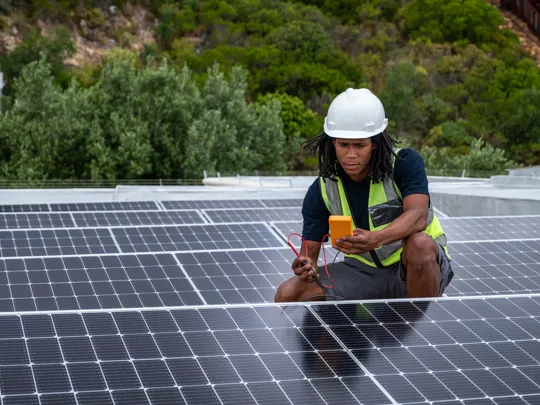
Engineering and construction at University College Birmingham
Discover more about our range of engineering and construction college courses, including Level 1, Level 2, Level 3 and T-level qualifications.

Other courses you may like
Construction and the Built Environment Level 3
Start building your career in the construction industry. Our Level 3 course will teach you the essentials such as construction mathematics, design, science and materials as well as focusing on sustainability, with a work placement to give you vital real-world experience.
Engineering Level 3
If you aspire to work in the areas of engineering and manufacturing, this BTEC Level 3 course will equip you with skills and knowledge in everything from mathematics and materials to AI and robotics, providing ideal preparation for future careers and further study.
Construction and the Built Environment Level 2
If you’re considering a career in construction, our Level 2 course will lay the foundations of knowledge and skills for you to start your journey in this sector, offering valuable work experience in the industry alongside your studies.
Engineering Level 2
Do you dream of becoming an engineer? Whether you’re interested in electronics, manufacturing or automation, our introductory engineering course will get you tooled up with the essential skills and knowledge to start your journey towards a career in this growing, fast-paced field.
Design, Surveying and Planning for Construction T-level
Want to be part of the future of sustainable construction? This T-level course is equivalent to three A-levels and will provide you with a grounding of knowledge from design to project management and more, alongside building substantial experience on work placement.
