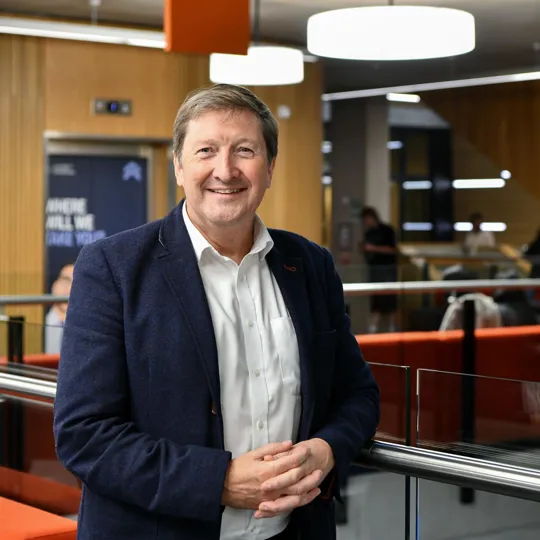
Glen Manning
Academic qualifications
BSc in IT and Computing, CertEd, HNC in Computing, ONC in Engineering, L7 Strategic Leadership and Management

I bring a unique blend of military and technical experience to my role at UCB, where I teach programming, AI, and new technologies such as neurotechnology. My time as an Aircraft Engineering Technician in the Royal Air Force (RAF), working on AI-based weapon systems and software to protect airfields, has given me valuable, real-world experience in high-pressure situations. This helps me connect theory to practical, important examples that engage students and prepare them for careers in technology and data.
In addition to my military background, I taught Python programming to new recruits as part of their progression from schools to T-Level education. This role honed my ability to break down complex programming topics into accessible, logical steps, ensuring learners from diverse backgrounds could build confidence - regardless of prior experience. My RAF experience fostered a disciplined, structured approach to problem-solving and programming, which I emphasise with students to help them develop critical thinking, effective communication skills, and resilience under pressure.
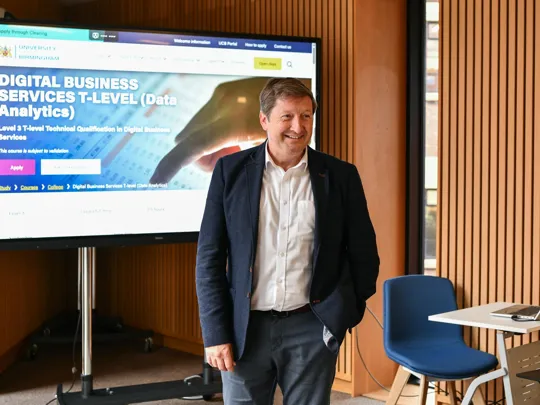
I hold industry-recognised certifications including CompTIA Security+ and Network+, and specialise in software programming, virtualisation, and web development using React, Node.js, and SQL. Recently, I have been expanding my applied knowledge in neurotechnology through hands-on development with the UltraCortex 16-channel EEG headset, working with real-time brainwave data. By integrating neurotechnology projects into the curriculum, I expose students to cutting-edge fields such as signal processing, machine learning, and human-computer interaction, fostering creativity and interdisciplinary thinking beyond traditional programming.
Students often say that they like my friendly and easy-to-understand teaching style. I break down complex topics into simple, clear steps, and I focus on practical, hands-on learning using real data and real-world problems. I also aim to create a supportive environment where students feel comfortable asking questions, trying things out, and learning from their mistakes.