January 2026
University College Birmingham awarded £900,000 capital funding investment
By Claire Huggins
Share post:Read time: approx 6 mins
AI and Robotics
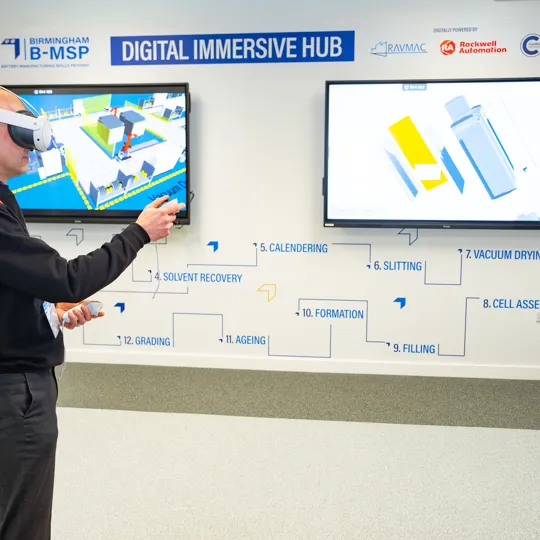
The government’s Industrial Strategy identifies key sectors for growth that include advanced manufacturing, automation, clean energy industries and modern construction. These investments will enhance student and apprentice access to the real-world technologies used in these sectors, and they respond directly to the West Midlands Local Skills Improvement Plan (LSIP), building on our role as a regional leader in battery manufacturing education and sustainable infrastructure skills.
Our AI and robotics labs will include robotic arms, drones, programmable sensor kits and AI-capable computing infrastructure. We will also be investing in additional equipment to support training related to battery technologies.
The funds will also be used to update and refurbish our existing engineering and construction spaces to ensure that they are flexible and adaptable for interdisciplinary delivery.
Health and Social Care
A priority for Skills England and the NHS, the health and social care sector is crying out for workers with specialised skills and who are digitally savvy.
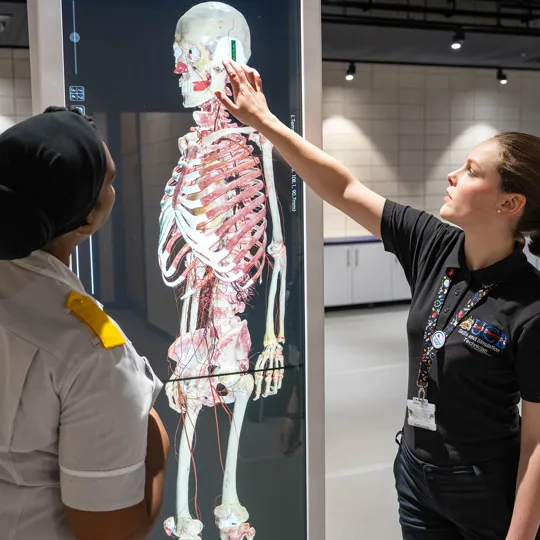
Our health and social care project will give students the chance to train for real life scenarios, putting their skills into practice and bringing the theory to life. Mirno Virtual Patients will offer immersive learning opportunities without the need for a physical body or person. Simulated community spaces will bring together a range of digital case studies based on lived experience.
This innovative approach brings students as close to working in the sector and with living patients as you can get, before they enter the workforce, and the technology selected has been done so in consultation with employers, to ensure it aligns with occupational standards.
“This investment is vitally important to us and the experience we’re able to provide our students,” said Stephen Garvey, Vice Dean - School of Health, Life Sciences and Education.
Check out our latest news stories
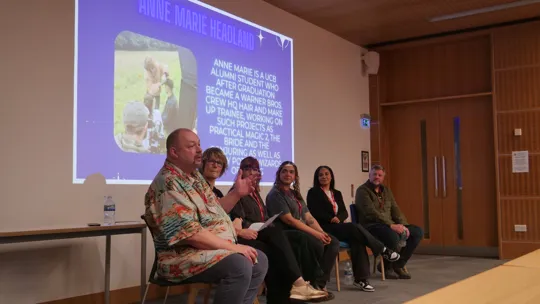
Graduate who worked on Netflix show speaks at creative industries event
A graduate who worked on award-winning Netflix show Adolescence was among a glittering guest speaker line-up at a fasci…
Read more
University’s social work provision receives exemplary Social Work England approval
Report positions University College Birmingham as the leading national benchmark in social work education.
Read more
Malvern Hills: where student insight meets industry impact
Students boast destination tourism success.
Read more
WM Tourism Awards unite education and industry impact
Students and staff enjoy prestigious awards evening.
Read more
THREE powerful reasons. TWO valuable events. ONE great day.
Two events on one day bring students, staff and stakeholders together.
Read more
Employer scholarships launched to break down barriers for Birmingham students
University College Birmingham has launched the first eight of a suite of new, fully-funded scholarships for stude…
Read more