March 2026
Prioritising potential, not paperwork: University lifts support allowance to £6,000

By Claire Huggins
Share post:Read time: approx 3 mins

Study without the struggle
Students who have already received instalments of the allowance this year have seen the difference it makes. They recognise and value the guaranteed support the allowance offers. One first-year business enterprise student was clear:
“This allowance has helped in many ways but mostly, I was able to reduce my working hours and focus more on my studies.
“This had a huge positive impact on my education and work-life balance. I am able to focus and prioritise my education, make more time for studying and limit my weekly working hours.”
Another student, studying events management, added:
“It’s helped me afford everything as my student loan isn't enough.”
Check out our latest news stories
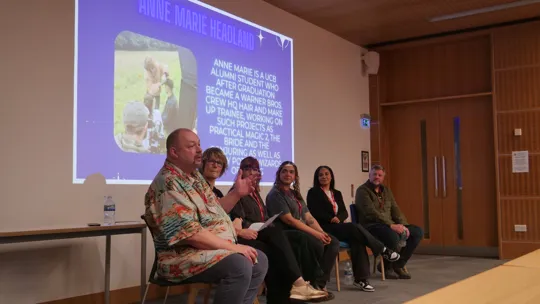
Graduate who worked on Netflix show speaks at creative industries event
A graduate who worked on award-winning Netflix show Adolescence was among a glittering guest speaker line-up at a fasci…
Read more
University’s social work provision receives exemplary Social Work England approval
Report positions University College Birmingham as the leading national benchmark in social work education.
Read more
Malvern Hills: where student insight meets industry impact
Students boast destination tourism success.
Read more
WM Tourism Awards unite education and industry impact
Students and staff enjoy prestigious awards evening.
Read more
THREE powerful reasons. TWO valuable events. ONE great day.
Two events on one day bring students, staff and stakeholders together.
Read more
Employer scholarships launched to break down barriers for Birmingham students
University College Birmingham has launched the first eight of a suite of new, fully-funded scholarships for stude…
Read more